
 KES

Search
- Page Path
- HOME > Search
Original Articles
- Thyroid
Big Data Articles (National Health Insurance Service Database) - Unveiling Risk Factors for Treatment Failure in Patients with Graves’ Disease: A Nationwide Cohort Study in Korea
- Jung A Kim, Kyeong Jin Kim, Jimi Choi, Kyoung Jin Kim, Eyun Song, Ji Hee Yu, Nam Hoon Kim, Hye Jin Yoo, Ji A Seo, Nan Hee Kim, Kyung Mook Choi, Sei Hyun Baik, Sin Gon Kim
- Endocrinol Metab. 2025;40(1):125-134. Published online January 13, 2025
- DOI: https://doi.org/10.3803/EnM.2024.2093

- 6,743 View
- 166 Download
- 3 Web of Science
- 3 Crossref
-
 Abstract
 PDF
 Supplementary Material
 PubReader
 ePub
- Background
Antithyroid drug (ATD) treatment is the preferred initial treatment for Graves’ disease (GD) in South Korea, despite higher treatment failure rates than radioactive iodine (RAI) therapy or thyroidectomy. This study aimed to evaluate the incidence of treatment failure associated with the primary modalities for GD treatment in real-world practice.
Methods
We included 452,001 patients diagnosed with GD between 2004 and 2020 from the Korean National Health Insurance Service-National Health Information Database. Treatment failure was defined as switching from ATD, RAI, or thyroidectomy treatments, and for ATD specifically, inability to discontinue medication for over 2 years.
Results
Mean age was 46.2 years, with females constituting 70.8%. Initial treatments for GD included ATDs (98.0%), thyroidectomy (1.3%), and RAI (0.7%), with a noted increment in ATD application from 96.2% in 2004 to 98.8% in 2020. During a median follow- up of 8.5 years, the treatment failure rates were 58.5% for ATDs, 21.3% for RAI, and 2.1% for thyroidectomy. Multivariate analysis indicated that the hazard ratio for treatment failure with ATD was 2.81 times higher than RAI. RAI treatments ≥10 mCi had 37% lower failure rates than doses <10 mCi.
Conclusion
ATDs are the most commonly used for GD in South Korea, followed by thyroidectomy and RAI. Although the risk of treatment failure for ATD is higher than that of RAI therapy, initial RAI treatment in South Korea is relatively limited compared to that in Western countries. Further studies are required to evaluate the cause of low initial RAI treatment rates in South Korea. -
Citations
Citations to this article as recorded by
- Nationwide Big Data Studies of Endocrine Diseases Using the Korean National Health Information Database: Research Trends and Standardization of Operational Definitions
Sun Wook Cho, Jung Hee Kim, Kyoung Jin Kim, Beom-Jun Kim, Mee Kyoung Kim, Eun Jung Rhee
Endocrinology and Metabolism.2026; 41(1): 86. CrossRef - Treatment of Graves’ Disease: Faster Remission or Longer but Safe, That Is the Question
Chan-Hee Jung
Endocrinology and Metabolism.2025; 40(1): 70. CrossRef - Process to radioactive iodine treatment for Graves’ hyperthyroidism: condemned or absolved?
Luigi Bartalena, Daniela Gallo, George J. Kahaly, Eliana Piantanida, Maria Laura Tanda
Journal of Endocrinological Investigation.2025; 48(9): 1927. CrossRef
- Nationwide Big Data Studies of Endocrine Diseases Using the Korean National Health Information Database: Research Trends and Standardization of Operational Definitions

- Miscellaneous
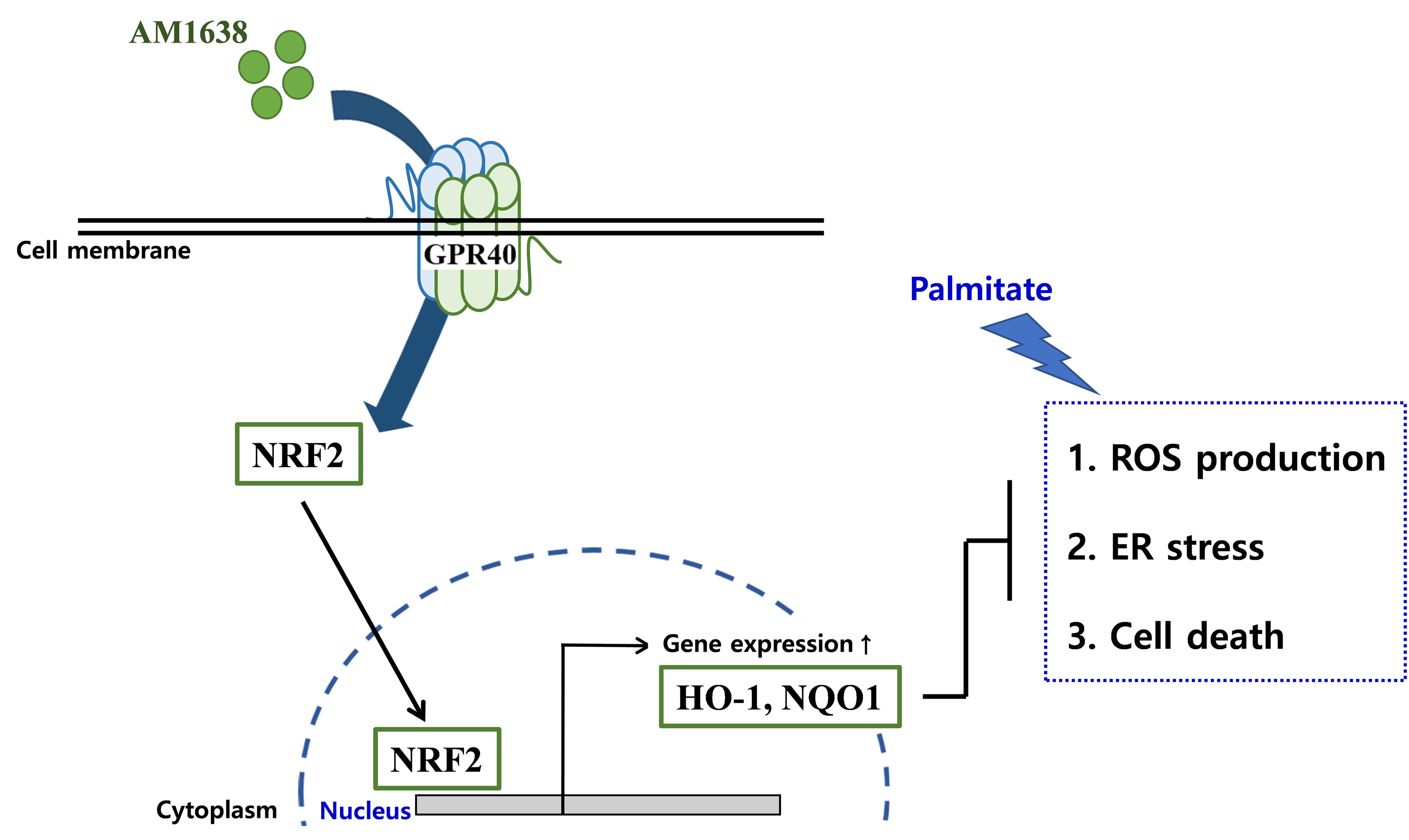
- AM1638, a GPR40-Full Agonist, Inhibited Palmitate- Induced ROS Production and Endoplasmic Reticulum Stress, Enhancing HUVEC Viability in an NRF2-Dependent Manner
- Hwan-Jin Hwang, Joo Won Kim, SukHwan Yun, Min Jeong Park, Eyun Song, Sooyeon Jang, Ahreum Jang, Kyung Mook Choi, Sei Hyun Baik, Hye Jin Yoo
- Endocrinol Metab. 2023;38(6):760-769. Published online November 2, 2023
- DOI: https://doi.org/10.3803/EnM.2023.1774
- 7,509 View
- 137 Download
- 7 Web of Science
- 8 Crossref
-
Abstract
PDFPubReader ePub
- Background
G protein-coupled receptor 40 (GPR40) is a key molecule in diabetes and fatty liver, but its role in endothelial dysfunction remains unclear. Our objective in this study was to determine whether GPR40 agonists protect endothelial cells against palmitatemediated oxidative stress.
Methods
Human umbilical vein endothelial cells (HUVECs) were used to investigate effects of various GPR40 agonists on vascular endothelium.
Results
In HUVECs, AM1638, a GPR40-full agonist, enhanced nuclear factor erythroid 2–related factor 2 (NRF2) translocation to the nucleus and heme oxygenase-1 (HO-1) expression, which blocked palmitate-induced superoxide production. Those antioxidant effects were not detected after treatment with LY2922470 or TAK875, GPR40-partial agonists, suggesting that GPR40 regulates reactive oxygen species (ROS) removal in a ligand-dependent manner. We also found that palmitate-induced CCAAT/enhancer‐binding protein homologous protein expression; X-box binding protein-1 splicing, nuclear condensation, and fragmentation; and caspase-3 cleavage were all blocked in an NRF2-dependent manner after AM1638 treatment. Both LY2922470 and TAK875 also improved cell viability independent of the NRF2/ROS pathway by reducing palmitate-mediated endoplasmic reticulum stress and nuclear damage. GPR40 agonists thus have beneficial effects against palmitate in HUVECs. In particular, AM1638 reduced palmitate-induced superoxide production and cytotoxicity in an NRF2/HO-1 dependent manner.
Conclusion
GPR40 could be developed as a good therapeutic target to prevent or treat cardiovascular diseases such as atherosclerosis. -
Citations
Citations to this article as recorded by- From oxidative stress to metabolic dysfunction: The role of TRPM2
Ying-Shuang Li, Hua-Cheng Ren, Hui Li, Man Xing, Jian-Hua Cao
International Journal of Biological Macromolecules.2025; 284: 138081. CrossRef - Discovery of potent free fatty acid receptor 1 full agonists with a novel scaffold bearing conjugated double bond linker
Ziwei Yang, Jun Sun, Tifei Xu, Yu Wang, Jiahui Fang, Kai Wang, Shimeng Guo, Xin Xie, Jianhua Shen
Bioorganic & Medicinal Chemistry.2025; 123: 118158. CrossRef - GPR40-full agonist AM1638 alleviates palmitate-induced oxidative damage in H9c2 cells via an AMPK-dependent pathway
SukHwan Yun, Joo Won Kim, Min Jeong Park, Eyun Song, Soo Yeon Jang, Ahreum Jang, Kyung Mook Choi, Sei Hyun Baik, Hwan-Jin Hwang, Hye Jin Yoo
BMB Reports.2025; 58(3): 133. CrossRef - HD6277 Suppresses Muscle Atrophy by Promoting Myogenic Factors and Inhibiting Proteolysis in Aged Mice
Joo Won Kim, SukHwan Yun, Min Jeong Park, Eyun Song, Sooyeon Jang, Ahreum Jang, Kyung Mook Choi, Sei Hyun Baik, Hwan‐Jin Hwang, Hye Jin Yoo
Journal of Cachexia, Sarcopenia and Muscle.2025;[Epub] CrossRef - Sarcopenic obesity: prospects of mitochondrial transplantation to combat metabolic deterioration in aging
Md Ariful Islam, Wenyi Gu, Yijie Song, Yu Xu, Hongxi Xu
Acta Materia Medica.2025;[Epub] CrossRef - Molecular mechanisms of aberrant fatty acids metabolism in driving cardiovascular diseases: key regulatory targets and dietary interventions
Rui Yang, Jiao Pang, Xue Zhong, Shuyang Pang, Xuefeng Hu, Chenfei Wei, Weiqi Yan, Xueting Chen, Rui Zhao, Baojun Xu, Zhipeng Cao
Food & Function.2025; 16(15): 5961. CrossRef - Hypoglycemic and Analgesic Effects of Benzyloxyphenylpropanoic Derivatives of Isobornylamine as FFAR‐1 Agonists
Mariya A. Elkina, Mikhail V. Khvostov, Sergey O. Kuranov, Olga A. Luzina, Natalia A. Zhukova, Yulia V. Meshkova, Tatiana G. Tolstikova, Nariman F. Salakhutdinov
Archiv der Pharmazie.2025;[Epub] CrossRef - Free Fatty Acids and Free Fatty Acid Receptors: Role in Regulating Arterial Function
Fengzhi Yu, Boyi Zong, Lili Ji, Peng Sun, Dandan Jia, Ru Wang
International Journal of Molecular Sciences.2024; 25(14): 7853. CrossRef
- From oxidative stress to metabolic dysfunction: The role of TRPM2
- Diabetes, Obesity and Metabolism
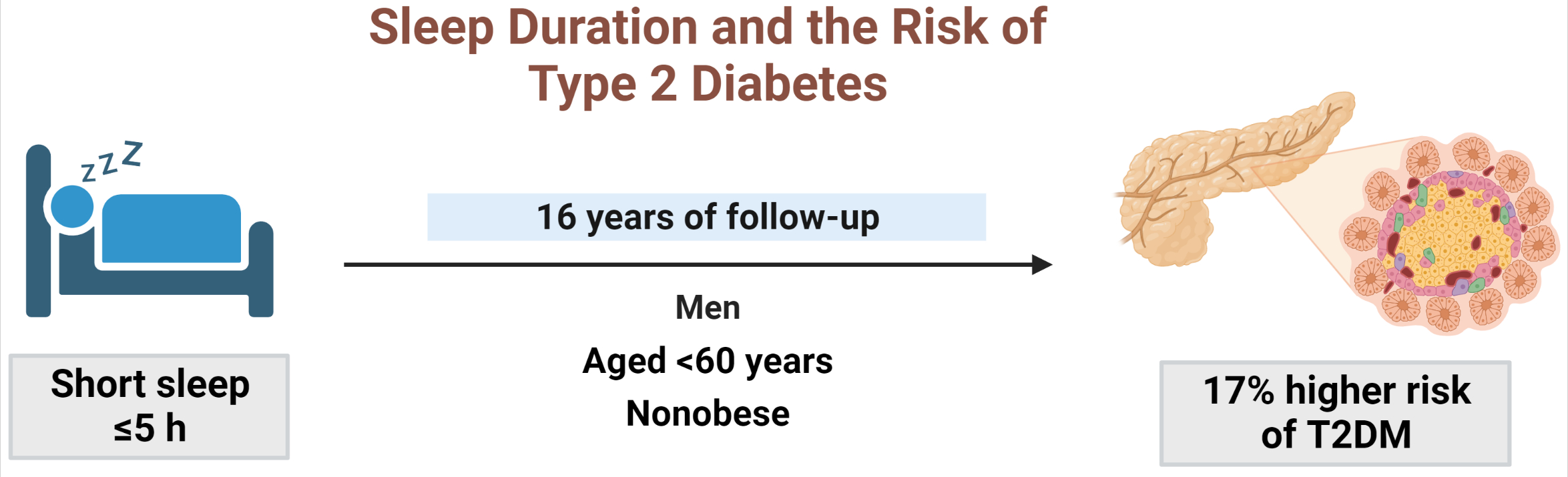
- Sleep Duration and the Risk of Type 2 Diabetes: A Community-Based Cohort Study with a 16-Year Follow-up
- Da Young Lee, Inha Jung, So Young Park, Ji Hee Yu, Ji A Seo, Kyeong Jin Kim, Nam Hoon Kim, Hye Jin Yoo, Sin Gon Kim, Kyung Mook Choi, Sei Hyun Baik, Seung Ku Lee, Chol Shin, Nan Hee Kim
- Endocrinol Metab. 2023;38(1):146-155. Published online February 6, 2023
- DOI: https://doi.org/10.3803/EnM.2022.1582
- 15,313 View
- 365 Download
- 18 Web of Science
- 23 Crossref
-
Abstract
PDFPubReader ePub
- Background
We aimed to investigate the moderating effects of obesity, age, and sex on the association between sleep duration and the development of diabetes in Asians.
Methods
We analyzed data from a cohort of the Korean Genome and Epidemiology Study conducted from 2001 to 2020. After excluding shift workers and those with diabetes at baseline, 7,407 participants were stratified into three groups according to sleep duration: ≤5 hours/night, >5 to 7 hours/night (reference), and >7 hours/night. The Cox proportional hazards analyses were used to calculate the hazard ratios (HRs) and 95% confidence intervals (CIs) for incident type 2 diabetes mellitus (T2DM). Subgroup analyses were performed according to obesity, age, and sex.
Results
During 16 years of follow-up, 2,024 cases of T2DM were identified. Individuals who slept ≤5 h/night had a higher risk of incident diabetes than the reference group (HR, 1.17; 95% CI, 1.02 to 1.33). The subgroup analysis observed a valid interaction with sleep duration only for obesity. A higher risk of T2DM was observed in the ≤5 hours/night group in non-obese individuals, men, and those aged <60 years, and in the >7 hours/night group in obese individuals (HRs were 1.34 [95% CI, 1.11 to 1.61], 1.22 [95% CI, 1 to 1.49], and 1.18 [95% CI, 1.01 to 1.39], respectively).
Conclusion
This study confirmed the effect of sleep deprivation on the risk of T2DM throughout the 16-year follow-up period. This impact was confined to non-obese or young individuals and men. We observed a significant interaction between sleep duration and obesity. -
Citations
Citations to this article as recorded by- Glucose homeostasis during recurrent periods of sleep restriction and recovery in healthy young adults
Yuki Y Y Cheung, Torance Y L Tan, Tiffany B Koa, Chin Meng Khoo, June C Lo
SLEEPJ.2026;[Epub] CrossRef - Mobile Phone Addiction and Sleep Quality Among Children and Adolescents: Unraveling the Health Consequences
Ghizal Fatima, Vani Shukla, Aminat Magomedova, Rasul Magomedov
Cureus.2026;[Epub] CrossRef - Association of daytime circadian-aligned activity with glycemic control in type 2 diabetes: Insights from continuous glucose monitoring and wearable data
Da Young Lee, Jung-Been Lee, Inha Jung, So Young Park, Ji Hee Yu, Ji A Seo, Heon-Jeong Lee, Nan Hee Kim
Metabolism.2026; 179: 156570. CrossRef - The Role of Circadian Rhythm Dysregulation, Abnormal Sleep Patterns, and Sleep Disorders on the Development of Diabetes
Hulya Merie, Bashair M. Mussa, Salah Abusnana
Clocks & Sleep.2026; 8(2): 22. CrossRef - Body-weight-specific and shared metabolomic responses to acute sleep loss in young adults
Linnéa Good, Luiz Eduardo Mateus Brandão, Lieve Thecla van Egmond, Payam Emami Khoonsari, Ida Erngren, Henrik Carlsson, Robert Fredriksson, Kim Kultima, Christian Benedict, Jonathan Cedernaes
Journal of Translational Medicine.2026;[Epub] CrossRef - Association Between Sleep Duration and Glycemic Levels in Adults With Prediabetes: A Population-based Study
Zhongqing Mou, Yan Zhou, Zaiquan Dong
Canadian Journal of Diabetes.2026;[Epub] CrossRef - Sleep features and the risk of type 2 diabetes mellitus: a systematic review and meta-analysis
Hongyi Liu, Hui Zhu, Qinkang Lu, Wen Ye, Tao Huang, Yuqiong Li, Bingqi Li, Yingxin Wu, Penghao Wang, Tao Chen, Jin Xu, Lindan Ji
Annals of Medicine.2025;[Epub] CrossRef - The potential impact of habitual sleep quality on glycaemic control and inflammation: A study on geriatric patients recently diagnosed with type 2 diabetes mellitus (T2DM)
Nadia Hussain, Amal Hussain Ibrahim Al Haddad, Saima Abbass, Zina Alfahl
Sleep Medicine: X.2025; 9: 100139. CrossRef - The link between sleep duration and stroke risk
Yu Cheng, Yuchuan Ding, Ahmed Elmadhoun, Xunming Ji, Xiaokun Geng
Brain Circulation.2025; 11(1): 1. CrossRef - Association between obstructive sleep apnea risk and atherosclerosis: A nationwide cross-sectional study in the Korean population
Il Rae Park, Yong Geun Chung, Seung Min Chung, Jun Sung Moon, Ji Sung Yoon, Kyu Chang Won, Qian Wu
PLOS One.2025; 20(5): e0322897. CrossRef - Case Report on the Improvement of Uncontrolled Blood Glucose with
Shihogayonggolmoryo-tang ,Yeonggyechulgam-tang , and Korean Medicine Complex Therapy
Nahyun Cho, Chul-woo Ahn, Hyungsun Jun, Hyun-jong Jung, Dasol Park, Jungtae Leem
The Journal of Internal Korean Medicine.2025; 46(3): 511. CrossRef - The relationship between sleep patterns and the risk of edentulism: evidence from the CHARLS
Hong-Yu Zhao, Peng-Lu Jia, Ping Ma, Wu-Long Jin, Hua-Jiao Yu
Postgraduate Medical Journal.2025; 102(1203): 48. CrossRef - Impact of Technological Advances on Type 2 Diabetes and Its Effect on Mental Health: A Perspective
Varun Damle, Ankit Halder, Tanvi Damle
Annals of Indian Psychiatry.2025;[Epub] CrossRef - Reinterpreting Yangsaeng in Physiology on Korean Medicine for Geriatric Care: A Personalized Self-Care Model for Future Medicine
Su Jin Lee, Young-Kyu Kwon
Journal of Physiology & Pathology in Korean Medicine.2025; 39(6): 271. CrossRef - Attention to Innate Circadian Rhythm and the Impact of Its Disruption on Diabetes
Da Young Lee, Inha Jung, So Young Park, Ji Hee Yu, Ji A Seo, Kyeong Jin Kim, Nam Hoon Kim, Hye Jin Yoo, Sin Gon Kim, Kyung Mook Choi, Sei Hyun Baik, Nan Hee Kim
Diabetes & Metabolism Journal.2024; 48(1): 37. CrossRef - Role of Sleep and Sleep Disorders in Cardiometabolic Risk: a Review and Update
Shaden O. Qasrawi, Ahmed S. BaHammam
Current Sleep Medicine Reports.2024; 10(1): 34. CrossRef - Evaluating reliability in wearable devices for sleep staging
Vera Birrer, Mohamed Elgendi, Olivier Lambercy, Carlo Menon
npj Digital Medicine.2024;[Epub] CrossRef - Replication Study of Genome Wide Association Study of Sleep Duration in Korean Association Resources Cohort
Seok-Ho Cho, Seon-Ah Kim, Hyun-Seok Jin, Hong Sung Kim
Biomedical Science Letters.2024; 30(2): 86. CrossRef - Insights into optimal BMI from the GlasVEGAS study
Chun-Kwan O, Juliana C. N. Chan
Nature Metabolism.2024; 6(8): 1435. CrossRef - Mechanisms, consequences and role of interventions for sleep deprivation: Focus on mild cognitive impairment and Alzheimer’s disease in elderly
Upasana Mukherjee, Ujala Sehar, Malcolm Brownell, P. Hemachandra Reddy
Ageing Research Reviews.2024; 100: 102457. CrossRef - The Relationship Between the Risk of Type 2 Diabetes and Insomnia Severity and Sleep Duration in Academicians
Tuğba Bilgehan, Esra Çalık Var
Sağlık Bilimleri Üniversitesi Hemşirelik Dergisi.2024; 6(3): 203. CrossRef - All That Glitters Is Not Gold: The Same Sleep Time, but Different Diabetogenic Outcomes
Bohye Kim, Obin Kwon
Endocrinology and Metabolism.2023; 38(1): 78. CrossRef - The Link Between Sleeping and Type 2 Diabetes: A Systematic Review
Ali Darraj
Cureus.2023;[Epub] CrossRef
- Glucose homeostasis during recurrent periods of sleep restriction and recovery in healthy young adults
Brief Report
- Diabetes, Obesity and Metabolism
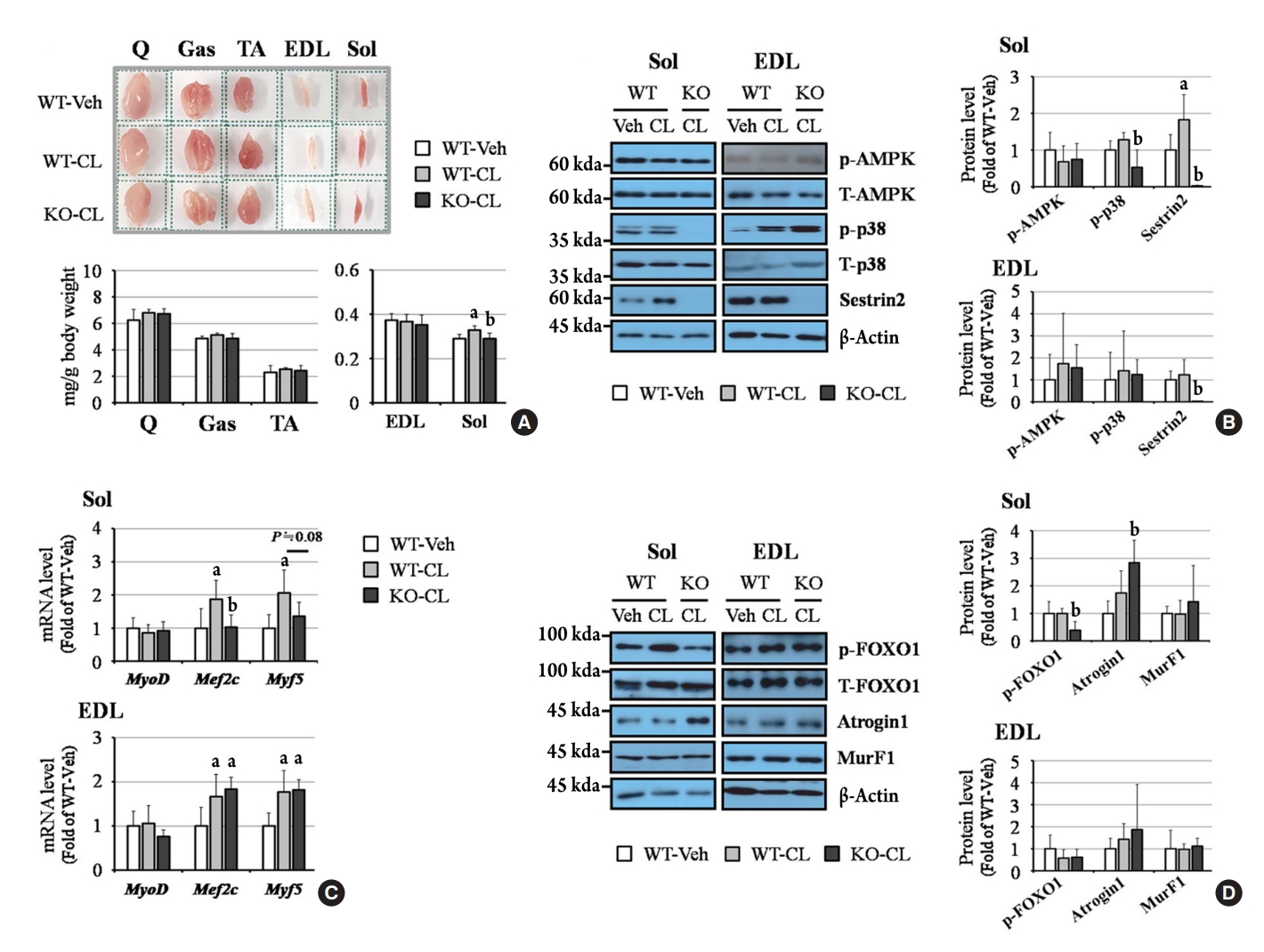
- Sestrin2 Regulates Beneficial β3-Adrenergic Receptor-Mediated Effects Observed in Inguinal White Adipose Tissue and Soleus Muscle
- Min Jeong Park, Joo Won Kim, Eun Roh, Kyung Mook Choi, Sei Hyun Baik, Hwan-Jin Hwang, Hye Jin Yoo
- Endocrinol Metab. 2022;37(3):552-557. Published online June 29, 2022
- DOI: https://doi.org/10.3803/EnM.2022.1421
- 6,519 View
- 139 Download
- 5 Web of Science
- 5 Crossref
-
Abstract
PDFSupplementary MaterialPubReader ePub
- Sestrin2, a well-known adenosine monophosphate-activated protein kinase (AMPK) regulator, plays a protective role against metabolic stress. The β3-adrenergic receptor (β3AR) induces fat browning and inhibits muscle atrophy in an AMPK-dependent manner. However, no prior research has examined the relationship of sestrin2 with β3AR in body composition changes. In this study, CL 316,243 (CL), a β3AR agonist, was administered to wild-type and sestrin2-knockout (KO) mice for 2 weeks, and fat and muscle tissues were harvested. CL induced AMPK phosphorylation, expression of brown-fat markers, and mitochondrial biogenesis, which resulted in the reduction of lipid droplet size in inguinal white adipose tissue (iWAT). These effects were not observed in sestrin2-KO mice. In CL-treated soleus muscle, sestrin2-KO was related to decreased myogenic gene expression and increased levels of muscle atrophy-related molecules. Our results suggest that sestrin2 is associated with beneficial β3AR-mediated changes in body composition, especially in iWAT and in the soleus.
-
Citations
Citations to this article as recorded by- The role of sestrin2 in skeletal muscle regeneration after injury
Chae Young Hwang, Sang-Min Park, Hoyeon Lee, Seung-Min Lee, Jeong Yi Choi, Su-Jin Baek, Taeyoung Kim, Yong Ryoul Yang, Ki-Sun Kwon
The Korean Journal of Physiology & Pharmacology.2026; 30(1): 19. CrossRef - Sesn2 is Associated with Attenuated Muscle Atrophy and Altered Expression of Key Myogenic and Autophagy Markers in Mdx Mice
Zubiao Song, Qing Lin, Jiahui Liang, Juanjuan He, Weixi Zhang
Journal of Molecular Neuroscience.2026;[Epub] CrossRef - Age-related changes in adrenergic regulation of contractility and redox status of glycolytic and oxidative skeletal muscles
Julia G. Odnoshivkina, Guzel V. Sibgatullina, Svetlana A. Dmitrieva, Anastasia A. Ponomareva, Venera F. Khuzakhmetova, Ellya A. Bukharaeva, Alexey M. Petrov
GeroScience.2025; 48(4): 5957. CrossRef - Sestrin2 levels in patients with anxiety and depression myocardial infarction was up-regulated and suppressed inflammation and ferroptosis by LKB1-mediated AMPK activation
Yufeng Qian, Lian Chen, Beibei Gao, Xianhua Ye
Clinical and Experimental Hypertension.2023;[Epub] CrossRef - Sestrin2 in diabetes and diabetic complications
Xiaodan Zhang, Zirui Luo, Jiahong Li, Yaxuan Lin, Yu Li, Wangen Li
Frontiers in Endocrinology.2023;[Epub] CrossRef
- The role of sestrin2 in skeletal muscle regeneration after injury
Original Articles
- Thyroid
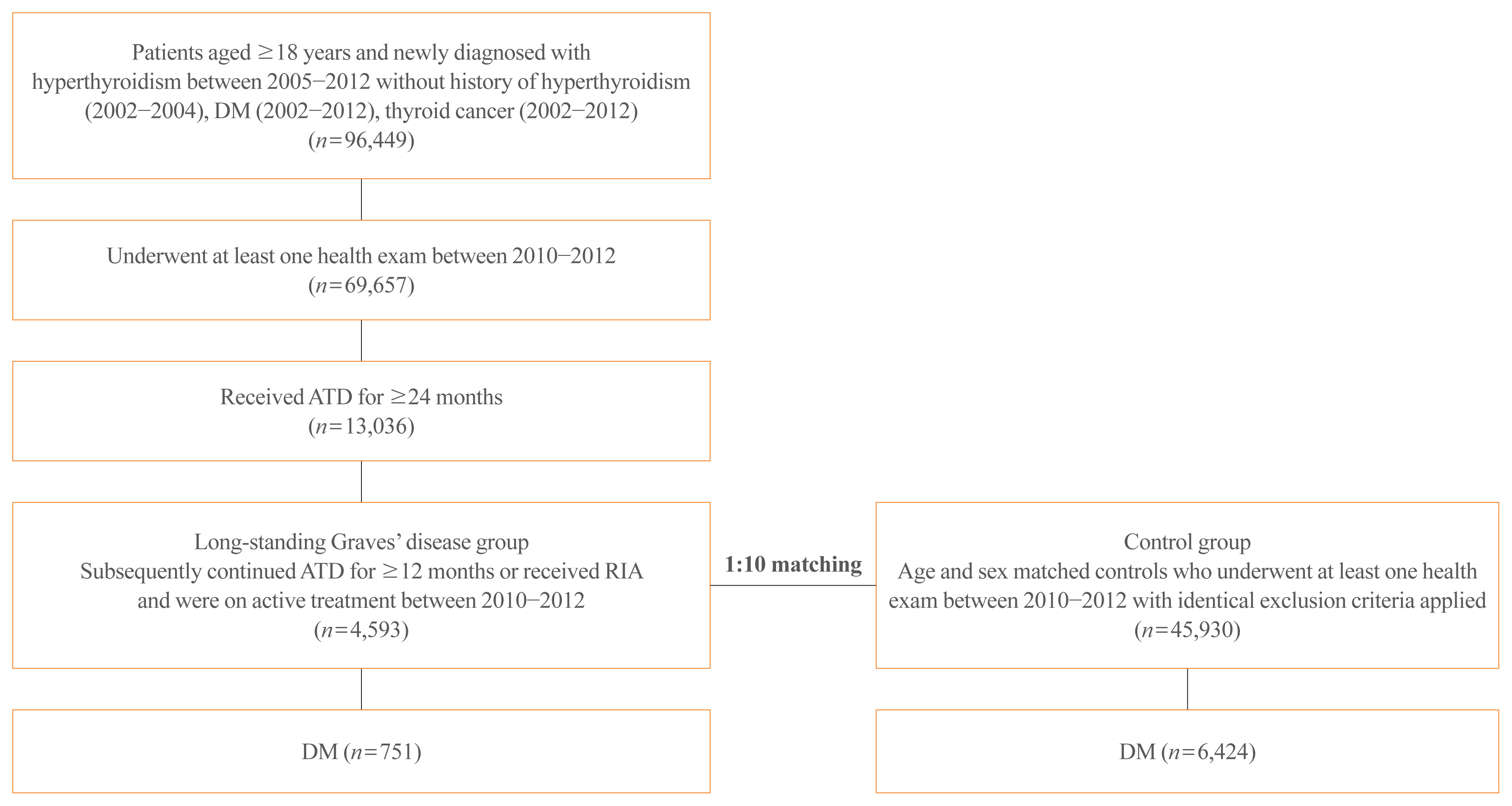
Big Data Articles (National Health Insurance Service Database) - Risk of Diabetes in Patients with Long-Standing Graves’ Disease: A Longitudinal Study
- Eyun Song, Min Ji Koo, Eunjin Noh, Soon Young Hwang, Min Jeong Park, Jung A Kim, Eun Roh, Kyung Mook Choi, Sei Hyun Baik, Geum Joon Cho, Hye Jin Yoo
- Endocrinol Metab. 2021;36(6):1277-1286. Published online December 16, 2021
- DOI: https://doi.org/10.3803/EnM.2021.1251
- 14,575 View
- 227 Download
- 15 Web of Science
- 16 Crossref
-
Abstract
PDFSupplementary MaterialPubReader ePub
- Background
The detrimental effects of excessive thyroid hormone on glucose metabolism have been widely investigated. However, the risk of diabetes in patients with long-standing hyperthyroidism, especially according to treatment modality, remains uncertain, with few longitudinal studies.
Methods
The risk of diabetes in patients with Graves’ disease treated with antithyroid drugs (ATDs) for longer than the conventional duration (≥2 years) was compared with that in age-and sex-matched controls. The risk was further compared according to subsequent treatment modalities after a 24-month course of ATD: continuation of ATD (ATD group) vs. radioactive iodine ablation (RIA) group.
Results
A total of 4,593 patients were included. Diabetes was diagnosed in 751 (16.3%) patients over a follow-up of 7.3 years. The hazard ratio (HR) for diabetes, after adjusting for various known risk factors, was 1.18 (95% confidence interval [CI], 1.10 to 1.28) in patients with hyperthyroidism. Among the treatment modality groups, the RIA group (n=102) had a higher risk of diabetes than the ATD group (n=4,491) with HR of 1.56 (95% CI, 1.01 to 2.42). Further, the risk of diabetes increased with an increase in the ATD treatment duration (P for trend=0.019).
Conclusion
The risk of diabetes was significantly higher in patients with long-standing Graves’ disease than in the general population, especially in patients who underwent RIA and prolonged ATD treatment. Special attention to hyperglycemia during follow-up along with effective control of hyperthyroidism may be necessary to reduce the risk of diabetes in these patients. -
Citations
Citations to this article as recorded by- Graves’ disease: review of disease characteristics, burden, and treatments
Lesley-Ann Miller-Wilson, Erin Mandal, Kylle M. Tollefsen, Sarah Ronnebaum, Sofie Norregaard, Julie Chen
Frontiers in Endocrinology.2026;[Epub] CrossRef - Graves’ Disease and the Risk of Type 2 Diabetes: A Korean Population-Based Study
Yoon Young Cho, Bongseong Kim, Sang-Man Jin, Chan-Hee Jung, Ji Oh Mok, Sun Wook Kim, Jae Hoon Chung, Kyung-Do Han, Tae Hyuk Kim
Thyroid®.2025; 35(1): 60. CrossRef - Diabetes mellitus secondary to endocrine diseases: a position statement of the working group of the club of the Italian society of endocrinology (SIE)-Nutrition hormones and metabolism
Luigi Barrea, Massimiliano Caprio, Sebastio Perrini, Elisabetta Camajani, Andrea Crafa, Elena Gangitano, Stefania Gorini, Laura Sciacca, Ludovica Verde, Manuela Albertelli, Diego Ferone, Francesco Giorgino, Annamaria Colao, Gianluca Aimaretti, Giovanna Mu
Journal of Endocrinological Investigation.2025; 48(8): 1739. CrossRef - The Effect of Metformin on Prolactin Concentration in Women with Hyperprolactinemia and Subclinical Hyperthyroidism
Robert Krysiak, Karolina Kowalcze, Bogusław Okopień
Neuroendocrinology.2025; 115(6-7): 553. CrossRef - Increased risk of multisystem comorbidities and disease trajectories following hyperthyroidism: evidence from the 0.5 million UK Biobank population
Qiuyuan Chen, Doudou Chen, Xinpan Wang, Yunhao Zheng, Longyao Zhang, Zaiming Li, Xiaoyu Wu, Qin Chen, Ruyang Zhang, Feng Chen, Tao Yang, Xuqin Zheng, Yongyue Wei
Endocrine Connections.2025;[Epub] CrossRef - Safety of non-standard regimen of systemic steroid therapy in patients with Graves’ orbitopathy: a single-centre experience
Nadia Sawicka-Gutaj, Dawid Gruszczyński, Natalia Zawalna, Kacper Nijakowski, Agnieszka Skiba, Mateusz Pochylski, Jerzy Sowiński, Marek Ruchała
Pharmacological Reports.2024; 76(1): 185. CrossRef - Increased risk of diabetes mellitus and hyperlipidemia in patients with differentiated thyroid cancer
Hwa Young Ahn, Jooyoung Lee, Jinmo Kang, Eun Kyung Lee
European Journal of Endocrinology.2024; 190(3): 248. CrossRef - Evaluation of the Dysregulation of Cholesterol and Glucose Levels in Graves' Disease Using Clinical Data Analysis
Zainab Razaq Kareem, Fatin Fadhel Al-Kazazz, Ahmed Mahdi Rheima, Ameer Radhi Sultan
Reports of Biochemistry and Molecular Biology.2024; 13(2): 159. CrossRef - Prevalencia de diabetes en personas con disfunción tiroidea
Juan J. Díez, Pedro Iglesias
Medicina Clínica.2023; 160(8): 333. CrossRef - Control of Thyroid Dysfunction in Spanish Population Registered in
the Primary Care Clinical Database: An Analysis of the Proportion of Patients
with Thyrotropin Values Outside the Reference Range
Juan J. Díez, Pedro Iglesias
Hormone and Metabolic Research.2023; 55(03): 184. CrossRef - Prevalence of thyroid dysfunction and its relationship to income level and employment status: a nationwide population-based study in Spain
Juan J. Díez, Pedro Iglesias
Hormones.2023; 22(2): 243. CrossRef - Prevalence of diabetes in people with thyroid dysfunction
Juan J. Díez, Pedro Iglesias
Medicina Clínica (English Edition).2023; 160(8): 333. CrossRef - Diabetes Mellitus Secondary to Endocrine Diseases: An Update of Diagnostic and Treatment Particularities
Mihaela Simona Popoviciu, Lorena Paduraru, Raluca Marinela Nutas, Alexandra Maria Ujoc, Galal Yahya, Kamel Metwally, Simona Cavalu
International Journal of Molecular Sciences.2023; 24(16): 12676. CrossRef - Thyroid Eye Disease and Its Association With Diabetes Mellitus: A Major Review
Roshmi Gupta, Pramila Kalra, Lakshmi B. Ramamurthy, Suryasnata Rath
Ophthalmic Plastic & Reconstructive Surgery.2023; 39(6S): S51. CrossRef - Metabolite Changes during the Transition from Hyperthyroidism to Euthyroidism in Patients with Graves’ Disease
Ho Yeop Lee, Byeong Chang Sim, Ha Thi Nga, Ji Sun Moon, Jingwen Tian, Nguyen Thi Linh, Sang Hyeon Ju, Dong Wook Choi, Daiki Setoyama, Hyon-Seung Yi
Endocrinology and Metabolism.2022; 37(6): 891. CrossRef - Diabetes and Hyperthyroidism: Is There a Causal Link?
Sang Yong Kim
Endocrinology and Metabolism.2021; 36(6): 1175. CrossRef
- Graves’ disease: review of disease characteristics, burden, and treatments
- Clinical Study
- Impact of the Dynamic Change of Metabolic Health Status on the Incident Type 2 Diabetes: A Nationwide Population-Based Cohort Study
- Jung A Kim, Da Hye Kim, Seon Mee Kim, Yong Gyu Park, Nan Hee Kim, Sei Hyun Baik, Kyung Mook Choi, Kyungdo Han, Hye Jin Yoo
- Endocrinol Metab. 2019;34(4):406-414. Published online December 23, 2019
- DOI: https://doi.org/10.3803/EnM.2019.34.4.406
- 11,916 View
- 100 Download
- 24 Web of Science
- 28 Crossref
-
Abstract
PDFSupplementary MaterialPubReader ePub
Background Metabolically healthy obese (MHO) is regarded as a transient concept. We examined the effect of the dynamic change of metabolic health status on the incidence of type 2 diabetes mellitus (T2DM) both in obese and normal weight individuals.
Methods We analyzed 3,479,514 metabolically healthy subjects aged over 20 years from the Korean National Health Screening Program, who underwent health examination between 2009 and 2010, with a follow-up after 4 years. The relative risk for T2DM incidence until the December 2017 was compared among the four groups: stable metabolically healthy normal weight (MHNW), unstable MHNW, stable MHO, and unstable MHO.
Results During the 4 years, 11.1% of subjects in the MHNW group, and 31.5% in the MHO group converted to a metabolically unhealthy phenotype. In the multivariate adjusted model, the unstable MHO group showed the highest risk of T2DM (hazard ratio [HR], 4.67; 95% confidence interval [CI], 4.58 to 4.77). The unstable MHNW group had a higher risk of T2DM than stable MHO group ([HR, 3.23; 95% CI, 3.16 to 3.30] vs. [HR, 1.81; 95% CI, 1.76 to 1.85]). The stable MHO group showed a higher risk of T2DM than the stable MHNW group. The influence of the transition into a metabolically unhealthy phenotype on T2DM incidence was greater in subjects with aged <65 years, women, and those with weight gain.
Conclusion Metabolically healthy phenotype was transient both in normal weight and obese individuals. Maintaining metabolic health was critical for the prevention of T2DM, irrespective of their baseline body mass index.
-
Citations
Citations to this article as recorded by- Association between albumin-bilirubin (ALBI) score and metabolically healthy obesity among US adults: findings from NHANES 2005–2018
Chenyi Ji, Fang Liu
BMC Endocrine Disorders.2026;[Epub] CrossRef - Metabolic health phenotypes and cardiovascular disease among U.S. adults with central obesity: Evidence from NHANES 2011– March 2020
David Kweku Aseda Donkor, Emmanuel Amoako Agyei, Samuel Prince Osei, Frederick Frimpong Opuni, Evelyn Gyau-Boakye, Maxwell Emmie, Adwoa Benyiwah Amoah, Sandra Agyenim Boateng, Dennis Dela Tsagli, Eunice Akomaning
Obesity Pillars.2026; 18: 100267. CrossRef - Dynamic Changes in Metabolic Syndrome Severity Score and Its Components with Risk of Type 2 Diabetes Mellitus: Insights from Joint Longitudinal and Survival Modeling
Safdar Masoumi, Ebrahim Hajizadeh, Farzad Eskandari, Davood Khalili
Metabolic Syndrome and Related Disorders.2026; 24(6): 258. CrossRef - Sex-stratified associations of TyG index and HOMA-IR changes with incident type 2 diabetes
Sojin Kim, Sujeong Shin, Yoosoo Chang, Eunju Sung, Jae-Heon Kang
Scientific Reports.2026;[Epub] CrossRef - Metabolic health, independent of body mass index, is associated with mortality risk in type 1 diabetes
Jung A Kim, Jimi Choi, Kyeong Jin Kim, Soo Myoung Shin, Young‐Eun Kim, Kyoung Jin Kim, Hee Young Kim, Nam Hoon Kim, Sin Gon Kim
Journal of Diabetes Investigation.2026;[Epub] CrossRef - Association of obesity phenotypes with risk of cardiovascular disease mortality: a prospective cohort study
Ruixue Song, Yanfeng Jiang, Jiaojiao Pang, Shuo Wu, Jingjing Ma, Ping Li, Xiaohui Wu, Feng Xu, Jiali Wang, Xingdong Chen, Yuguo Chen
BMC Public Health.2025;[Epub] CrossRef - Dynamic Changes in Metabolic Status Are Associated With Risk of Ocular Motor Cranial Nerve Palsies
Daye Diana Choi, Kyung-Ah Park, Kyungdo Han, Sei Yeul Oh
Journal of Neuro-Ophthalmology.2024; 44(3): 386. CrossRef - Metabolically healthy obese individuals are still at high risk for diabetes: Application of the marginal structural model
Hye Ah Lee, Hyesook Park
Diabetes, Obesity and Metabolism.2024; 26(2): 431. CrossRef - The prevalence of metabolically healthy obesity and its transition into the unhealthy state: A 5‐year follow‐up study
Amir Baniasad, Mohammad Javad Najafzadeh, Hamid Najafipour, Mohammad Hossein Gozashti
Clinical Obesity.2024;[Epub] CrossRef - When Being Lean Is Not Enough: The Metabolically Unhealthy Normal Weight Phenotype and Cardiometabolic Disease
Dahyun Park, Min-Jeong Shin, Faidon Magkos
CardioMetabolic Syndrome Journal.2024; 4(2): 57. CrossRef - Association of anthropometric parameters as a risk factor for development of diabetic retinopathy in patients with diabetes mellitus
Aditya Verma, Ashok Jha, Ahmed Roshdy Alagorie, Rishi Sharma
Eye.2023; 37(2): 303. CrossRef - From Metabolic Syndrome to Type 2 Diabetes in Youth
Dario Iafusco, Roberto Franceschi, Alice Maguolo, Salvatore Guercio Nuzio, Antonino Crinò, Maurizio Delvecchio, Lorenzo Iughetti, Claudio Maffeis, Valeria Calcaterra, Melania Manco
Children.2023; 10(3): 516. CrossRef - Assessment of Metabolic Syndrome Risk Based on Body Size Phenotype in Korean Adults: Analysis of Community-based Cohort Data
Ji Young Kim, Youngran Yang
Research in Community and Public Health Nursing.2023; 34: 158. CrossRef - Prevalence and factors related to the metabolically obese normalweight (MONW) phenotype: a review
Edyta Suliga, Martyna Głuszek-Osuch, Stanisław Głuszek
Medical Studies.2023; 39(1): 73. CrossRef - New metabolic health definition might not be a reliable predictor for diabetes in the nonobese Chinese population
Liying Li, Ziqiong Wang, Haiyan Ruan, Muxin Zhang, Linxia Zhou, Xin Wei, Ye Zhu, Jiafu Wei, Xiaoping Chen, Sen He
Diabetes Research and Clinical Practice.2022; 184: 109213. CrossRef - Metabolically healthy obesity: Is it really healthy for type 2 diabetes mellitus?
Qi Wu, Ming-Feng Xia, Xin Gao
World Journal of Diabetes.2022; 13(2): 70. CrossRef - Metabolically obese phenotype and its dynamic change are associated with increased carotid intima-media thickness: Results from a cohort study
Liping Yang, Xue Li, Li Wang, Shan Xu, Yanmei Lou, Fulan Hu
Nutrition, Metabolism and Cardiovascular Diseases.2022; 32(9): 2238. CrossRef - Obesity Metabolic Phenotype, Changes in Time and Risk of Diabetes Mellitus in an Observational Prospective Study on General Population
Chan Yang, Xiaowei Liu, Yuanyuan Dang, Juan Li, Jingyun Jing, Di Tian, Jiangwei Qiu, Jiaxing Zhang, Ni Yan, Xiuying Liu, Yi Zhao, Yuhong Zhang
International Journal of Public Health.2022;[Epub] CrossRef - Implications of metabolic health status and obesity on the risk of kidney cancer: A nationwide population-based cohort study
Yun Kyung Cho, Hwi Seung Kim, Joong-Yeol Park, Woo Je Lee, Ye-Jee Kim, Chang Hee Jung
Frontiers in Endocrinology.2022;[Epub] CrossRef - Metabolic health is a determining factor for incident colorectal cancer in the obese population: A nationwide population‐based cohort study
Yun Kyung Cho, Jiwoo Lee, Hwi Seung Kim, Joong‐Yeol Park, Woo Je Lee, Ye‐Jee Kim, Chang Hee Jung
Cancer Medicine.2021; 10(1): 220. CrossRef - Cumulative Exposure to Metabolic Syndrome Components and the Risk of Dementia: A Nationwide Population-Based Study
Yunjung Cho, Kyungdo Han, Da Hye Kim, Yong-Moon Park, Kun-Ho Yoon, Mee Kyoung Kim, Seung-Hwan Lee
Endocrinology and Metabolism.2021; 36(2): 424. CrossRef - Excessive Intake of High-Fructose Corn Syrup Drinks Induces Impaired Glucose Tolerance
Hidemi Hattori, Yuma Hanai, Yuto Oshima, Hiroaki Kataoka, Nozomu Eto
Biomedicines.2021; 9(5): 541. CrossRef - The risk of Alzheimer’s disease according to dynamic changes in metabolic health and obesity: a nationwide population-based cohort study
Yun Kyung Cho, Jiwoo Lee, Hwi Seung Kim, Joong-Yeol Park, Woo Je Lee, Ye-Jee Kim, Chang Hee Jung
Aging.2021; 13(13): 16974. CrossRef - Metabolically healthy obesity: predictors of transformation to unhealthy phenotype in St Petersburg population (according to the ESSE-RF study)
M. A. Boyarinova, O. P. Rotar, A. M. Erina, N. A. Paskar, A. S. Alieva, E. V. Moguchaia, E. P. Kolesova, A. O. Konradi
"Arterial’naya Gipertenziya" ("Arterial Hypertension").2021; 27(3): 279. CrossRef - Physiological and Lifestyle Traits of Metabolic Dysfunction in the Absence of Obesity
Hanna Bjørk Klitgaard, Jesper Hoffmann Kilbak, Erica Arhnung Nozawa, Ann V. Seidel, Faidon Magkos
Current Diabetes Reports.2020;[Epub] CrossRef - Exploring Therapeutic Targets to Reverse or Prevent the Transition from Metabolically Healthy to Unhealthy Obesity
Tenzin D. Dagpo, Christopher J. Nolan, Viviane Delghingaro-Augusto
Cells.2020; 9(7): 1596. CrossRef - Prepregnancy smoking and the risk of gestational diabetes requiring insulin therapy
Mee Kyoung Kim, Kyungdo Han, Sang Youn You, Hyuk-Sang Kwon, Kun-Ho Yoon, Seung-Hwan Lee
Scientific Reports.2020;[Epub] CrossRef - Obesity with and without type 2 diabetes: are there differences in obesity history, lifestyle factors or concomitant pathology?
E. A. Shestakova, Yu. I. Yashkov, O. Yu. Rebrova, M. V. Kats, M. D. Samsonova, I. I. Dedov
Obesity and metabolism.2020; 17(4): 332. CrossRef
- Association between albumin-bilirubin (ALBI) score and metabolically healthy obesity among US adults: findings from NHANES 2005–2018
Case Report
- A Case of Bilateral Macronodular Adrenocortical Hyperplasia.
- Yoon Sang Choi, Soo Mi Kim, Shin Gon Kim, Ie Byung Park, Sei Hyun Baik, Dong Seop Choi, Seung Woon Rha, Dong Hyun Shin
- J Korean Endocr Soc. 1996;11(4):523-530. Published online November 7, 2019
- 2,542 View
- 43 Download
-
Abstract
PDF
- Cushing's syndrome associated with nodular adrenal glands will be divided into four main categories: adrenal adenoma, adrenal carcinoma, primary pigmented nodular adrenal dysplasia (PPNAD) and macronodular adrenal hyperplasia(MAH). The term macronodular adrenal hyperplasia is restricted to the presence of multiple nodules visible to the naked eye, ranging in size from 0.5 to 7.0 cm. We report a case of Cushings syndrome caused by bilateral macronodular adrenal hyperplasia (MAH). A 45-year-old man presented with Cushingoid features, hypertension and diabetes mellitus. Urine free cortisol was 449.9 mmol/day(27-276) and were not suppressed after administration of low-dose and high-dose dexamethasone. Plasma ACTH was very low(1.87 pmol/L(18)) and was not stimulated by administration of ovine CRH. In abdominal CT, both adrenal glands were markedly enlarged and nodular in appearance. Pituitary MRI showed no abnormal finding. Bilateral adrenalectomy was done. Histologic examination revealed multiple nodules and internodular hyperplasia. This case and other reports suggested that because of variable biochemical, radiologic and pathologic findings, macronodular adrenal hyperplasia represents a heterogeneous group of patients with varying degrees of adrenal autonomy.
Original Article
- Camprison of Diagnostic and Therapeutic scans in Patients with Differentiated Thyroid Cancer.
- Yoon Sang Choi, Soo Mi Kim, Shin Gon Kim, Don Hyun Shin, Ie Byung Park, Sei Hyun Baik, Dong Seop Choi, Jae Myung Yu
- J Korean Endocr Soc. 1996;11(4):431-437. Published online November 7, 2019
- 2,212 View
- 19 Download
-
Abstract
PDF
- Background
Whole body scan using 131-iodine is performed to detect local recurrence or metastasis after thyroidectorny in differenciated thyroid cancer patients. The sensitivity of this procedure is related to the dose of radiopharmaceutical administered. It was reported that 131I posttreatment whole body scan demonstrate foci of tracer uptake not previously observed in diagnostic scan in 10~30% of cases. Posttreatment scans were most likely to reveal new foci in young patients(<45) and patients who had previously received radioactive iodine therapy. Method: We observed the frequency of discordant posttreatment scans and analysed the clicnical significance in 33 differenciated thyroid cancer patients who were admitted for radioiodine ablation from June, 1995 to April, 1996. Results: In 7 cases(21.2%), post treatment scan demonstrated cme or more foci of uptake and revealed less sites of uptake than diagnostic scan in 3 cases(9.1%). In one case with elevated thyroglobulin level and negative diagnostic scan, post treatment scan revealed new uptake sites with thyroid bed and cervical 1ymph node. The sites of discordant uptake were cervical lymph nodes in 4 cases and rnediastinal lymph node in one case, lung in one case, thyroid bed and cervical lymph nodes in one case, 3 cases of 7 pts(43%), demonstrated ane or more foci of uptake in post treatment scan, had history of previous radioiodine treatent. Conclusion: Post treatment scan confirmed uptake into remnant and metaststic tissues identified on the corresponding low dose diagnostic scans. Scanning after high dose radioiodine treatment frequently demonstrated one or more foci of uptake, especially in patients with previous radioiodine treatment, which were not visualized on the diagnostic low dose scan. Treatment scan may be useful for detection of remnant tissue or metastatic lesion in patients with elevated thyroglobulin and negative diagnostic scan.
Case Report
- A Case of Isolated ACTH Deficiency.
- Sang Jin Kim, Kyung Mook Choi, Sei Hyun Baik, Dong Seop Choi
- J Korean Endocr Soc. 1995;10(4):445-450. Published online November 7, 2019
- 1,907 View
- 25 Download
-
Abstract
PDF
- solated ACTH deficiency is a very uncommon cause of hypoadrenocorticism, with less than 200 cases reported in the literatures. The clinical presentation can be similar to that of primary adrenal insufficiency, but there is a greater tendency for hypoglycemia and absence of hyperpigmentation. The diagnosis is established by demonstrating hypocortisolism with undetectable serum levels of ACTH, normal adrenal responsiveness to prolonged ACTH infusion, and an absent ACTH response to insulin-induced hypoglycemia. Other endocrine function is normal.We experienced a case of isolated ACTH deficiency in 34 years old female who was admitted due to fever and drowsy mentality.So we present this case with a review of literatures.
Original Articles
- Changes in Bone Mineral Density in Patients with Sheehan's Syndrome.
- Jae Myung Yoo, Sang Jin Kim, Kyung Mook Choi, Sei Hyun Baik, Dong Seop Choi, Eun Jong Lee, Yong Hyun Kim
- J Korean Endocr Soc. 1994;9(1):10-17. Published online November 6, 2019
- 2,529 View
- 42 Download
-
Abstract
PDF
- Osteoporosis is a common clinical problem with high risk of fractures in old age, especially postmenopausal women.Secondary causes of osteoporosis can be identified in 20% of women and 40% of men with vertebral fractures. One of the causes of secondary osteoporosis is endocrine disease such as hypogonadism, ovarian agenesis, hyperadrenocorticism, hyperthyroidism, hyperparathyroidism and diabetes mellitus. Patients with Sheehan's syndrome have deficiency of multiple hormones which may cause bone loss.To determine changes in the bone mineral density in women with Sheehan's syndrome and to compare clinical and biochemical characteristics between the patients with osteoporosis and the patients without osteoporosis, we measured the bone mineral density(BMD) of the lumber spine and midradius by dual energy X-ray absortiometry(DEXA) and the serum levels of estrogen and osteocalcin in 11 patients of Sheehan's syndrome.The results were as follows;1) The BMDs of the lumbar spine were significantly decreased in patients with Sheehan's syndrome when compared with those of age-matched control.2) The prevalence of osteoporosis in patients with Sheehan's syndromes was 55%. Between the patients with osteoporosis and the patients without osteoporosis, there were no difference in the onset age of amenorrhea, the duration of amenorrhea, and the serum levels of osteocalcin and alkaline phosphatase.3) Serum estradiol levels were decreased uniformly in the patients with Sheehan's syndrome except three patients with estrogen replacement, but the concentration of estradiol was not correlated with the degree of the decrease in bone mass.In conclusion, the patients with Sheehan's syndrome have an increased prevalence of osteoporosis. But the effect of each anterior pituitary hormone deficiency on bone loss should be clarified in the futher prospective study.
- A Clinical Study of 11 Cases of Adrenal Ineidentaloma.
- Jae Myung Yoo, Sang Jin Kim, Kyung Mook Choi, Sei Hyun Baik, Dong Seop Choi, Yong Hyun Kim, Eun Jong Lee
- J Korean Endocr Soc. 1994;9(4):358-365. Published online November 6, 2019
- 1,960 View
- 20 Download
-
Abstract
PDF
- With the wide application of ultrasonography and CT scanning, the incidental finding of a radiologic abnormality, apparently adrenal origin, has presented a problem for clinical management. The prevalence of these clinically silent tumors has been reported as 0.6 to 1.3% of upper abdominal CT scans performed for other reasons.Once identified, an adrenal lesion must characterized as to its functional status and malignant potential. A thorough approach that initially excludes biochemical hypersecretion, then considers characteristics of anatomy and the functional nature of an adrenal mass, will allow a rational and cost-effective evaluation and management of these lesions.We present out experience of eleven adrenal incidentalomas with a review of literatures.
- Effects of Vildagliptin or Pioglitazone on Glycemic Variability and Oxidative Stress in Patients with Type 2 Diabetes Inadequately Controlled with Metformin Monotherapy: A 16-Week, Randomised, Open Label, Pilot Study
- Nam Hoon Kim, Dong-Lim Kim, Kyeong Jin Kim, Nan Hee Kim, Kyung Mook Choi, Sei Hyun Baik, Sin Gon Kim
- Endocrinol Metab. 2017;32(2):241-247. Published online June 23, 2017
- DOI: https://doi.org/10.3803/EnM.2017.32.2.241
- 9,873 View
- 111 Download
- 29 Web of Science
- 30 Crossref
-
Abstract
PDFPubReader
Background Glycemic variability is associated with the development of diabetic complications through the activation of oxidative stress. This study aimed to evaluate the effects of a dipeptidyl peptidase 4 inhibitor, vildagliptin, or a thiazolidinedione, pioglitazone, on glycemic variability and oxidative stress in patients with type 2 diabetes.
Methods In this open label, randomised, active-controlled, pilot trial, individuals who were inadequately controlled with metformin monotherapy were assigned to either vildagliptin (50 mg twice daily,
n =17) or pioglitazone (15 mg once daily,n =14) treatment groups for 16 weeks. Glycemic variability was assessed by calculating the mean amplitude of glycemic excursions (MAGE), which was obtained from continuous glucose monitoring. Urinary 8-iso prostaglandin F2α, serum oxidised low density lipoprotein, and high-sensitivity C-reactive protein were used as markers of oxidative stress or inflammation.Results Both vildagliptin and pioglitazone significantly reduced glycated hemoglobin and mean plasma glucose levels during the 16-week treatment. Vildagliptin also significantly reduced the MAGE (from 93.8±38.0 to 70.8±19.2 mg/dL,
P =0.046), and mean standard deviation of 24 hours glucose (from 38±17.3 to 27.7±6.9,P =0.026); however, pioglitazone did not, although the magnitude of decline was similar in both groups. Markers of oxidative stress or inflammation including urinary 8-iso prostaglandin F2α did not change after treatment in both groups.Conclusion In this 16-week treatment trial, vildagliptin, but not pioglitazone, reduced glycemic variability in individuals with type 2 diabetes who was inadequately controlled with metformin monotherapy, although a reduction of oxidative stress markers was not observed.
-
Citations
Citations to this article as recorded by- Clinical management of common toxicities with inhibitors targeting the PI3K/AKT/mTOR pathway in breast cancer
K.L. Jhaveri, N.M. Iyengar, N.C. Turner, H.S. Rugo, J. O’Shaughnessy, C.H. Barrios, G. Curigliano, F. André, S.-A. Im, M.D. Goncalves, M.E. Lacouture, P.A. Fasching, R. Leung
ESMO Open.2026; 11(2): 105936. CrossRef - Dietary effect on glucose homeostasis is modulated by a loss-of-function variant in the sucrase-isomaltase gene: a randomised, dietary crossover intervention in Inuit
Ninna Senftleber, Marie Mathilde B. Christensen, Bendix Carstensen, Frederik Filip Stæger, Michael B. Frøst, Matthew P. Gillum, Torben Hansen, Marit E. Jørgensen
Diabetologia.2026; 69(7): 2015. CrossRef - Investigating the Genotoxic Potential of Pioglitazone in Hyperglycemic Conditions Using Chromosome Aberration and GADD45α Markers in TK6 Cells
Darshan T. Valani, Dolatsinh B. Zala, Chetan K. Kajavadara, Laxit K. Bhatt, Hiren M. Patel, Rajesh Sundar, Mukul R. Jain
Journal of Biochemical and Molecular Toxicology.2025;[Epub] CrossRef - The effects of vildagliptin on glycemic variability in patients with type 2 diabetes on premixed insulin therapy
Deyue Kong, Ziyang Shen, Lanlan Jiang, Xiaojing Xie, Rengna Yan, Ting Jing, Yun Hu, Jianhua Ma
Frontiers in Endocrinology.2025;[Epub] CrossRef - Vildagliptin Sustained-release and Dapagliflozin Fixed-dose Combination in the Management of Type 2 Diabetes Mellitus: A Comprehensive Review
Subhajyoti Ghosh, Mainak Mukhopadhyay, Mayur Agrawal, Mohammad Shahid, Mahak Lamba, Sudeep Jain, Ashish Prasad, Amit Gupta, Rohan Kesarkar, Sona Warrier, Abhijeet Pednekar
International Journal of Diabetes and Technology.2024; 3(2): 49. CrossRef - Glycemic Variability in Pancreatogenic Diabetes Mellitus: characteristics, Risks, Potential Mechanisms, and Treatment Possibilities
Yuyan Sun, Bing Lu, Yuanwen Hu, Yingqi Lv, Shao Zhong
International Journal of General Medicine.2024; Volume 17: 4297. CrossRef - Clinical implications and pharmacological considerations of glycemic variability in patients with type 2 diabetes mellitus
Alanood A. Howsawi, Manal M. Alem
Scientific Reports.2024;[Epub] CrossRef - What is Glycaemic Variability and which Pharmacological Treatment Options are Effective? A Narrative Review
Juan Miguel Huertas Cañas, Maria Alejandra Gomez Gutierrez, Andres Bedoya Ossa
European Endocrinology.2023; 19(2): 4. CrossRef - Glycemic Variability, Glycated Hemoglobin, and Cardiovascular Complications: Still a Dilemma in Clinical Practice
Antonio Ceriello, Ali A. Rizvi, Manfredi Rizzo
Advances in Therapy.2022; 39(1): 1. CrossRef - Contrasting Three Non-hypoglycemic Antidiabetic Drug Effects on Glycemic Control in Newly Diagnosed Type II Diabetes Mellitus: An Experimental Study
Abdulhamza Hmood, Mohammed Almasoody, Hameed Hussein Al-Jameel
Open Access Macedonian Journal of Medical Sciences.2022; 10(B): 506. CrossRef - Hypoglycemic agents and glycemic variability in individuals with type 2 diabetes: A systematic review and network meta-analysis
SuA Oh, Sujata Purja, Hocheol Shin, Minji Kim, Eunyoung Kim
Diabetes and Vascular Disease Research.2022;[Epub] CrossRef - Influence of dipeptidyl peptidase-4 inhibitors on glycemic variability in patients with type 2 diabetes: A meta-analysis of randomized controlled trials
Shangyu Chai, Ruya Zhang, Ye Zhang, Richard David Carr, Yiman Zheng, Swapnil Rajpathak, Miao Yu
Frontiers in Endocrinology.2022;[Epub] CrossRef - Comparison of Efficacy of Glimepiride, Alogliptin, and Alogliptin-Pioglitazone as the Initial Periods of Therapy in Patients with Poorly Controlled Type 2 Diabetes Mellitus: An Open-Label, Multicenter, Randomized, Controlled Study
Hae Jin Kim, In Kyung Jeong, Kyu Yeon Hur, Soo-Kyung Kim, Jung Hyun Noh, Sung Wan Chun, Eun Seok Kang, Eun-Jung Rhee, Sung Hee Choi
Diabetes & Metabolism Journal.2022; 46(5): 689. CrossRef - Effect of low dose allopurinol on glycemic control and glycemic variability in patients with type 2 diabetes mellitus: A cross-sectional study
Manal M. Alem
Heliyon.2022; 8(11): e11549. CrossRef - Effect of Hydroxychloroquine on Glycemic Variability in Type 2 Diabetes Patients Uncontrolled on Glimepiride and Metformin Therapy
Rajesh Rajput, Suyasha Saini, Siddhant Rajput, Parankush Upadhyay
Indian Journal of Endocrinology and Metabolism.2022; 26(6): 537. CrossRef - Effect of Dapagliflozin as an Add-on Therapy to Insulin on the Glycemic Variability in Subjects with Type 2 Diabetes Mellitus (DIVE): A Multicenter, Placebo-Controlled, Double-Blind, Randomized Study
Seung-Hwan Lee, Kyung-Wan Min, Byung-Wan Lee, In-Kyung Jeong, Soon-Jib Yoo, Hyuk-Sang Kwon, Yoon-Hee Choi, Kun-Ho Yoon
Diabetes & Metabolism Journal.2021; 45(3): 339. CrossRef - Comprehensive elaboration of glycemic variability in diabetic macrovascular and microvascular complications
Bao Sun, Zhiying Luo, Jiecan Zhou
Cardiovascular Diabetology.2021;[Epub] CrossRef - CGMS and Glycemic Variability, Relevance in Clinical Research to Evaluate Interventions in T2D, a Literature Review
Anne-Esther Breyton, Stéphanie Lambert-Porcheron, Martine Laville, Sophie Vinoy, Julie-Anne Nazare
Frontiers in Endocrinology.2021;[Epub] CrossRef - Efficacy and safety profile of sitagliptin, vildagliptin, and metformin in newly diagnosed type 2 diabetic subjects
Sahar Hossam Elhini, Amal K. Hussien, Ahmed Abd Elsamie Omran, Asmaa A. Elsayed, Haitham saeed
Clinical and Experimental Pharmacology and Physiology.2021; 48(12): 1589. CrossRef - Vildagliptin ameliorates renal injury in type 2 diabetic rats by suppressing oxidative stress
Fariba Aghahoseini, Alireza Alihemmati, Leila Hosseini, Reza Badalzadeh
Journal of Diabetes & Metabolic Disorders.2020; 19(2): 701. CrossRef - Small changes in glucose variability induced by low and high glycemic index diets are not associated with changes in β-cell function in adults with pre-diabetes
Kristina M. Utzschneider, Tonya N. Johnson, Kara L. Breymeyer, Lisa Bettcher, Daniel Raftery, Katherine M. Newton, Marian L. Neuhouser
Journal of Diabetes and its Complications.2020; 34(8): 107586. CrossRef - Comparison of the effects of gemigliptin and dapagliflozin on glycaemic variability in type 2 diabetes: A randomized, open‐label, active‐controlled, 12‐week study (STABLE II study)
Soo Heon Kwak, You‐Cheol Hwang, Jong Chul Won, Ji Cheol Bae, Hyun Jin Kim, Sunghwan Suh, Eun Young Lee, Subin Lee, Sang‐Yong Kim, Jae Hyeon Kim
Diabetes, Obesity and Metabolism.2020; 22(2): 173. CrossRef - Glycemic variability: adverse clinical outcomes and how to improve it?
Zheng Zhou, Bao Sun, Shiqiong Huang, Chunsheng Zhu, Meng Bian
Cardiovascular Diabetology.2020;[Epub] CrossRef - Anti-inflammatory properties of antidiabetic drugs: A “promised land” in the COVID-19 era?
Niki Katsiki, Ele Ferrannini
Journal of Diabetes and its Complications.2020; 34(12): 107723. CrossRef - Impact of long-term glucose variability on coronary atherosclerosis progression in patients with type 2 diabetes: a 2.3 year follow-up study
Suhua Li, Xixiang Tang, Yanting Luo, Bingyuan Wu, Zhuoshan Huang, Zexiong Li, Long Peng, Yesheng Ling, Jieming Zhu, Junlin Zhong, Jinlai Liu, Yanming Chen
Cardiovascular Diabetology.2020;[Epub] CrossRef - Visit-to-visit fasting plasma glucose variability is an important risk factor for long-term changes in left cardiac structure and function in patients with type 2 diabetes
Xixiang Tang, Junlin Zhong, Hui Zhang, Yanting Luo, Xing Liu, Long Peng, Yanling Zhang, Xiaoxian Qian, Boxiong Jiang, Jinlai Liu, Suhua Li, Yanming Chen
Cardiovascular Diabetology.2019;[Epub] CrossRef - Effect of dipeptidyl-peptidase-4 inhibitors on C-reactive protein in patients with type 2 diabetes: a systematic review and meta-analysis
Xin Liu, Peng Men, Bo Wang, Gaojun Cai, Zhigang Zhao
Lipids in Health and Disease.2019;[Epub] CrossRef - Efficacy and Safety of Pioglitazone Monotherapy in Type 2 Diabetes Mellitus: A Systematic Review and Meta-Analysis of Randomised Controlled Trials
Fahmida Alam, Md. Asiful Islam, Mafauzy Mohamed, Imran Ahmad, Mohammad Amjad Kamal, Richard Donnelly, Iskandar Idris, Siew Hua Gan
Scientific Reports.2019;[Epub] CrossRef - Effect of DPP-IV Inhibitors on Glycemic Variability in Patients with T2DM: A Systematic Review and Meta-Analysis
Subin Lee, Heeyoung Lee, Yoonhye Kim, EunYoung Kim
Scientific Reports.2019;[Epub] CrossRef - Glycemic Variability: How to Measure and Its Clinical Implication for Type 2 Diabetes
Guillermo E. Umpierrez, Boris P. Kovatchev
The American Journal of the Medical Sciences.2018; 356(6): 518. CrossRef
- Clinical management of common toxicities with inhibitors targeting the PI3K/AKT/mTOR pathway in breast cancer
Case Report
- A Case of Multiple Osteoporotic Compression Fractures in Young Man with Budd-Chiari Syndrome.
- Sun Hwa Kim, Tae Un Yang, Byeong Kwang Choi, Hye Jin Yoo, Ji A Seo, Kyung Mook Choi, Nan Hee Kim, Sin Gon Kim, Sei Hyun Baik, Dong Seop Choi, Hae Yoon Choi
- Endocrinol Metab. 2012;27(4):334-339. Published online December 20, 2012
- DOI: https://doi.org/10.3803/EnM.2012.27.4.334
- 3,449 View
- 32 Download
-
Abstract
PDF
- Osteoporosis in young men is extremely rare. In this report, we demonstrate a rare case of multiple vertebral fractures discovered in a young man with Budd-Chiari syndrome without prior history of trauma. A 29-year-old man was diagnosed as Budd-Chiari syndrome 12 years ago and underwent a mesocaval shunt to relieve the hepatic vein obstruction and was on warfarin therapy. He suffered from low back pain and it was not relieved by analgesics. A T-L spine X-ray revealed multiple compression fractures and the z-score at lumbar spine was -3.7 which is below the expected range for that age. The patient was treated with calcium, vitamin D and bisphosphonate, and showed clinical improvement. This case highlights the importance of the investigation for secondary osteoporosis in young adults with an underlying disease that alters bone metabolism.
Original Article
- Thyroid Dysfunction of North Korean Women Living in South Korea, Focusing on Subclinical Hypothyroidism.
- Joo Hyung Kim, Sol Ah Park, Nam Hoon Kim, Jae Hee Ahn, Yoon Jung Kim, Myongjin Cho, Yoon Jung Lee, Hye Jin Yoo, Hee Young Kim, Ji A Seo, Nan Hee Kim, Kyung Mook Choi, Sei Hyun Baik, Dong Seop Choi, Sin Gon Kim
- Endocrinol Metab. 2012;27(3):200-207. Published online September 19, 2012
- DOI: https://doi.org/10.3803/EnM.2012.27.3.200
- 10,290 View
- 32 Download
- 2 Crossref
-
Abstract
PDF
- BACKGROUND
Thyroid function depends on ethnic and environmental factors. North Korean refugees have the same genetic background as South Koreans, but they have been exposed to different environments. This study examines the prevalence and pattern of thyroid disorders in North Korean women living in South Korea, focusing on subclinical hypothyroidism (SCH). METHODS: The intended sample was a total of 327 North Korean women residing in Seoul. Health questionnaires and medical examinations, including serum thyrotropin (thyroid stimulating hormone, TSH), free thyroxine, and thyroid autoantibodies, were conducted. RESULTS: The prevalence of SCH was 9.4%. In logistic regression analysis, smoking, menopause, length of stay in South Korea, body mass index, history of thyroid disease, and metabolic syndrome were not associated with the risk of SCH. Whereas, the positivity of autoantibodies were associated with a high risk for SCH (odds ratio [OR], 4.840; 95% confidence interval [CI], 1.80-13.017; P = 0.002), and age was associated with a low risk for SCH (OR, 0.94; 95% CI, 0.888-0.994; P = 0.031). The serum TSH levels also decreased with increasing age, and in particular, there was significant difference between 30-39 years, and over 60 years (2.33 +/- 1.51 microIU/mL vs. 1.54 +/- 0.73 microIU/mL, P = 0.028). CONCLUSION: In North Korean women, the positivity of autoantibodies was associated with a high risk for SCH. But interestingly, a younger age was associated with a high risk for SCH. Considering that they suffered from severe famine at the period of growth, and this led to malnutrition, their thyroid dysfunction might be associated with the peculiar environment that they experienced. -
Citations
Citations to this article as recorded by- Systematic review of evidence on public health in the Democratic People’s Republic of Korea
John J Park, Ah-Young Lim, Hyung-Soon Ahn, Andrew I Kim, Soyoung Choi, David HW Oh, Owen Lee-Park, Sharon Y Kim, Sun Jae Jung, Jesse B Bump, Rifat Atun, Hee Young Shin, Kee B Park
BMJ Global Health.2019; 4(2): e001133. CrossRef - Environmental Factors and Thyroid Dysfunction
Hyun-Kyung Chung
Endocrinology and Metabolism.2012; 27(3): 191. CrossRef
- Systematic review of evidence on public health in the Democratic People’s Republic of Korea
Case Reports
- Hyperprolactinemia-Associated Breast Uptake of Radioiodine Following 131I Postablation Scan in Differentiated Thyroid Cancer.
- Jae Hee Ahn, Sun Young Kim, Ye Ji Kim, Suk Young Lee, Jae Hyoung Lee, Seung Hun Kang, Ho Cheol Hong, Sae Jeong Yang, Hye Jin Yoo, Ji A Seo, Sin Gon Kim, Nan Hee Kim, Kyung Mook Choi, Sei Hyun Baik, Dong Seop Choi, Hae Yoon Choi
- Endocrinol Metab. 2011;26(4):345-347. Published online December 1, 2011
- DOI: https://doi.org/10.3803/EnM.2011.26.4.345
- 6,309 View
- 23 Download
- 1 Crossref
-
Abstract
PDF
- Scanning with whole-body 131I scintigraphy after surgery has been a valuable diagnostic modality in the surveillance of patients with differentiated thyroid cancer. Radioiodine uptake is rarely observed in non-lactating breast tissue, which mimics thyroid cancer metastasis. We now report a case of a 45-year-old female thyroid cancer patient who underwent radioiodine therapy, and in whom breast uptake of radioiodine was observed on a post-therapy whole body scan. Her serum prolactin level was elevated to 328 ng/mL at the time of the radioiodine uptake, and the hyperprolactinemia was induced by her antipsychotic medications. Six months after she discontinued that medication, her serum prolactin level was normalized to 12.6 ng/mL and breast uptake of iodine was no longer present in a follow-up whole body scan.
-
Citations
Citations to this article as recorded by- Incidental Findings of Intense Radioiodine Uptake in Struma Ovarii and Bilateral Nonlactating Breasts Simultaneously on Postablation 131I SPECT/CT for Papillary Thyroid Cancer
Hye-kyung Shim, Mi Ra Kim
Nuclear Medicine and Molecular Imaging.2016; 50(4): 353. CrossRef
- Incidental Findings of Intense Radioiodine Uptake in Struma Ovarii and Bilateral Nonlactating Breasts Simultaneously on Postablation 131I SPECT/CT for Papillary Thyroid Cancer
- Successful Localization of Distant Metastasis in Parathyroid Carcinoma Using Intraoperative Parathyroid Hormone Assay.
- Ho Cheol Hong, Sun Won Kim, Tae Hyung Kim, In Hye Cha, Jae Hee Ahn, Hye Jin Yoo, Hee Young Kim, Ji A Seo, Hyun Koo Kim, Sin Gon Kim, Nan Hee Kim, Kyung Mook Choi, Jae Bok Lee, Sei Hyun Baik, Dong Seop Choi
- Endocrinol Metab. 2011;26(1):92-96. Published online March 1, 2011
- DOI: https://doi.org/10.3803/EnM.2011.26.1.92
- 3,899 View
- 24 Download
- 1 Crossref
-
Abstract
PDF
- Intra-operative parathyroid hormone (IOPTH) assay is a useful tool to confirm complete excision of all hyper-functioning parathyroid gland tissue. In this report, we describe a case with successful localization of distant metastasis in a patient with parathyroid carcinoma using the IOPTH assay. A 53-year-old man presented to our clinic with a serum calcium level of 11.8 mg/dL and an intact PTH level of 233.3 pg/mL. He had been treated for parathyroid carcinoma eleven years ago. Two suspected metastatic lesions were detected on the chest computed tomography. Due to the vastly different surgical field necessary to excise each lesion, we preferentially removed only one lesion and we monitored the other remaining suspected lesion without resection via IOPTH assay. Six months later, the patient's serum calcium and intact PTH levels remained within their normal ranges. To the best of our knowledge, this is the first case to effectively utilize IOPTH assay for the management of metastatic parathyroid carcinoma.
-
Citations
Citations to this article as recorded by- The association of abdominal obesity, obesity and parathyroid hormone in Korean adults (aged≥50 years): The Korea National Health and Nutrition Survey, 2011
Kyu Su Lee, Yo Sang Yoon, Hyun Yoon
Journal of the Korea Academia-Industrial cooperation Society.2015; 16(6): 3882. CrossRef
- The association of abdominal obesity, obesity and parathyroid hormone in Korean adults (aged≥50 years): The Korea National Health and Nutrition Survey, 2011
- A Case of Recurrent Ectopic Parathyroid Adenoma Developed 22 Years after the Initial Parathyroidectomy.
- Yoon Jung Kim, Ji A Seo, Ji Mi Moon, Young Jin Seo, Hae Yoon Choi, Hye Sook Kim, Sin Gon Kim, Kyeung mook Choi, Sei Hyun Baik, Dong Seop Choi, Nan Hee Kim
- J Korean Endocr Soc. 2009;24(4):260-264. Published online December 1, 2009
- DOI: https://doi.org/10.3803/jkes.2009.24.4.260
- 3,668 View
- 29 Download
-
Abstract
PDF
- Persistent or recurrent primary hyperparathyroidism after initial parathyroid surgery occurs at rates of 1.5~10%. A single missed parathyroid adenoma accounts for the majority of persistent hyperparathyroidism, whereas metachronous parathyroid adenoma is a rare cause of recurrent hypercalcemia. We report a case of a 39-year-old female who presented with recurrent pancreatitis. She had symptoms of hyperparathyroidism such as hypercalcemia, hypophosphatemia, hypercalciuria, nephrocalcinosis, and osteoporosis. She had a 2-cm firm neck mass under the right submandibular area. She was diagnosed with primary hyperparathyroidism 22 years ago. At that time, the right upper and lower parathyroid glands were removed after exploration of all parathyroid glands, and a right upper parathyroid adenoma was diagnosed. Now, she had a second surgery to remove the right submandibular mass with intraoperative PTH monitoring, which was diagnosed as a parathyroid adenoma in an ectopic supernumerary parathyroid gland. Because of hungry bone syndrome, she received calcium carbonate replacement therapy and has no evidence of recurrence. Here, we report a recurrent parathyroid adenoma in the undescended, supernumerary parathyroid gland after a long interval from the initial surgery.
- A Case of Fulminant Type 1 Diabetes Mellitus Complicated with Ischemic Ileitis.
- Se Won Oh, Ju Ri Park, Yun Jeong Lee, Hee Yeong Kim, Ji A Seo, Nan Hee Kim, Kyung Mook Choi, Sei Hyun Baik, Dong Seop Choi, Sin Gon Kim
- J Korean Endocr Soc. 2009;24(2):116-120. Published online June 1, 2009
- DOI: https://doi.org/10.3803/jkes.2009.24.2.116
- 2,972 View
- 21 Download
-
Abstract
PDF
- Fulminant type 1 diabetes is characterized by diabetes with an abrupt onset, severe metabolic acidosis at diagnosis, a low HbA1c level and negativity for islet cell-related autoantibodies, and this illness has been classified as type 1B diabetes by the WHO. The prevalence of this disease is higher in Japan than any other country and recently, there have been an increasing number of such case reports in Korea. Genetic factors and environmental factors such as virus infection and an immune mechanism have been suggested as the mechanism of the pathophysiology, but this remains to be clarified.
- Normal Repetitive Pregnancies and Tumor Regression Induced by Low-Dose Bromocriptine in a Patient with Macroprolactinoma.
- Hye Jung Choi, Jin Yong Park, Woo Seok Choi, Jong Gyu Song, Hee Young Kim, Ji A Seo, Sin Gon Kim, Nan Hee Kim, Kyung Mook Choi, Sei Hyun Baik, Dong Seop Choi
- J Korean Endocr Soc. 2009;24(1):42-46. Published online March 1, 2009
- DOI: https://doi.org/10.3803/jkes.2009.24.1.42
- 2,947 View
- 19 Download
-
Abstract
PDF
- Prolactin-secreting adenomas are the most common pituitary tumors. Menstrual disturbances and infertility are the main complaints in women with prolactinoma. Dopaminergic agonists such as bromocriptine are well-established treatments for prolactinoma when pregnancy is desired. Pregnancy-related outcomes in macroprolactinoma are worse than those in microprolactinoma. In addition, symptomatic tumor expansion during pregnancy occurs in 30% of women with macroprolactinoma. Therefore, when women with macroprolactinoma are planning a pregnancy, serum prolactin level should be normalized and the tumor volume significantly reduced. On the other hand, a spontaneous regression of macroprolactinoma can occur after pregnancy. We report a case of macroprolactinoma showing significant tumor regression during repeated pregnancies and low dose bromocriptine treatment, with a literature review.
- Two Cases of Acromegaly with Empty Sella Syndrome Treated by Long-Acting Release Octreotide.
- Dong Jin Kim, Young Jin Seo, Nam Hoon Kim, Hye Soo Chung, Chai Ryoung Eun, Hye Jung Choi, Hye Sook Kim, Sae Jeong Yang, Juri Park, Hye Jin Yoo, Soo Yeon Park, Yun Jeong Lee, Ohk Hyun Ryu, Kye Won Lee, Hee Young Kim, Ji A Seo, Sin Gon Kim, Nan Hee Kim, Kyung Mook Choi, Sei Hyun Baik, Dong Seop Choi
- J Korean Endocr Soc. 2007;22(2):135-141. Published online April 1, 2007
- DOI: https://doi.org/10.3803/jkes.2007.22.2.135
- 3,755 View
- 37 Download
-
Abstract
PDF
- Two cases of typical acromegaly with empty sella syndrome presented to our institution. In the natural course of untreated pituitary adenoma, empty sella syndrome may result from necrosis by infarction or from hemorrhage of the pituitary gland. In our patients, the secretion of growth hormone continued in spite of the existence of empty sella syndrome. In one case, we confirmed the hypersecretion of growth hormone from sella by jugular vein sampling. Medical therapy with somatostatin analogue was attempted because there was no obvious mass in the sella. After 6~12 months of treatment with long-acting release octreotide, clinical features in our patients were improved, and the level of growth hormone and IGF-1 were also normalized.
Original Article
- Comparison of Target Organ Damages between Primary Aldosteronism and Essential Hypertension.
- Juri Park, Dong Jin Kim, Sae Jeong Yang, Sook Hae Kim, Soo Yeon Park, Hye Jin Yoo, Yun Jeong Lee, Hee Young Kim, Ohk Hyun Ryu, Kye Won Lee, Ji A Seo, Sin Gon Kim, Kyung Mook Choi, Sei Hyun Baik, Dong Seop Choi
- J Korean Endocr Soc. 2007;22(1):11-18. Published online February 1, 2007
- DOI: https://doi.org/10.3803/jkes.2007.22.1.11
- 4,109 View
- 21 Download
- 3 Crossref
-
Abstract
PDF
- BACKGROUND
A number of recent clinical studies have reported marked target organ damages in patients with primary aldosteronism. The aim of this study was to compare the incidence of target organ damages in patients with primary aldosteronism (PA) and essential hypertension (EHT). METHODS: The clinical records of 41 PA patients, over a 20-year period, were retrospectively analyzed. The clinical characteristics and incidence of target organ damages of 33 of the patients in this group were compared with those of 66 patients with essential hypertension, directly matched for age, gender and mean blood pressure. 8 of the PA patients could not be matched with EHT patients for age, gender and mean blood pressure, so were excluded from the comparison. The patients with essential hypertension were sampled from patients who visited for the evaluation of hypertension. RESULTS: Ischemic heart diseases were found in 18.2 and 10.6% of patients with PA and EHT, respectively (P = 0.22). From echocardiograms, left ventricular hypertrophy was found in 93.3% and 61.4% of patients with PA and EHT, respectively (P = 0.017). The degrees of left ventricular hypertrophy were correlated with the levels of serum aldosterone, with an r value of 0.490 (P < 0.005). Cerebrovascular attack was found in 18.2% and 1.5% of patients with PA and EHT, respectively (P = 0.005). Hypertensive retinopathy was found in 50% and 33.3% of patients with PA and EHT (P = 0.255), and nephropathy was found in 42.4% and 25.8% of patients with PA and EHT, respectively (P = 0.074). CONCLUSION: Patients with primary aldosteronism had target organ damages more frequently than with those with essential hypertension, which was independent of blood pressure. -
Citations
Citations to this article as recorded by- Changes in the clinical manifestations of primary aldosteronism
Sun Hwa Kim, Jae Hee Ahn, Ho Cheol Hong, Hae Yoon Choi, Yoon Jung Kim, Nam Hoon Kim, Hye Jin Yoo, Hee Young Kim, Ji A Seo, Nan Hee Kim, Sin Gon Kim, Kyung Mook Choi, Sei Hyun Baik, Dong Seop Choi
The Korean Journal of Internal Medicine.2014; 29(2): 217. CrossRef - Comparing the Prevalence of Primary Aldosteronism in Hypertensive Diabetic and Non-diabetic Patients
Yi Sun Jang, Koon Soon Kim, Hye Soo Kim
Journal of Korean Endocrine Society.2009; 24(4): 254. CrossRef - Aldosterone as a Cardiovascular Risk Factor
Soon Jib Yoo
Journal of Korean Endocrine Society.2007; 22(1): 8. CrossRef
- Changes in the clinical manifestations of primary aldosteronism
Case Reports
- A Case of Colon Cancer in Mayer-Rokitansky-Kuster-Hauser (MRKH) Syndrome with Gonadal Agenesis.
- Jae Youn Park, Seoung Young Kim, Jin Nam Kim, Seo Jung Yang, Ju Ri Park, Bo Sung Kwan, Dong Jin Kim, Kye Won Lee, Kyung Mook Choi, Sei Hyun Baik, Moon Kyoung Joo, Jin Soo Chang
- J Korean Endocr Soc. 2006;21(5):414-418. Published online October 1, 2006
- DOI: https://doi.org/10.3803/jkes.2006.21.5.414
- 4,089 View
- 33 Download
- 1 Crossref
-
Abstract
PDF
- Mayer-Rokitansky-Kuster-Hauser (MRKH) syndrome is the second frequent cause of primary amenorrhea. There have been several reports concerning gynecologic disease in MRKH syndrome, but there has been no case about a colon cancer in a patient with this condition. A 43 years old woman, who reported primary amenorrhea with sexual infantilism, was evaluated in our department because of lower abdominal pain: she presented with a suprapubic mass. To evaluate the suprapubic abdominal mass and primary amenorrhea, abdominal MRI, colonoscopy and endocrine tests were done. She had no gynecologic organs, and she finally was diagnosed as having colon cancer with the atypical form of MRKH syndrome (bilateral gonadal agenesis 46 XX). To the best of our knowledge this is the first case concerning primary colon cancer in a patient with MRKH syndrome.
-
Citations
Citations to this article as recorded by- Long-term follow-up on MURCS (Müllerian duct, renal, cervical somite dysplasia) association and a review of the literature
Sun Kim, Yeong Seok Lee, Dong Hyun Kim, Aram Yang, Tack Lee, Seun Deuk Hwang, Dae Gyu Kwon, Ji Eun Lee
Annals of Pediatric Endocrinology & Metabolism.2019; 24(3): 207. CrossRef
- Long-term follow-up on MURCS (Müllerian duct, renal, cervical somite dysplasia) association and a review of the literature
- A Case of Sheehan's Syndrome Presenting Central Diabetes Insipidus.
- Dong Jin Kim, Nan Hee Kim, Ju Ri Park, Sae Jeong Yang, Hye Suk Kim, Hye Jin Yoo, Soo Yeon Park, Ohk Hyun Ryu, Kye Won Lee, Hee Young Kim, Ji A Seo, Sin Gon Kim, Kyung Mook Choi, Sei Hyun Baik, Dong Seop Choi
- J Korean Endocr Soc. 2006;21(4):333-337. Published online August 1, 2006
- DOI: https://doi.org/10.3803/jkes.2006.21.4.333
- 3,690 View
- 30 Download
-
Abstract
PDF
- Sheehan's syndrome occurs as a result of ischemic pituitary necrosis due to severe postpartum hemorrhage. The manifestations of this clinical syndrome are most often caused by a deficiency in the hormones produced by the anterior pituitary gland, whereas the neurohypophysis is usually preserved but can be involved in severe cases that manifest as diabetes insipidus. This is a report of Sheehan's syndrome that manifested with diabetes insipidus as presenting symptom 2 month's after delivery. The patient suffered massive bleeding, so received a blood transfusion. A combined pituitary stimulation and water deprivation test revealed deficiencies of not only anterior pituitary hormones, such as growth hormone and prolactin, but also of anti-diuretic hormone. We report this case, with a review of the literature.
- A Case of Primary Hyperparathyroidism Caused by Cystic Parathyroid Adenoma, Diagnosed during Intra-Operative PTH Monitoring.
- Hye Jin Yoo, Nan Hee Kim, Soo Yeon Park, Dong Jin Kim, Sae Jeung Yang, Ju Ri Park, Hee Young Kim, Ji A Seo, Kye Won Lee, Sin Gon Kim, Kyung Mook Choi, Jae Bok Lee, Young Seok Lee, Sei Hyun Baik, Dong Seop Choi
- J Korean Endocr Soc. 2005;20(3):278-282. Published online June 1, 2005
- DOI: https://doi.org/10.3803/jkes.2005.20.3.278
- 2,939 View
- 27 Download
-
Abstract
PDF
- Primary hyperparathyroidism is the most frequent cause of hypercalcemia, and its prevalence is increasing due to the routine examination of serum calcium levels. Primary hyperparathyroidims is most commonly caused by an adenoma or hyperplasia of the parathyroid gland. A cystic parathyroid adenoma is an extremely rare cause of primary hyperparathyroidism. In our case, a-79-year old female presented with lower back pain and constipation. Her serum calcium, phosphate and immunoreactive parathyroid homone levels were 15.6, 1.8mg/dL and 371.8pg/mL, respectively. Neck CT revealed a cystic mass and a contour bulging heterogeneous mass in the left inferior right thyroid gland, respectively. These mass lesions were removed, and the intra-operative parathyroid hormone levels monitored, to confirm the complete resection. After removing the left cystic mass to the inferior thyroid, the serum calcium and immunoreactive parathyroid hormone levels quickly returned to normal. We report a case of primary hyperparathyroidism, caused by a cystic parathyroid adenoma, with a brief review of the literature
- A Case of Congenital Adrenal Hyperplasia due to 11beta-Hydroxylase Deficiency.
- Ohk Hyun Ryu, Hye Jin Yoo, Soo Yeon Park, Soon Beom Kwon, Sang Soo Park, Hee Young Kim, Kye Won Lee, Ji A Seo, Jeong Heon Oh, Sin Gon Kim, Nan Hee Kim, Kyung Mook Choi, Sei Hyun Baik, Dong Seop Choi
- J Korean Endocr Soc. 2004;19(1):58-63. Published online February 1, 2004
- 2,389 View
- 49 Download
-
Abstract
PDF
- Congenital adrenal hyperplasia refers to a group of autosomal recessive disorders that is defective in the synthesis of cortisol. The enzymes most often affected are 21-hydroxylase and 11beta hydroxylase. The low levels of cortisol stimulate the pituitary gland to release ACTH. Chronic elevation of the ACTH level causes bilateral adrenal hyperplasia and a secondary increase in androgen formation. We examined a 19 year-old woman presented with clitoral hypertrophy and vaginal spotting. The subjects basal level of serum cortisol was low, but the serum levels of ACTH, 17a-hydroxyprogesterone, deoxy-corticosterone were elevated. The urinary excretions of 17-ketosteroids and 17-hydroxycorticosteroids were also increased. The karyotyping study and transrectal ultrasonography showed normal findings. The patient underwent clitoris reduction surgery and received hydrocortisone. To the best of our knowledge, this is the first case of 11beta-Hydroxylase deficiency in Korea.
Original Article
- A Case of Multiple Endocrine Neoplasia 2A with Germ Line Mutation of RET Gene.
- Hee Young Kim, Ji Yeon Lee, Sung Bum Kim, Kye Won Lee, Ji A Seo, Jeong Heon Oh, Sin Gon Kim, Kyung Mook Choi, Sei Hyun Baik, Dong Seop Choi, Nan Hee Kim
- J Korean Endocr Soc. 2003;18(5):481-488. Published online October 1, 2003
- 1,951 View
- 19 Download
-
Abstract
PDF
- Multiple endocrine neoplasia 2A (MEN 2A) is an autosomal dominantly inherited disease, composed of medullary thyroid carcinoma, pheochromocytoma and hyperparathyroidism. The activation of germ-line mutations in the RET proto-oncogene are responsible for MEN 2. The analysis of the RET mutations has replaced the measurement of the calcitonin level in the diagnosis of the MEN carrier state. Specific RET codon mutations correlate with the MEN 2 syndromic variant, the age at onset of the medullary thyroid carcinoma (MTC) and the aggressiveness of the MTC. Herein, our experience of a 47-year-old woman, who had a bilateral pheochromocytoma and MTC, and MEN 2A confirmed by the detection of an RET proto-oncogene mutation at axon 10 on codon 618, is reported. Her sister was found to have the same mutant gene. After a total thyroidectomy and bilateral adrenalectomy, the calcitonin and catecholamine levels were normalized, and the patient discharged without problems. This case is reported, with a review of the literature.
Case Report
- A Case of Malignant Pleural Effusion with Pleural Metastasis in a Patient with Papillary Thyroid Carcinoma.
- Ju Young Kim, Dae Won Park, Jin O Na, Byoung Yeon Hwang, Dong Lim Kim, Dong Hyun Shin, Sin Gon Kim, Kyung Mook Choi, Sei Hyun Baik, Dong Seop Choi, Sung Jin Cho, Nan Hee Kim
- J Korean Endocr Soc. 2002;17(2):269-274. Published online April 1, 2002
- 2,128 View
- 26 Download
-
Abstract
PDF
- Papillary thyroid carcinomas comprise approximately 80 percent of all thyroid cancers, but haves a good prognosis, with overall survival rates at 10 years of about 80 to 95 percent. They spreads through the lymphatic system, and the lung is the most frequent metastasis site. If distant metastasis is present, the overall survival rate is about 40 percent. Although malignant pleural effusion, with pleural metastasis is a rare complication in patients with papillary thyroid carcinoma, the development of malignant pleural effusion is an extremely adverse prognostic indicator. We recently experienced a case of malignant pleural effusion with papillary thyroid carcinoma. A 54-year-old woman was admitted to the hospital because of dyspnea. A chest X-ray showed massive pleural effusion in the right hemithorax. Previously total thyroidectomy, and iodine-131 therapy had been performed, but a local recurrence and pulmonary metastasis developed 5 years later, accompanied by malignant pleural effusion with pleural metastasis. We performed diagnostic thoracentesis, which confirmed a metastatic papillary thyroid carcinoma. This patient was a rare case of paplillary thyroid carcinoma, in which the disease was represented by a rapid deterioration with malignant pleural effusion. So we report this case with a review of the literature.
Original Articles
- The Association between CRP and the Metabolic Syndrome in Korean Adults.
- Sin Gon Kim, Dong Lim Kim, Dong Hyun Shin, Nan Hee Kim, Kyung Mook Choi, Sei Hyun Baik, Dong Seop Choi
- J Korean Endocr Soc. 2002;17(2):226-235. Published online April 1, 2002
- 2,183 View
- 18 Download
-
Abstract
PDF
- BACKGROUND
Metabolic syndrome (MS) is characterized by insulin resistance accompanied by one or more of the following: obesity, hypertension, impaired glucose tolerance, low HDL cholesterol levels, and/or hypertriglyceridemia. However, the precise underlying pathogenic mechanism of MS is not known. Several recent reports have suggested a positive association between components of MS and markers of the acute-phase response, including C-reactive protein (CRP). These results imply that MS is accompanied by an ongoing inflammatory process. The purpose of our study was to evaluate the association between circulating levels of C-reactive protein, a sensitive systemic marker of inflammation, with components of metabolic syndrome in Korean adults. METHODS: A total of 1,461 subjects aged between 20 and 81 years, who visited the Health Management Center at Korea university between November 2000 and February 2001 were studied. We investigated the correlation between CRP levels and components of MS. The components of MS were categorized, and age-sex adjusted mean values of CRP calculated for the categorized components. The BMI was categorized into 5 classes, and the CRP levels examined according to their BMI class. In addition, subjects with a different number of the MS components were grouped as follows: group 1 for 0 components, group 2 for 1 components, group 3 for 2 components and group 4 for > or = 3 components, and the CRP levels calculated for each group. RESULTS: There were significant positive correlations of CRP levels with age, BMI, TG, systolic blood pressure (SBP), diastolic blood pressure (DBP), fasting blood glucose (FBS), uric acid, insulin,and homeostasis model assessment IR (HOMAIR). A significant inverse correlation was observed between CRP levels and serum HDL. From the multivariate analysis, age and BMI were significantly correlated with CRP levels. The means of the CRP for the categorized components of MS were significantly higher in the BMI categories: > or =25 for female/27 for male, TG > or =200 mg/dL, fasting plasma glucose > or =126 mg/dL and blood pressure > or =140/90 mmHg, and the CRP levels by BMI class were: 1.19 (BMI <18.5), 1.54 (BMI 18.5~22.9), 1.59 (BMI 23.0~24.9), 1.77 (BMI 25.0~29.9) and 2.07 (BMI >30.0) mg/L. Furthermore, the increase in the CRP levels in relation to the numbers of MS were 1.46 (group 1), 1.70 (group 2), 1.95 (group 3) and 2.11 mg/L (group 4) with statistical significance. CONCLUSION: The above data showed associations between the CRP levels and the different components of MS. This might suggest that MS in Koreans could be accompanied by a systemic inflammation response
- A case of symptomatic rathke's cleft cyst.
- Yong Hyun Kim, Eun Jong Lee, Sang Jin Kim, Jae Myung Yoo, Sei Hyun Baik, Dong Seop Choi
- J Korean Endocr Soc. 1993;8(1):94-99. Published online January 1, 2001
- 1,699 View
- 16 Download
- A case of lingual thyroid with euthyroidism.
- Sin Hyung Lee, Yong Hyun Kim, Eun Jong Lee, Sang Jin Kim, Jae Myung Yu, Sei Hyun Baik, Dong Seop Choi
- J Korean Endocr Soc. 1992;7(3):300-304. Published online January 1, 2001
- 1,971 View
- 16 Download
Case Report
- A Case of Afrenocortical Carcinoma Associated with Multiple Paraganglioma.
- Kyung Mook Choi, Jeong Heon Oh, Nan Hee Kim, Yong Hyun Kim, Ae Ree Kim, Chul Hwan Kim, Sang Jin Kim, Sei Hyun Baik, Dong Seop Choi
- J Korean Endocr Soc. 1999;14(3):599-604. Published online January 1, 2001
- 1,893 View
- 20 Download
-
Abstract
PDF
- Simultaneous oceurrence of adrenocortical tumor and pheochromocytoma is extremely rare. Coexistence of adrenal tumor and pheochromocytoma was first reported by Cope in 1952 and some other cases were reported after that. But there was no report about coexistence of adrenocortical carcinoma and paragangliomas. Recently, we experienced a case of adrenocortical carcinoma associated with multiple paragangliomas. A 35-year-old woman was admitted to the hospital because of left upper abdominal pain. A palm-sized fum tender mass was palpated at left upper quadrant. Hormonal studies revealed pheochromocytomas feature. Fmergency operation was performed because of the possibility of intemal hemorrhage of the tumor. Operator found 10 cm sized mass in left adrenal area and also the other 5 small tumors adjacent to IVC. Pathologic report revealed that adrenal mass was adrenocortical carcinoma with hemorrhagic necrosis and tumors adjacent to IVC were paragangliomas. This patient was the first case of adrenocortical carcinoma with multiple paragangliomas in the world. So we report this case with a review of literature.
 First
 Prev


