
 KES

Search
- Page Path
- HOME > Search
Original Article
- Diabetes, obesity and metabolism
- Safety and Effectiveness of Pravastatin in Korean Patients with Dyslipidemia Based on the Cardiovascular Risk Classification: Pooled Analysis of Four Observational Studies
- In-Kyung Jeong, Hyuk-Sang Kwon, Dae Jung Kim, Sin Gon Kim
- Endocrinol Metab. 2025;40(4):598-609. Published online April 15, 2025
- DOI: https://doi.org/10.3803/EnM.2024.2200

- 7,560 View
- 169 Download
- 1 Web of Science
- 1 Crossref
-
 Abstract
 PDF
 Supplementary Material
 PubReader
 ePub
- Background
Despite their efficacy, statin-related adverse events (AEs) may interfere with statin treatment and contribute to negative outcomes in patients with cardiovascular diseases. In this study, we evaluated the safety and effectiveness of pravastatin in Korea.
Methods
Pooled data were collected from four multicenter prospective observational studies conducted in Korea between 2011 and 2020. Finally, 7,334 and 2,022 participants were included in the safety and effectiveness analyses, respectively. Overall safety, particularly muscle-related, incidence of new-onset diabetes mellitus (DM), changes in fasting plasma glucose and hemoglobin A1c level, achievement of target low-density lipoprotein cholesterol (LDL-C) level, and changes in LDL-C level were analyzed.
Results
At week 24, after 20 or 40 mg pravastatin treatment, safety results showed that AEs and adverse drug reactions (ADRs) were 8.7% and 1.3%, respectively, and that muscle-related AEs and ADRs were 0.5% and 0.3%, respectively, with no statistically significant difference in risk factors for statin-associated muscle symptoms. No patients developed DM during the study period. Additionally, at week 24, the achievement rates of target LDL-C levels were 87.9%, 78.4%, 57.8%, and 11.6% in low-, moderate-, high-, and very high-risk groups, respectively.
Conclusion
This study found that 20 or 40 mg pravastatin had minimal side effects and was safe for use in real-world clinical settings in Korea. Specifically, these doses effectively achieved the target LDL-C levels in patients with dyslipidemia in low-, moderate-, and high-risk groups for atherosclerotic cardiovascular disease (ASCVD). These results demonstrate that pravastatin can be safely administered continuously to patients with low-, moderate-, and high-risk ASCVD in a real-world clinical setting. -
Citations
Citations to this article as recorded by
- Head-to-head comparison of visceral adiposity indices (A Body Shape Index and Visceral Adiposity Index) with traditional anthropometrics: a community-based strategy for cardiovascular risk prediction in urban China
Guoliang Ma, Wenyan Wang, Lin Zhu, Wenting Li, Zhuanzhuan Fan, Weiyi Zhong, Wenjing Zang, Xin Hong, Kun Li
BMJ Open.2025; 15(12): e102918. CrossRef
- Head-to-head comparison of visceral adiposity indices (A Body Shape Index and Visceral Adiposity Index) with traditional anthropometrics: a community-based strategy for cardiovascular risk prediction in urban China

Special Article
- Miscellaneous
- Immune Checkpoint Inhibitors and Endocrine Disorders: A Position Statement from the Korean Endocrine Society
- Hyemi Kwon, Eun Roh, Chang Ho Ahn, Hee Kyung Kim, Cheol Ryong Ku, Kyong Yeun Jung, Ju Hee Lee, Eun Heui Kim, Sunghwan Suh, Sangmo Hong, Jeonghoon Ha, Jun Sung Moon, Jin Hwa Kim, Mi-kyung Kim, The Committee of Clinical Practice Guideline of the Korean Endocrine Society
- Endocrinol Metab. 2022;37(6):839-850. Published online December 26, 2022
- DOI: https://doi.org/10.3803/EnM.2022.1627
- 15,084 View
- 455 Download
- 6 Web of Science
- 6 Crossref
-
Abstract
PDFPubReader ePub
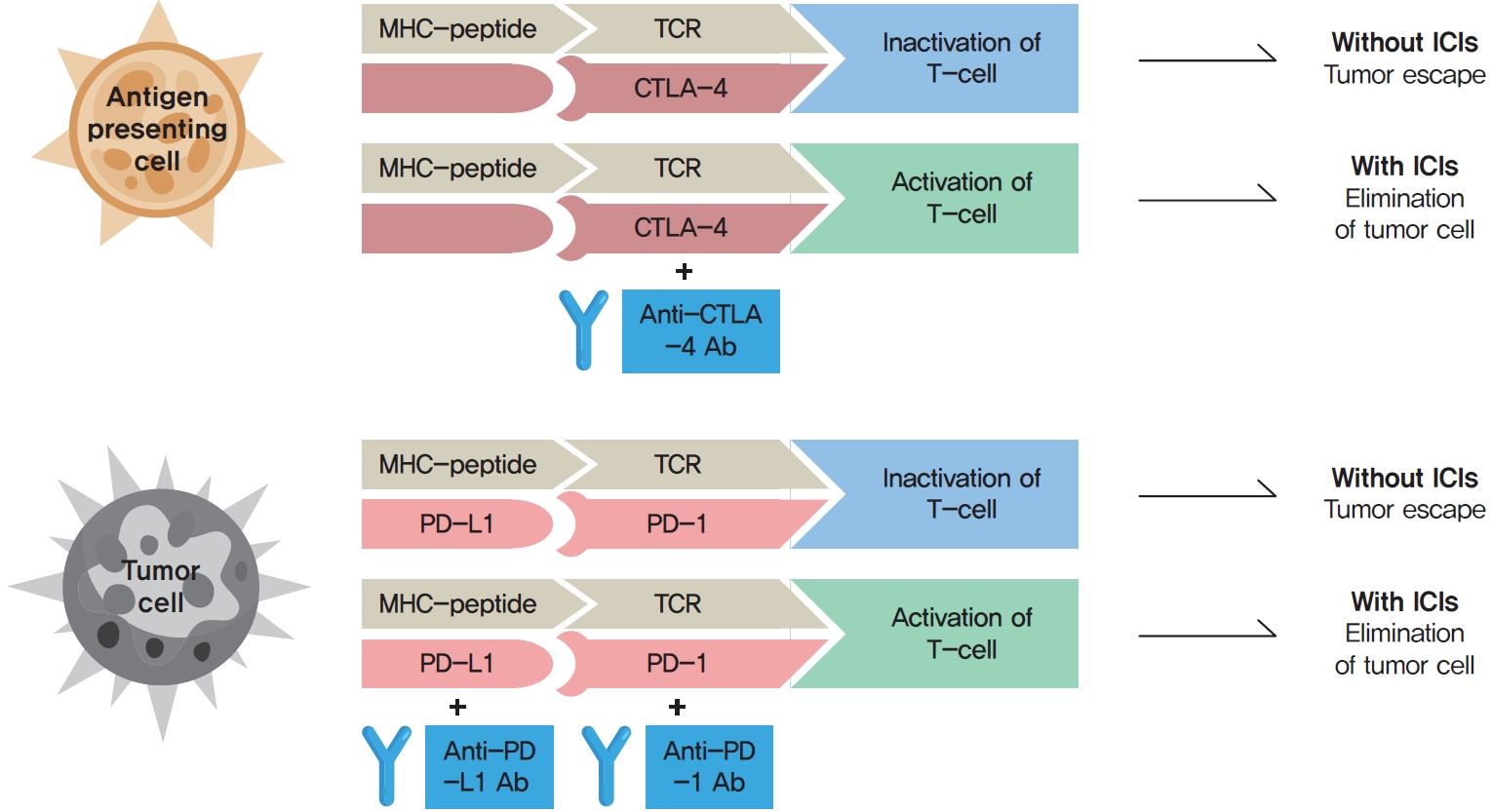
- Immune checkpoint inhibitors (ICIs) including an anti-cytotoxic T-lymphocyte-associated antigen 4 inhibitor, anti-programmed cell death protein 1 (PD-1) inhibitors, and anti-PD-ligand 1 inhibitors are representative therapeutics for various malignancies. In oncology, the application of ICIs is currently expanding to a wider range of malignancies due to their remarkable clinical outcomes. ICIs target immune checkpoints which suppress the activity of T-cells that are specific for tumor antigens, thereby allowing tumor cells to escape the immune response. However, immune checkpoints also play a crucial role in preventing autoimmune reactions. Therefore, ICIs targeting immune checkpoints can trigger various immune-related adverse events (irAEs), especially in endocrine organs. Considering the endocrine organs that are frequently involved, irAEs associated endocrinopathies are frequently life-threatening and have unfavorable clinical implications for patients. However, there are very limited data from large clinical trials that would inform the development of clinical guidelines for patients with irAEs associated endocrinopathies. Considering the current clinical situation, in which the scope and scale of the application of ICIs are increasing, position statements from clinical specialists play an essential role in providing the appropriate recommendations based on both medical evidence and clinical experience. As endocrinologists, we would like to present precautions and recommendations for the management of immune-related endocrine disorders, especially those involving the adrenal, thyroid, and pituitary glands caused by ICIs.
-
Citations
Citations to this article as recorded by- Clinical manifestations and risk factors of immune-related thyroid adverse events in patients treated with PD-1 inhibitors: a case-control study
Pengfei Zhao, Jia Li, Lihong Yu, Wenming Ma, Ting Zhao
Frontiers in Immunology.2025;[Epub] CrossRef - Immune Checkpoint Inhibitor-Related Hypophysitis: A Call for Vigilance
Ju Hee Lee
Endocrinology and Metabolism.2025; 40(3): 391. CrossRef - Panhypopituitarism Presenting as Myxedema Coma Unveiling Sheehan’s Syndrome
Mennaallah Eid, Daniel Joseph Toft, Kalyani Sen
Case Reports in Endocrinology.2025;[Epub] CrossRef - Patterns of hormonal changes in hypophysitis by immune checkpoint inhibitor
Hyunji Sang, Yun Kyung Cho, Sang-hyeok Go, Hwa Jung Kim, Eun Hee Koh
The Korean Journal of Internal Medicine.2024; 39(5): 801. CrossRef - Pembrolizumab plus lenvatinib for radically unresectable or metastatic renal cell carcinoma in the Japanese population
Ryo Fujiwara, Takeshi yuasa, kenichi kobayashi, tetsuya yoshida, susumu kageyama
Expert Review of Anticancer Therapy.2023; 23(5): 461. CrossRef - Incidence of Endocrine-Related Dysfunction in Patients Treated with New Immune Checkpoint Inhibitors: A Meta-Analysis and Comprehensive Review
Won Sang Yoo, Eu Jeong Ku, Eun Kyung Lee, Hwa Young Ahn
Endocrinology and Metabolism.2023; 38(6): 750. CrossRef
- Clinical manifestations and risk factors of immune-related thyroid adverse events in patients treated with PD-1 inhibitors: a case-control study
 First
 Prev


