
 KES

Search
- Page Path
- HOME > Search
Review Articles
- Diabetes, obesity and metabolism
- Regulation of Energy and Glucose Homeostasis by the Nucleus of the Solitary Tract and the Area Postrema
- Kyla Bruce, Ameth N. Garrido, Song-Yang Zhang, Tony K.T. Lam
- Endocrinol Metab. 2024;39(4):559-568. Published online August 1, 2024
- DOI: https://doi.org/10.3803/EnM.2024.2025

- 11,908 View
- 285 Download
- 10 Web of Science
- 12 Crossref
-
 Abstract
 PDF
 PubReader
 ePub
- The central nervous system regulates feeding, weight and glucose homeostasis in rodents and humans, but the site-specific mechanisms remain unclear. The dorsal vagal complex in the brainstem that contains the nucleus of the solitary tract (NTS) and area postrema (AP) emerges as a regulatory center that impacts energy and glucose balance by monitoring hormonal and nutrient changes. However, the specific mechanistic metabolic roles of the NTS and AP remain elusive. This mini-review highlights methods to study their distinct roles and recent findings on their metabolic differences and similarities of growth differentiation factor 15 (GDF15) action and glucose sensing in the NTS and AP. In summary, future research aims to characterize hormonal and glucose sensing mechanisms in the AP and/or NTS carries potential to unveil novel targets that lower weight and glucose levels in obesity and diabetes.
-
Citations
Citations to this article as recorded by
- Region-Specific Adult Neural Stem Cell Niches of the Mediobasal Hypothalamus and Medulla Oblongata
Eriko Furube, Rena Fujii, Yuri Nambu, Daishi Hiratsuka, Ryoichi Yoshimura, Seiji Miyata
Stem Cell Reviews and Reports.2026; 22(1): 222. CrossRef - Adipocyte-derived extracellular vesicles are key regulators of central leptin sensitivity and energy homeostasis
Jin Wang, Xuhong Zhang, Ye Zhu, Haixiang Sun, Xuetao Chen, Zhicong Zhao, Nina Zhang, Chenyu Zhang, Liang Li, Yan Bi
Cell Metabolism.2026; 38(1): 82. CrossRef - Pharmacological administration of FGF21 reverses obesity through a parabrachial-projecting neuron population in the hindbrain
Yunfan Lin, Kristin E. Claflin, Iltan Aklan, Donald A. Morgan, Andrew I. Sullivan, Michael C. Rudolph, Kamal Rahmouni, Matthew J. Potthoff
Cell Reports.2026; 45(4): 117093. CrossRef - Astrocytes in systemic regulation of blood glucose and the development of type 2 diabetes
Zhen Wen, Peng Bai, Li Du, Qianru Zhao, Mengliu Yang, Jialin Shan, Xiang Hu, Jie Min, Kangli Qiu, Yunfei Liao, Tianshu Zeng, Nan Zhang
Frontiers in Cellular Neuroscience.2026;[Epub] CrossRef - Therapeutic access points: The roles of circumventricular organs in drug delivery and metabolic regulation
Ines Martinez‐Corral, Nicholas Monaco, Daniel I. Brierley, Monica Imbernon
British Journal of Pharmacology.2026;[Epub] CrossRef - Brain circadian clocks timing the 24h rhythms of behavior
Jorge Mendoza
npj Biological Timing and Sleep.2025;[Epub] CrossRef - Hypothalamus and brainstem circuits in the regulation of glucose homeostasis
Zitian Lin, Yunxin Xuan, Yingshi Zhang, Qirui Zhou, Weiwei Qiu
American Journal of Physiology-Endocrinology and Metabolism.2025; 328(4): E588. CrossRef - Global Clock Coordination by the Brain Clock in the Suprachiasmatic Nucleus Through Relay and Amplification of Diffusible and Neural Signaling
Rae Silver, Yifan Yao, Jihwan Myung
European Journal of Neuroscience.2025;[Epub] CrossRef - The brainstem BBSome regulates glucose homeostasis and lean mass in a state-dependent manner
Connor Laule, Deng-Fu Guo, Yuying Zhao, Paul A. Williams, Donald A. Morgan, Younes Rouabhi, Miriam McDonough, Trevor Butler, Jon Resch, Kamal Rahmouni
Molecular Metabolism.2025; 100: 102222. CrossRef - Regional adiposity shapes brain and cognition in adults
Die Zhang, Yingji Fu, Chenye Shen, Chaoqiang Liu, Nanguang Chen, Hua Cao, Kui Kai Lau, Anqi Qiu
Nature Mental Health.2025; 3(10): 1168. CrossRef - Central and peripheral neural circuits regulating glucose homeostasis
Diego Espinoza, Finn Seibold, Sarah Stanley
npj Biomedical Innovations.2025;[Epub] CrossRef - Relevance of GDF15 as a biomarker for clinical outcomes after bariatric surgery
Paula Urones, Paula Juiz-Valiña, Elena Outeiriño-Blanco, María Jesús García-Brao, Vanesa Balboa-Barreiro, Fernando Cordido, Susana Sangiao-Alvarellos
Journal of Endocrinology.2025;[Epub] CrossRef
- Region-Specific Adult Neural Stem Cell Niches of the Mediobasal Hypothalamus and Medulla Oblongata

- Diabetes, Obesity and Metabolism
- Dopaminergic Control of the Feeding Circuit
- Ja-Hyun Baik
- Endocrinol Metab. 2021;36(2):229-239. Published online April 6, 2021
- DOI: https://doi.org/10.3803/EnM.2021.979

- 23,653 View
- 713 Download
- 70 Web of Science
- 70 Crossref
-
Abstract
PDFPubReader ePub
- There is increasing evidence demonstrating that reward-related motivational food intake is closely connected with the brain’s homeostatic system of energy balance and that this interaction might be important in the integrative control of feeding behavior. Dopamine regulates motivational behavior, including feeding behaviors, and the dopamine reward system is recognized as the most prominent system that controls appetite and motivational and emotional drives for food. It appears that the dopamine system exerts a critical role in the control of feeding behavior not only by the reward-related circuit, but also by contributing to the homeostatic circuit of food intake, suggesting that dopamine plays an integrative role across the converging circuitry of control of food intake by linking energy state-associated signals to reward-related behaviors. This review will cover and discuss up-to-date findings on the dopaminergic control of food intake by both the reward-related circuit and the homeostatic hypothalamic system.
-
Citations
Citations to this article as recorded by- Antibiotic-induced Dysbiosis of Gut Microbiota Increases Food Motivation and Anticipatory Activity Under a Time-restricted Feeding Protocol
Manuel T. Crespo, Alana Del Rio, Cristina Borio, Marcos Bilen, Juan J. Chiesa, Patricia V. Agostino
Journal of Biological Rhythms.2026; 41(1): 81. CrossRef - Dopamine D2 receptor modulation of insulin receptor signaling in the central amygdala: implications for compulsive-like eating behavior
Bokyeong Kim, Minji Kim, Hyun-Yong Lee, Jung Hyun Pyo, Jihee Seo, Yoon Jeon, Ho Lee, Joung-Hun Kim, Seung Hyun Ahn, Sung Wook Chi, Je Kyung Seong, Ja-Hyun Baik
Molecular Psychiatry.2026; 31(2): 664. CrossRef - Long-term neuronal and neurocognitive consequences in offspring after prenatal exposure to a novel antidepressant, vilazodone: Role of BDNF/Bax-Bcl-2/AChE mediated pathways
Priyanka Agrawal, Pallavi Singh, K. P. Singh
Psychopharmacology.2026; 243(8): 1885. CrossRef - Sequence-based genome-wide association study reveals genetic and metabolic mechanisms underlying feed efficiency-related traits in beef cattle
Leonardo M. Arikawa, Lucio F. M. Mota, Larissa F. S. Fonseca, Gerardo A. Fernandes Júnior, Bruna M. Salatta, Gabriela B. Frezarim, Patricia I. Schmidt, Sindy L. C. Nasner, Julia P. S. Valente, Amalia M. Pelaez, Roberta C. Canesin, Josineudson A. II. V. Si
Journal of Animal Science and Biotechnology.2026;[Epub] CrossRef - Levodopa: A novel therapeutic prospect for liver disease
Jun Xu, Ying Qian, Jun-Min Wang, Xing-Li Wu, Yi-Yuan Zheng
World Journal of Hepatology.2026;[Epub] CrossRef - Elevated activity of the mesolimbic dopamine system promotes feeding during pregnancy in mice
Tanya Pattnaik, Benjamin Wang, Patrick Sweeney
Molecular Metabolism.2026; 105: 102323. CrossRef - Current and Future Pharmacological Interventions for Acquired Hypothalamic Obesity
Christian L. Roth, Nathalie J. Doelman-Oldenburger, Hanneke M. van Santen
Drugs.2026; 86(4): 411. CrossRef - Role of the central adropin and its interaction with dopaminergic and serotoninergic system on feed intake in broiler chicken
G. Golalizadeh, S. Hassanpour, M. Zendehdel
British Poultry Science.2026; 67(5): 940. CrossRef - A meta-analysis of potential genetic factors associated with antipsychotic-induced weight gain in adults with severe mental illness
John Warner-Levy, Lleyton Belston, Yasitha Illangasekera, Adam Jameson, Cheyenne Meehan, Loren Wilkins, Camila Marcelino Loureiro, Sushant Saluja, Mark Shakespeare, Caroline Dalton, Gavin Reynolds, Adrian Heald
Journal of Psychopharmacology.2026; 40(4): 606. CrossRef - Bifidobacterium longum and prebiotic interventions restore early-life high-fat/high-sugar diet-induced alterations in feeding behavior in adult mice
Cristina Cuesta-Marti, Eduardo Ponce-España, Friederike Uhlig, Iris Stoltenborg, Luiza A. Wasiewska, Lamiah Kareem, Dara Hedayatpour, Loreto Olavarría-Ramírez, Cristina Rosell-Cardona, Thomaz. F. S. Bastiaanssen, Gabriel. S. S. Tofani, Benjamin Valderrama
Nature Communications.2026;[Epub] CrossRef - Rethinking anorexia nervosa through the lens of control, compulsion and reward: Neurobiological insights into addiction-like features via the dopaminergic, endocannabinoid, and orexinergic systems − A narrative review
Wojciech Ziemichód, Natalia Kajka, Zuzanna Rząd, Aleksandra Metelska, Małgorzata Janas-Kozik, Grażyna Biała, Krzysztof Maria Wilczyński, Karolina Grabowska, Hanna Karakuła-Juchnowicz
Neuroscience & Biobehavioral Reviews.2026; 185: 106615. CrossRef - Disentangling the relationship between psychiatric disorders, cardiometabolic abnormalities, and antipsychotics: A systematic review of genomic studies
Rory Shepherd, David Stacey, Jack Janetzki, Scott R. Clark, Elina Hyppönen, Vijayaprakash Suppiah
Schizophrenia Research.2026; 291: 119. CrossRef - Lipid-lowering and glucose-lowering drug targets differentially modulate antipsychotic treatment efficacy in schizophrenia
Yunqing Zhu, Rui Yuan, Zhe Lu, Yuyanan Zhang, Zhewei Kang, Xiaoyang Feng, Guorui Zhao, Junyuan Sun, Jing Guo, Tong Yu, Yang Yang, Yaoyao Sun, Weihua Yue
Cell Reports Medicine.2026; 7(3): 102653. CrossRef - Associations among executive function, social functioning, emotional states, and eating behavior patterns in young adults
Ga-Eun Jung, Ga-Ram Kwon, Young-A Lee
Journal of Psychiatric Research.2026; 199: 13. CrossRef - The role of gut microbiota in shaping and modulating dietary preferences in neurological diseases: implications for microbiota-targeted interventions
Tingting Hou, Zhixing Peng, Yonglin Chen, Yanqing Feng, Xiaohui Hou, Yu-Heng Mao
Food & Function.2026; 17(9): 3871. CrossRef - Association of central α-klotho with dopaminergic and melanocortin receptors on feed intake regulation in chicken
Yaser Hassania, Shahin Hassanpour, Morteza Zendehdel, Bita Vazir
Poultry Science.2026; 105(8): 107042. CrossRef - RNA-seq reveals differentially expressed genes involved in catecholamine synthesis and metabolism in the hypothalamus affecting divergent residual feed intake in slow-growing Korat chickens
Panpradub Sinpru, Orapin Jantasaeng, Phocharapon Pasri, Boonyarit Kamkrathok, Saknarin Pengsanthia, Tom E. Porter, Wittawat Molee, Amonrat Molee
Poultry Science.2026; 105(8): 107098. CrossRef - Prenatal Methyl Nutrient Availability Shapes Mesolimbic Dopaminergic Circuitry and Systemic Inflammation in Wistar Rat Offspring of Both Sexes
Cassia Di Pierdomenico, William J. J. Cook, Jianzhang Dong, Gia V. Shelp, Elizabeth M. Poole, Sarah E. Burns, Clara E. Cho
Journal of Neurochemistry.2026;[Epub] CrossRef - Early adult-onset undernutrition drives duration-dependent changes in locomotion, exploration and pain sensitivity in rats
Safae Hassab, Zineb Hassab, Ahmed Omar Touhami Ahami, Oualid Abboussi, Khalid Taghzouti, Meryem Alamy
Physiology & Behavior.2026; 314: 115378. CrossRef - Deep Brain Stimulation of the Nucleus Accumbens Modulates Effort‐Based Decision‐Making and Phasic Dopamine Release in Male Wistar Rats
Sebastian McCullough, Roger B. Varela, Tristan Houghton, Heather Cruickshank, Susannah J. Tye
Journal of Neurochemistry.2026;[Epub] CrossRef - Omega-6 and omega-3 fatty acids in feeding behavior: Biological mechanisms and implications for dietary adherence. A mini-review
Luca Pipicelli, Anna Palmiero, Giorgia Ristagno, Mariarosaria Santillo, Simona Damiano
Neuroscience & Biobehavioral Reviews.2026; 187: 106755. CrossRef - Chronic Caffeine Consumption Prevents Body Weight Gain and Glucose Intolerance in High-Fat Diet-Induced Obesity Mice Model
Giuseppe Faraco, Natália F. Mendes, Luisa O. Schmitt, Tamires S. Stivanin, Elisa Gaspar, Nicolle Platt, Manuella P. Kaster, Joana M. Gaspar
Metabolites.2026; 16(6): 381. CrossRef - Neurobiological mechanisms of second-generation antipsychotic-induced obesity: Interactions between ghrelin signaling and neurotransmitter systems
Nevena Zogović, Ana Despotović, Maja Misirkić Marjanović, Ljubica Vučićević, Kristina Janjetović
Brain Research Bulletin.2026; 242: 111959. CrossRef - Dopamine ensembles regulating appetite, feeding, and energy homeostasis
Oriane Onimus, Kate Z. Peters, Fabien Naneix, Giuseppe Gangarossa
Trends in Endocrinology & Metabolism.2026;[Epub] CrossRef - Regulators of appetite in mammals—old and new players
Jorge H Fernandes, Jorge Diogo Da Silva, Marta D Costa, Patrícia Maciel
Endocrine Reviews.2026;[Epub] CrossRef - Associations of affective states and cognitive functions with eating behavior in healthy young Korean adults
Jae-Won Jung, Yukiori Goto, Kyung-A Lee, Young-A Lee
Physiology & Behavior.2026; 315: 115442. CrossRef - FLP-15 functions through the GPCR NPR-3 to regulate local and global search behaviours in Caenorhabditis elegans
Umer Saleem Bhat, Siju Surendran, Sharanya H, Jun Liu, Yun Xu, Namra Tasnim, Mohd Faraz Abbas, Ashwani Bhardwaj, Monika Scholz, Kavita Babu
Communications Biology.2026;[Epub] CrossRef - Lactation increases food seeking and palatable feeding through mesolimbic dopamine signaling in mice
Tanya Pattnaik, Vraj Patel, Jared Butts, Benjamin Wang, Qingyin Zheng, Emma Borrowman, Samuel Congdon, Lara Villano, Patrick Sweeney
Cell Reports.2026; 45(8): 117720. CrossRef - Acute pharmacological assessment of dopaminergic and glutamatergic involvement in nitric oxide-associated feed intake in male neonatal broilers
Salaheddin Zarei, Ali Baghbanzadeh
Physiology & Behavior.2026; 317: 115501. CrossRef - Distinct CaMKII neurons in anterior cingulate cortex regulate anxiety-like behavior and appetite suppression in a model of inflammatory pain
Jiandong Yu, Huiyue Han, Yuehan You, Bingjing Sun, Xinyi Wang, Jing Guan, Menghan Gu, Jing Feng, Zinan Zheng, Rongjing Ge, Li Mei
Frontiers in Pharmacology.2026;[Epub] CrossRef - Characterization and postprandial regulation of the nutrient-sensing machinery in the oral floor mucosa of 10-week-old mule ducks
Marie Lasserre, Yan Fericelli, Cécile Heraud, Laura-Lou Zwick, Karel Sasso, Sandra Biasutti, Anne Surget, Joelle Dupont, Marianne Houssier, Stéphane Panserat, Jérôme Roy, Karine Gontier
Poultry Science.2026; 105(12): 107806. CrossRef - Feed Intake Regulation in Fish: Implications for Aquaculture
José L. Soengas, Sara Comesaña, Ayelén M. Blanco, Marta Conde-Sieira
Reviews in Fisheries Science & Aquaculture.2025; 33(1): 8. CrossRef - Central administration of galanin-like peptide (GALP) causes short-term orexigenic effects in broilers: Mediatory role of NPY1 and D1 receptors
Elham Sanadgol, Morteza Zendehdel, Bita Vazir, Ali Rassouli, Hadi Haghbinnazarpak
Neuroscience Letters.2025; 844: 138042. CrossRef - Neurocognitive impairments in rat offspring after maternal exposure to vortioxetine: Involvement of BDNF, apoptosis and cholinergic mediated signaling pathways
Pallavi Singh, Priyanka Agrawal, K.P. Singh
Reproductive Toxicology.2025; 131: 108746. CrossRef - Exploring the genetic contribution in obesity: An overview of dopaminergic system genes
Myrela Ribeiro Teixeira, Tamara Silva, Rafaela de Freitas Martins Felício, Patrícia Torres Bozza, Verônica Marques Zembrzuski, Cicero Brasileiro de Mello Neto, Ana Carolina Proença da Fonseca, Fabiana Barzotto Kohlrausch, Kaio Cezar Rodrigues Salum
Behavioural Brain Research.2025; 480: 115401. CrossRef - Leaky Gut Syndrome: An Interplay Between Nutrients and Dysbiosis
Ana Beatriz Marcari, Aline Dias Paiva, Claudio Roberto Simon, Maria Emilia Soares Martins dos Santos
Current Nutrition Reports.2025;[Epub] CrossRef - The Hypothalamic Arcuate Nucleus Dopaminergic Neurons: More Than Just Prolactin Secretion
Luis Wei Cheng Lim, Christopher Thomas Egnot, Panagiotis Papaioannou, Siew Hoong Yip
Endocrinology.2025;[Epub] CrossRef - Excessive body weight and its contributing factors in visually impaired patients in northwest Ethiopia, 2024
Baye Ashenef, Bayu Wondimneh Yimenu, Enatnesh Essa Osman, Derese Sinamaw, Gelagey Baye, Zigale Hibstu Teffera, Mamaru Getinet Engida, Adane Adugna, Enyew Fenta Mengistu, Temesgen Baylie, Mohammed Jemal
Frontiers in Endocrinology.2025;[Epub] CrossRef - α2-Adrenergic Receptors in Hypothalamic Dopaminergic Neurons: Impact on Food Intake and Energy Expenditure
Byong Seo Park, Hye Rim Yang, Hara Kang, Kwang Kon Kim, Yang Tae Kim, Sunggu Yang, Jae Geun Kim
International Journal of Molecular Sciences.2025; 26(8): 3590. CrossRef - Overexpression of the short isoform of the dopamine D2 receptor causes diet‐induced obesity and hyperglycemia in mice
Hanna Gonzalez, Lei Cheng, Qing Chang, Paul E. Gold, Diego Perez‐Tilve, YanYan Wang
Journal of Neuroendocrinology.2025;[Epub] CrossRef - Dopamine D3 receptor blockade accelerates the extinction of opioid withdrawal‐induced drug‐seeking behaviours and alters microglia in dopaminoceptive nuclei
Aurelio Franco‐García, Victoria Gómez‐Murcia, M. Victoria Milanés, Cristina Núñez
British Journal of Pharmacology.2025; 182(17): 4168. CrossRef - Mechanistic and translational insights from preclinical cocaine choice procedures on the economic substitutability of cocaine and nondrug reinforcers
Madison M. Marcus, Matthew L. Banks
Neuroscience & Biobehavioral Reviews.2025; 175: 106217. CrossRef - Smoking, Obesity, and Post-Cessation Weight Gain: Neurobiological Intersection and Treatment Recommendations
Angela Golden, James Davis
Journal of Multidisciplinary Healthcare.2025; Volume 18: 2889. CrossRef - The effect of dopamine agonists on cardiometabolic risk factors: a systematic review and meta-analysis
Yizhuo Xue, Mohammad Hassan Sohouli, Nathalia Sernizon Guimarães
Expert Opinion on Pharmacotherapy.2025; 26(11-12): 1321. CrossRef - Comprehensive characterization of chronic midazolam exposure on neonates and long-term neurodevelopment
Nghi M. Nguyen, Pranavi Athota, Adrian Flores, Andrew Trease, Daniel Meyer, Vamsi K. Singu, Chandan Krishnamoorthy, Victoria L. Schaal, Reeyan Bhakat, Kunal Sualy, Sathish Kumar Natarajan, Kelly Stauch, Sowmya V. Yelamanchili, Gurudutt Pendyala
Molecular Psychiatry.2025; 30(11): 5203. CrossRef - Role of ventromedial hypothalamic dopaminergic D1-like receptors in regulating standard food intake in 24-hour food-deprived male rats
Shiva Bakhshi-Ameshi, Nihad Torabi, Maryam Nazari, Afsaneh Eliassi
Brain Research.2025; 1863: 149846. CrossRef - Exploring the link between dopamine dysregulation and eating disorders: A narrative review
Zoaib Habib Tharwani, Sean Kaisser Shaeen, Komal Zahid, Shahzaib Ahmed, Rania Naqrashi, Amir Murtaza, Sanila Mughal, Muhammad Hasanain, Muhammad Umair Anjum, Mohammed Mahmmoud Fadelallah Eljack, Syeda Wardah Zaidi
Journal of Neuroendocrinology.2025;[Epub] CrossRef - Sweetness Ratings of U.S. Infant Formulas
Chelsea Olson, Rajesh Kumar, Martin J. Talavera, Christopher E. Anderson, Jennifer A. Hanson
Nutrients.2025; 17(16): 2602. CrossRef - Exposure to high-energy diet reduces cue-evoked dopamine in obesity-resistant but not obesity-prone female rats
Greta Lommi, Lorenz Klein, Thomas A. Lutz, Christina N. Boyle
Physiology & Behavior.2025; 301: 115060. CrossRef - PET/fMRI demonstrates that bariatric surgery may reverse striatal dopaminergic dysfunction in women with obesity
Marta Lapo Pais, Joana Crisóstomo, Antero Abrunhosa, Miguel Castelo-Branco
Communications Medicine.2025;[Epub] CrossRef - Effects of cafeteria diet and caloric restriction on pituitary hormones and metabolic phenotype in male Wistar rats
Christakis Kagios, Susanne Hetty, Fleur Hukema, Giovanni Fanni, Erika Roman, Jan W Eriksson
Endocrine.2025; 90(3): 1459. CrossRef - Chrysin Alters Hypothalamic Levels of Proteins Related to Appetite and Sweet Taste Preferences in Fructose-Fed Rats
Henrique Santos, Hugo Osório, Nelson Andrade, Fátima Martel
The Journal of Nutrition.2025; 155(12): 4307. CrossRef - Cross-cultural adaptation and psychometric investigation of the palatable eating motives scale (PEMS) for a sample of Brazilian adults
Priscila Carvalho Santos, Wanderson Roberto da Silva, João Marôco, Juliana Alvares Duarte Bonini Campos
Current Psychology.2024; 43(7): 6360. CrossRef - The Calmodulin-interacting peptide Pcp4a regulates feeding state-dependent behavioral choice in zebrafish
Margherita Zaupa, Nagarjuna Nagaraj, Anna Sylenko, Herwig Baier, Suphansa Sawamiphak, Alessandro Filosa
Neuron.2024; 112(7): 1150. CrossRef - Maternal nanoplastic ingestion induces an increase in offspring body weight through altered lipid species and microbiota
Bohyeon Jeong, Ji-Sun Kim, A Ra Kwon, Jangjae Lee, Subin Park, Jahong Koo, Wang Sik Lee, Jeong Yeob Baek, Won-Ho Shin, Jung-Sook Lee, Jinyoung Jeong, Won Kon Kim, Cho-Rok Jung, Nam-Soon Kim, Sung-Hee Cho, Da Yong Lee
Environment International.2024; 185: 108522. CrossRef - Satiety: a gut–brain–relationship
Ghinwa M. Barakat, Wiam Ramadan, Ghaith Assi, Noura B. El Khoury
The Journal of Physiological Sciences.2024; 74(1): 11. CrossRef - Effect of Probiotic Lacticaseibacillus rhamnosus LB1.5 on Anxiety-like Behavior, Neuroprotection and Neuroinflammation Markers of Male Mice Fed a High-Fat Diet
Natália Perin Schmidt, Patrícia Molz, Brenda Santos Fraga, Nicole Hiller Bondarczuk, Priscila Dutra Silveira, Milena Henrique Ferri, Thais Busatto Crestani, Gabriela Merker Breyer, Giuliano Rizzoto Guimarães, Amanda de Souza da Motta, Renata Padilha Guede
Nutrients.2024; 16(6): 879. CrossRef - Repeated binge‐like eating episodes in female rats alter adenosine A2A and dopamine D2 receptor genes regulation in the brain reward system
Francesca Mercante, Emanuela Micioni Di Bonaventura, Mariangela Pucci, Luca Botticelli, Carlo Cifani, Claudio D'Addario, Maria Vittoria Micioni Di Bonaventura
International Journal of Eating Disorders.2024; 57(7): 1433. CrossRef - Traditional Japanese medicine Kamikihito ameliorates sucrose preference, chronic inflammation and obesity induced by a high fat diet in middle-aged mice
Yuko Maejima, Shoko Yokota, Megumi Yamachi, Shingen Misaka, Tomoyuki Ono, Hiroaki Oizumi, Keita Mizuno, Shizu Hidema, Katsuhiko Nishimori, Masato Aoyama, Heidi de Wet, Kenju Shimomura
Frontiers in Endocrinology.2024;[Epub] CrossRef - Lack of Bmal1 leads to changes in rhythmicity and impairs motivation towards natural stimuli
Paula Berbegal-Sáez, Ines Gallego-Landin, Javier Macía, Laia Alegre-Zurano, Adriana Castro-Zavala, Patrick-Simon Welz, Salvador A. Benitah, Olga Valverde
Open Biology.2024;[Epub] CrossRef - Stimulation of Dopamine D4 Receptors in the Nucleus Accumbens Shell Increases Palatable Food Intake in Satiated Male Rats: Modulation by NMDA and AMPA Receptors
Refugio Cruz-Trujillo, Daniel Díaz-Urbina, José Alfredo Díaz-Gandarilla, Dolores Guadalupe Vidal-López, Rodrigo Erick Escartín-Pérez, Juan Manuel Mancilla-Diaz, Benjamín Florán, Juan Gabriel Tejas-Juárez
Brain Sciences.2024; 14(11): 1103. CrossRef - Dopamine-Sensitive Anterior Cingulate Cortical Glucose-Monitoring Neurons as Potential Therapeutic Targets for Gustatory and Other Behavior Alterations
Edina Hormay, Bettina László, István Szabó, Kitti Mintál, Beáta Berta, Tamás Ollmann, László Péczely, Bernadett Nagy, Attila Tóth, Kristóf László, László Lénárd, Zoltán Karádi
Biomedicines.2024; 12(12): 2803. CrossRef -
Retracted
: Pan‐neuronal knockdown of Ras GTPase‐activating protein 1 alters
Drosophila
activity and sleep behavior
Francisco Alejandro Lagunas‐Rangel
Archives of Insect Biochemistry and Physiology.2023;[Epub] CrossRef - Maternal Over- and Malnutrition and Increased Risk for Addictive and Eating Disorders in the Offspring
Mathilde C. C. Guillaumin, Daria Peleg-Raibstein
Nutrients.2023; 15(5): 1095. CrossRef - Carving the senescent phenotype by the chemical reactivity of catecholamines: An integrative review
Aleksei G. Golubev
Ageing Research Reviews.2022; 75: 101570. CrossRef - Obesity I: Overview and molecular and biochemical mechanisms
Robert H. Lustig, David Collier, Christopher Kassotis, Troy A. Roepke, Min Ji Kim, Etienne Blanc, Robert Barouki, Amita Bansal, Matthew C. Cave, Saurabh Chatterjee, Mahua Choudhury, Michael Gilbertson, Dominique Lagadic-Gossmann, Sarah Howard, Lars Lind,
Biochemical Pharmacology.2022; 199: 115012. CrossRef - Food preferences and thyroid hormones in children and adolescents with obesity
Daniela Staníková, Lea Krajčovičová, Linda Demková, Petronela Forišek-Paulová, Lucia Slobodová, Eva Vitariušová, Lubica Tichá, Barbara Ukropcová, Juraj Staník, Jozef Ukropec
Frontiers in Psychiatry.2022;[Epub] CrossRef - Dopamine systems and biological rhythms: Let’s get a move on
Qijun Tang, Dina R. Assali, Ali D. Güler, Andrew D. Steele
Frontiers in Integrative Neuroscience.2022;[Epub] CrossRef - Suprachiasmatic to paraventricular nuclei interaction generates normal food searching rhythms in mice
Iwona Olejniczak, Benjamin Campbell, Yuan-Chen Tsai, Shiva K. Tyagarajan, Urs Albrecht, Jürgen A. Ripperger
Frontiers in Physiology.2022;[Epub] CrossRef - THE ROLE OF CIRCADIAN REGULATION OF GHRELIN LEVELS IN PARKINSON’S DISEASE (LITERATURE REVIEW)
Kateryna A. Tarianyk, Nataliya V. Lytvynenko, Anastasiia D. Shkodina, Igor P. Kaidashev
Wiadomości Lekarskie.2021; 74(7): 1750. CrossRef
- Antibiotic-induced Dysbiosis of Gut Microbiota Increases Food Motivation and Anticipatory Activity Under a Time-restricted Feeding Protocol
- Diabetes, Obesity and Metabolism
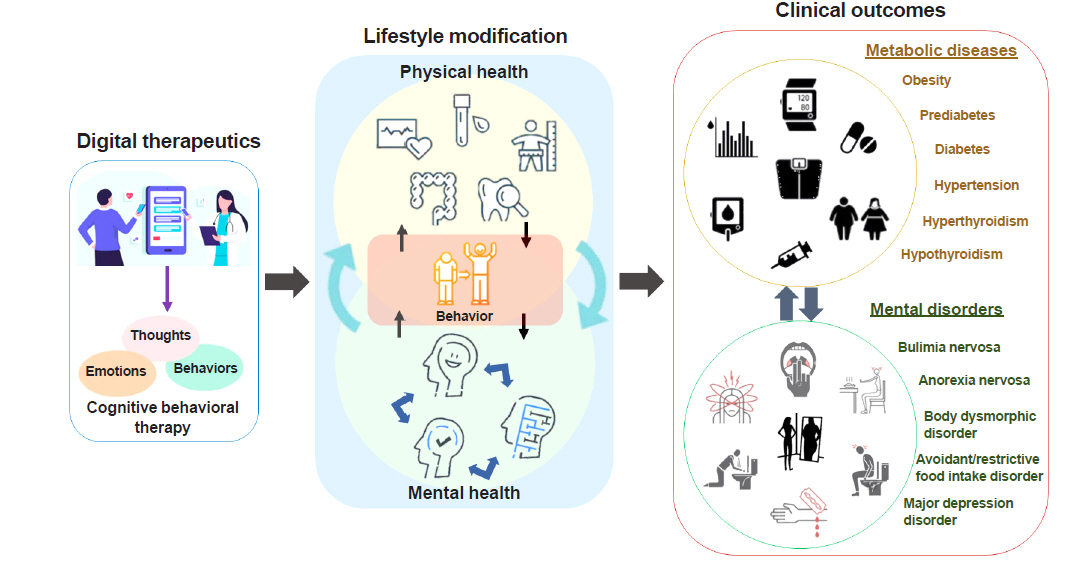
- Digital Therapeutics for Obesity and Eating-Related Problems
- Meelim Kim, Hyung Jin Choi
- Endocrinol Metab. 2021;36(2):220-228. Published online March 24, 2021
- DOI: https://doi.org/10.3803/EnM.2021.107
- 20,807 View
- 540 Download
- 25 Web of Science
- 26 Crossref
-
Abstract
PDFPubReader ePub
- In recent years, digital technologies have rapidly advanced and are being applied to remedy medical problems. These technologies allow us to monitor and manage our physical and mental health in our daily lives. Since lifestyle modification is the cornerstone of the management of obesity and eating behavior problems, digital therapeutics (DTx) represent a powerful and easily accessible treatment modality. This review discusses the critical issues to consider for enhancing the efficacy of DTx in future development initiatives. To competently adapt and expand public access to DTx, it is important for various stakeholders, including health professionals, patients, and guardians, to collaborate with other industry partners and policy-makers in the ecosystem.
-
Citations
Citations to this article as recorded by- Single-arm longitudinal study to assess changes in insula functional connectivity following a mobile-based lifestyle intervention in adults with metabolic abnormalities
Deokjong Lee, Kyung Mee Park, Jihye Kim, Sin Young Ko, Byeonghee Lee, Chae Jung Park, Kyoung Min Kim, Jin Young Park
Journal of Psychosomatic Research.2026; 201: 112498. CrossRef - Revolutionizing obesity treatment: The emerging role of GLP-1 receptor agonists and next-generation pharmacotherapies
Polu Picheswara Rao
Obesity Medicine.2026; 60: 100686. CrossRef - Review of the use of digital therapeutics (DTx) for obesity treatment: towards a psychological phenotyping?
Cédric Plessis, Marie Galmiche, Pierre Déchelotte, Anthony Haro
Advances in Nutrition.2026; : 100613. CrossRef - Understanding digital therapeutics in disease self-management: A systematic literature review
Liang Yang, Manyang Zhang, Lin Jia, Zhijun Yan, Qiuju Yin
Technology in Society.2025; 81: 102831. CrossRef - Effectiveness of a digital therapy on 6-month weight loss in people living with obesity: the DEMETRA Randomized Clinical Trial (Preprint)
Simona Bertoli, Paolo Capodaglio, Santo Colosimo, Ramona Silvana De Amicis, Luisa Gilardini, Amalia Bruno, Sara Paola Mambrini, Giada Pietrabissi, Luca Cavaggioni, Gianluca Castelnuovo, Giuseppina Piazzolla
Journal of Medical Internet Research.2025;[Epub] CrossRef - Hijacked Brain in Modern Obesity: Cue, Habit, Addiction, Emotion, and Restraint as Targets for Personalized Digital Therapy and Electroceuticals
Taesung Lee, Seeun Park, Seokhyun Lee, Areum Hwangbo, HanGyeol Bae, Yumin Lee, Hyung Jin Choi
Journal of Obesity & Metabolic Syndrome.2025; 34(3): 196. CrossRef - A deep learning-based early prediction framework for weight management using real-world lifelog data: GRU–ODE–Bayes model development and validation study
Yera Choi, Hyunji Sang, Sunyoung Kim, Haanju Yoo, Sang Youl Rhee
DIGITAL HEALTH.2025;[Epub] CrossRef - KIOS: A smartphone app for self‐monitoring for patients with bipolar disorder
Mehak Pahwa, Susan L. McElroy, Richard Priesmeyer, Gregg Siegel, Phyllis Siegel, Sharon Nuss, Charles L. Bowden, Rif S. El‐Mallakh
Bipolar Disorders.2024; 26(1): 84. CrossRef - What digital health technology types are used in mental health prevention and intervention? Review of systematic reviews for systematization of technologies
Naomichi Tani, Hiroaki Fujihara, Kenji Ishii, Yoshiyuki Kamakura, Mafu Tsunemi, Chikae Yamaguchi, Hisashi Eguchi, Kotaro Imamura, Satoru Kanamori, Noriko Kojimahara, Takeshi Ebara
Journal of Occupational Health.2024;[Epub] CrossRef - Randomized controlled trial of digital therapeutics for temporomandibular disorder: A pilot study
Sang-Yoon Park, Soo-Hwan Byun, Byoung-Eun Yang, Daehyun Kim, Bongju Kim, Jong-Ho Lee, Young-Kyun Kim
Journal of Dentistry.2024; 147: 105030. CrossRef - Comparing the Efficacy of Digital and In-Person Weight Loss Interventions for Patients with Obesity and Glycemic Disorders: Evidence from a Randomized Non-Inferiority Trial
Katarína Moravcová, Markéta Sovová, Jaromír Ožana, Martina Karbanová, Jan Klásek, Agnieszka Barbara Kolasińska, Eliška Sovová
Nutrients.2024; 16(10): 1510. CrossRef - Feasibility and Acceptability Evaluation of a Digital Therapeutic Program for Improving Cancer Prevention: A Quasi-experimental Pre-post Interventional Pilot Study
Xianwei Zhang, Sheng Zhang, Haiyan Zhang, Ziyou Xiong, Yi Li, Lufeng Li, Xitian Pi, Hongying Liu
Journal of Cancer Education.2024; 39(5): 520. CrossRef - How do gamified digital therapeutics work on obesity self-management?
Xuejuan Zhu, Shuneng Gu, Jian Li
Metabolism Open.2024; 23: 100314. CrossRef - Adoption of Digital Therapeutics in Europe
Amelie Fassbender, Shaantanu Donde, Mitchell Silva, Adriano Friganovic, Alessandro Stievano, Elisio Costa, Tonya Winders, Joris van Vugt
Therapeutics and Clinical Risk Management.2024; Volume 20: 939. CrossRef - Digital therapeutics from bench to bedside
Changwon Wang, Chungkeun Lee, Hangsik Shin
npj Digital Medicine.2023;[Epub] CrossRef - Digital Therapeutics: Emerging New Therapy for Nonalcoholic Fatty Liver Disease
Run Zhou, Yunpeng Gu, Binbin Zhang, Tingting Kong, Wei Zhang, Jie Li, Junping Shi
Clinical and Translational Gastroenterology.2023; 14(4): e00575. CrossRef - Digital Therapeutics as a New Therapeutic Modality: A Review from the Perspective of Clinical Pharmacology
Benjamin Ribba, Richard Peck, Lucy Hutchinson, Imein Bousnina, Dario Motti
Clinical Pharmacology & Therapeutics.2023; 114(3): 578. CrossRef - eHealth in obesity care
Bukhosi Raymond Sithole, Yannis Pappas, Gurch Randhawa
Clinical Medicine.2023; 23(4): 347. CrossRef - Strategies for Long-Term Weight Loss and Maintenance
Yoo-Bin Seo
Korean Journal of Family Practice.2023; 13(3): 128. CrossRef - Implications of immersive technologies in healthcare sector and its built environment
Eunsil Yang
Frontiers in Medical Technology.2023;[Epub] CrossRef - Cost-effectiveness analysis of digital therapeutics for home-based cardiac rehabilitation for patients with atrial fibrillation after catheter ablation
Tianyi Liu, Zhijie Tang, Cheng Cai, Nan Wu, Jian Jia, Gang Yang, Wenhong Zhang
DIGITAL HEALTH.2023;[Epub] CrossRef - Cost-effectiveness analysis of digital therapeutics for home-based cardiac rehabilitation for patients with chronic heart failure: model development and data analysis
Tianyi Liu, Yiyang Zhan, Silei Chen, Wenhong Zhang, Jian Jia
Cost Effectiveness and Resource Allocation.2023;[Epub] CrossRef - Comprehensive traditional East Asian medicine treatment strategy for obesity considering the therapeutic effects and adverse events
Hongmin Chu, Byungsoo Kang, Bo-Young Youn, Kwan-il Kim, Jinbong Park, Jungtae Leem
Medicine.2022; 101(6): e28673. CrossRef - Clinical Evaluation of Digital Therapeutics: Present and Future
Ki Young Huh, Jaeseong Oh, SeungHwan Lee, Kyung-Sang Yu
Healthcare Informatics Research.2022; 28(3): 188. CrossRef - Health-Related Indicators Measured Using Earable Devices: Systematic Review
Jin-Young Choi, Seonghee Jeon, Hana Kim, Jaeyoung Ha, Gyeong-suk Jeon, Jeong Lee, Sung-il Cho
JMIR mHealth and uHealth.2022; 10(11): e36696. CrossRef - Clinical Efficacy of a Digital Intervention for Patients with Atopic Dermatitis: a Prospective Single-Center Study
Sigrídur Lára Gudmundsdóttir, Tommaso Ballarini, María L. Ámundadóttir, Judit Mészáros, Jenna H. Eysteinsdóttir, Ragna H. Thorleifsdóttir, Sigrídur K. Hrafnkelsdóttir, Heida B. Bragadóttir, Saemundur Oddsson, Jonathan I. Silverberg
Dermatology and Therapy.2022; 12(11): 2601. CrossRef
- Single-arm longitudinal study to assess changes in insula functional connectivity following a mobile-based lifestyle intervention in adults with metabolic abnormalities
Original Articles
- Endocrine Research
- Rebound Feeding in the Wake of Short-Term Suspension of Food Intake Differs in the Presence of Estrous Cycle Peak versus Nadir Levels of Estradiol
- Manita Shakya, Karen P. Briski
- Endocrinol Metab. 2017;32(4):475-484. Published online December 14, 2017
- DOI: https://doi.org/10.3803/EnM.2017.32.4.475
- 7,972 View
- 25 Download
- 2 Web of Science
- 2 Crossref
-
Abstract
PDFPubReader
Background Short-term interruption of feeding is ordinary in modern life but negatively impacts appetite control and body weight. Estradiol (E) imposes long-term inhibitory tonus on food consumption; however, E influence on energy repletion secondary to food deprivation (FD) is unclear. This study investigated the hypothesis that E signal strength regulates hyperphagic responses to FD of varying duration.
Methods Ovariectomized female rats were implanted with E-containing silastic capsules (30 [E-30] or 300 µg [E-300]/mL) to replicate plasma concentrations at cycle nadir versus peak levels.
Results Data show that food intake was increased equally in E-30 and E-300 rats after 12 hours of food deprivation (FD-12); yet, FD of 18 hours (FD-18) amplified refeeding by E-300 versus E-30. Caudal fourth ventricular administration of the 5′-monophosphate-activated protein kinase (AMPK) inhibitor compound C (Cc) did not modify FD-induced hyperphagia in E-30 (regardless of FD interval) or E-300 animals exposed to FD-12, but diminished refeeding after FD-18 in E-300 rats. Cc-reversible hyperglycemia occurred in refed FD-18 groups. Serum insulin was resistant to FD-12 plus refeeding, but was elevated by AMPK-dependent mechanisms in refed E-300 FD-18 rats; equivalent Cc-insensitive decrements in circulating leptin occurred in all FD groups.
Conclusion Current results show that estrous cycle peak, but not baseline, E levels engage hindbrain AMPK signaling to intensify hyperphagia in response to prolongation of FD. Observations of hindbrain AMPK-dependent hyperglycemia, alongside elevated insulin secretion, in refed rats exposed to FD-18 implicate this sensor in insulin resistance mechanisms of glucose partitioning in response to this metabolic imbalance.
-
Citations
Citations to this article as recorded by- A Framework for Developing Translationally Relevant Animal Models of Stress-Induced Changes in Eating Behavior
Marie François, Olaya Fernández-Gayol, Lori M. Zeltser
Biological Psychiatry.2022; 91(10): 888. CrossRef - Assessing the effects of stress on feeding behaviors in laboratory mice
Marie Francois, Isabella Canal Delgado, Nikolay Shargorodsky, Cheng-Shiun Leu, Lori Zeltser
eLife.2022;[Epub] CrossRef
- A Framework for Developing Translationally Relevant Animal Models of Stress-Induced Changes in Eating Behavior
- Endocrine Research
- Melanocortin 4 Receptor and Dopamine D2 Receptor Expression in Brain Areas Involved in Food Intake
- Ye Ran Yoon, Ja-Hyun Baik
- Endocrinol Metab. 2015;30(4):576-583. Published online December 31, 2015
- DOI: https://doi.org/10.3803/EnM.2015.30.4.576
- 10,652 View
- 83 Download
- 22 Web of Science
- 22 Crossref
-
Abstract
PDFPubReader
Background The melanocortin 4 receptor (MC4R) is involved in the regulation of homeostatic energy balance by the hypothalamus. Recent reports showed that MC4R can also control the motivation for food in association with a brain reward system, such as dopamine. We investigated the expression levels of MC4R and the dopamine D2 receptor (D2R), which is known to be related to food rewards, in both the hypothalamus and brain regions involved in food rewards.
Methods We examined the expression levels of D2R and MC4R by dual immunofluorescence histochemistry in hypothalamic regions and in the bed nucleus of the stria terminalis (BNST), the central amygdala, and the ventral tegmental area of transgenic mice expressing enhanced green fluorescent protein under the control of the D2R gene.
Results In the hypothalamic area, significant coexpression of MC4R and D2R was observed in the arcuate nucleus. We observed a significant coexpression of D2R and MC4R in the BNST, which has been suggested to be an important site for food reward.
Conclusion We suggest that MC4R and D2R function in the hypothalamus for control of energy homeostasis and that within the brain regions related with rewards, such as the BNST, the melanocortin system works synergistically with dopamine for the integration of food motivation in the control of feeding behaviors.
-
Citations
Citations to this article as recorded by- Unravelling the genetic and haplotypic variability of MC4R gene in Delphinapterus leucas
Yaiza Hernández-Palomares, Fátima Gimeno-Ferrer, Carola Guzmán Luján, David Albuquerque, Óscar González Hernández, Mónica Valls Torres, Daniel García-Párraga, Raquel Rodríguez-López
Gene Reports.2026; 43: 102466. CrossRef - Maternal isocaloric fructose exposure selectively attenuates effort-based cocaine motivation and remodels mesostriatal dopaminergic and melanocortin receptor profiles in male rat offspring
Kacper Witek, Karolina Wydra, Agata Suder, Małgorzata Filip
Behavioural Brain Research.2026; 508: 116222. CrossRef - Nutraceuticals as modulators of genetic, epigenetic and hormonal factors in obesity
M. Ezzat, H. Handoussa, K. Elsayed, M. Wanas, M. Mansour
European Journal of Clinical Nutrition.2026; 80(7): 648. CrossRef - Neuropsychological and metabolic interconnectivity in obesity, anorexia and bulimia nervosa – an integrative literature review
Malini Turner, Mansi Dass Singh, Ian Evans
Metabolic Brain Disease.2026;[Epub] CrossRef - Beyond Pleasure: Unraveling the Multifaceted Role of Dopamine in Obesity and Metabolic Regulation
Shurui Yang, Zhongyu Huang, Wei Lu, Wenyan Wang, Song Wu, Yayuan Wang, Liuyang Huang, Li Chen, Rui Chen, Fengxia Liang
Current Obesity Reports.2026;[Epub] CrossRef - Understanding food addiction in obesity: a genetic perspective
Elvira Anna Carbone, Marianna Rania, Federica Catalano, Ettore D’Onofrio, Renato de Filippis, Daria Quirino, Matteo Aloi, Marta Letizia Hribal, Teresa Vanessa Fiorentino, Cristina Segura-Garcia
Journal of Eating Disorders.2025;[Epub] CrossRef - Experimental biology can inform our understanding of food insecurity
Linda Wilbrecht, Wan Chen Lin, Kathryn Callahan, Melissa Bateson, Kevin Myers, Rachel Ross
Journal of Experimental Biology.2024;[Epub] CrossRef - Motivational dysregulation with melanocortin 4 receptor haploinsufficiency
Alex M. Steiner, Robert F. Roscoe, Rosemarie M. Booze, Charles F. Mactutus
NeuroImmune Pharmacology and Therapeutics.2024; 3(3-4): 237. CrossRef - Dopamine D2-Subtype Receptors Outside the Blood-Brain Barrier Mediate Enhancement of Mesolimbic Dopamine Release and Conditioned Place Preference by Intravenous Dopamine
J. Daniel Obray, Christina A. Small, Emily K. Baldwin, Eun Young Jang, Jin Gyeom Lee, Chae Ha Yang, Jordan T. Yorgason, Scott C. Steffensen
Frontiers in Cellular Neuroscience.2022;[Epub] CrossRef - Reduced MC4R signaling alters nociceptive thresholds associated with red hair
Kathleen C. Robinson, Lajos V. Kemény, Gillian L. Fell, Andrea L. Hermann, Jennifer Allouche, Weihua Ding, Ajay Yekkirala, Jennifer J. Hsiao, Mack Y. Su, Nicholas Theodosakis, Gabor Kozak, Yuichi Takeuchi, Shiqian Shen, Antal Berenyi, Jianren Mao, Cliffor
Science Advances.2021;[Epub] CrossRef - Is aripiprazole a key to unlock anorexia nervosa?: A case series
Akın Tahıllıoğlu, Tuğçe Özcan, Gamze Yüksel, Noorjahan Majroh, Sezen Köse, Burcu Özbaran
Clinical Case Reports.2020; 8(12): 2826. CrossRef - The Melanocortin System behind the Dysfunctional Eating Behaviors
Emanuela Micioni Di Bonaventura, Luca Botticelli, Daniele Tomassoni, Seyed Khosrow Tayebati, Maria Vittoria Micioni Di Bonaventura, Carlo Cifani
Nutrients.2020; 12(11): 3502. CrossRef - Visceral adiposity and insular networks: associations with food craving
Oren Contreras-Rodríguez, Marta Cano, Raquel Vilar-López, Jacqueline Schmidt Rio-Valle, Juan Verdejo-Román, Juan F. Navas, Cristina Martín-Pérez, Fernando Fernández-Aranda, José Manuel Menchón, Carles Soriano-Mas, Antonio Verdejo-García
International Journal of Obesity.2019; 43(3): 503. CrossRef - Motivation to eat and not to eat – The psycho-biological conflict in anorexia nervosa
Guido K.W. Frank, Marisa C. DeGuzman, Megan E. Shott
Physiology & Behavior.2019; 206: 185. CrossRef - Glucagon-Like Peptide-1 (GLP-1) and 5-Hydroxytryptamine 2c (5-HT2c) Receptor Agonists in the Ventral Tegmental Area (VTA) Inhibit Ghrelin-Stimulated Appetitive Reward
Erin Howell, Hannah M. Baumgartner, Lia J. Zallar, Joaquín A. Selva, Liv Engel, Paul J. Currie
International Journal of Molecular Sciences.2019; 20(4): 889. CrossRef - Oxytocin neurons: integrators of hypothalamic and brainstem circuits in the regulation of macronutrient-specific satiety
Catherine Hume, Gareth Leng
Current Opinion in Physiology.2019; 12: 65. CrossRef - Functional Interaction between the Dopamine and Melanocortin Systems of the Brain
K. V. Derkach, I. V. Romanova, A. O. Shpakov
Neuroscience and Behavioral Physiology.2018; 48(2): 213. CrossRef - The Leptin, Dopamine and Serotonin Receptors in Hypothalamic POMC-Neurons of Normal and Obese Rodents
Irina V. Romanova, Kira V. Derkach, Anastasiya L. Mikhrina, Ivan B. Sukhov, Elena V. Mikhailova, Alexander O. Shpakov
Neurochemical Research.2018; 43(4): 821. CrossRef - The intersection of stress and reward: BNST modulation of aversive and appetitive states
Sarah Ch'ng, Jingjing Fu, Robyn M. Brown, Stuart J. McDougall, Andrew J. Lawrence
Progress in Neuro-Psychopharmacology and Biological Psychiatry.2018; 87: 108. CrossRef - Localization of the dopamine receptors of types 1 and 2 on the bodies of POMC-expressing neurons of the arcuate nucleus of the hypothalamus in mice and rats
I. V. Romanova, A. L. Mikhrina, A. O. Shpakov
Doklady Biological Sciences.2017; 472(1): 11. CrossRef - The partial dopamine D2 receptor agonist aripiprazole is associated with weight gain in adolescent anorexia nervosa
Guido K. W. Frank, Megan E. Shott, Jennifer O. Hagman, Marissa A. Schiel, Marisa C. DeGuzman, Brogan Rossi
International Journal of Eating Disorders.2017; 50(4): 447. CrossRef - Rs12970134 near MC4R is associated with appetite and beverage intake in overweight and obese children: A family-based association study in Chinese population
Shuo Wang, Jieyun Song, Yide Yang, Nitesh V. Chawla, Jun Ma, Haijun Wang, Yiqing Song
PLOS ONE.2017; 12(5): e0177983. CrossRef
- Unravelling the genetic and haplotypic variability of MC4R gene in Delphinapterus leucas
- The Effect of Leptin Level Fluctuations by a Repeated Fasting/Refeeding on the Leptin Sensitivity in OLETF Rats.
- Sung Chul Park, Yong Hoon Park, So Young Park, Jong Yeon Kim, Yoon Ki Park, Tae Hyung Lee, Kyu Chang Won, Yong Woon Kim
- J Korean Endocr Soc. 2008;23(5):310-318. Published online October 1, 2008
- DOI: https://doi.org/10.3803/jkes.2008.23.5.310
- 4,375 View
- 34 Download
- 5 Crossref
-
Abstract
PDF
- BACKGROUND
Leptin resistance is a common feature in obese subjects and animals, and this is commonly accompanied with hyperleptinemia. We speculated that one of the causes of leptin resistance is a persistently elevated leptin concentration and then we hypothesized that fluctuations of serum leptin would increase leptin sensitivity in the leptin-resistant state. METHODS: We used a repeated fasting and refeeding (RFR) protocol to produce fluctuation in leptin levels in 7 month-old Otsuka Long-Evans Tokushima Fatty (OLETF) rats and Long-Evans Tokushima Otsuka (LETO) rats, We then measured the leptin sensitivity following an intracerebroventricular (i.c.v.) infusion of leptin. RESULTS: The OLETF rats exhibited severe visceral fat deposition, hyperleptinemia and leptin resistance. However, in the OLETF-RFR rats, the anorexic effect following i.c.v. leptin infusion was restored. Moreover, the visceral fat mass and serum leptin levels decreased, while the serum adiponectin levels were elevated in the OLETF-RFR rats compared to the OLETF-Control rats. The leptin receptor content in the hypothalamus increased in the OLETF-RFR rats compared to the OLETF-Control rats, and the leptin receptor content in the OLETF-RFR rats decreased compared to that in the the LETO-Control rats. CONCLUSION: These results suggest that the intermittent suppression of the serum leptin level reversed the leptin resistance in OLEFT rats, and this may have occurred due to an increased number of leptin receptors in the hypothalamus. -
Citations
Citations to this article as recorded by- Dietary-dependent sensitization of neuronal leptin signaling promotes neural repair after injury via cAMP and gene transcription
Jessica S. Chadwick, Charlotte Decourt, Franziska Müller, Ines Maldonado-Lasuncion, Elisabeth Serger, Guiping Kong, Luming Zhou, Yayue Song, Yuyang Yan, Zhulin Yuan, Alessandro Falconieri, Phoebe Liddell, Linshan Chu, Wei Qin Chan, Lucia Luengo-Gutierrez,
Neuron.2025; 113(17): 2839. CrossRef - Reduced Striatal Dopamine Transporter Availability and Heightened Response to Natural and Pharmacological Stimulation in CCK-1R-Deficient Obese Rats
Sevag Hamamah, Andras Hajnal, Mihai Covasa
International Journal of Molecular Sciences.2023; 24(11): 9773. CrossRef - Improvement of Leptin Resistance
Yong Woon Kim
Yeungnam University Journal of Medicine.2013; 30(1): 4. CrossRef - The Effect of Food Restriction on Appetite Regulating Hormones and Adiponectin Activity
Ki Hoon Kim, Hyun Kook Kim
Korean Journal of Nutrition.2012; 45(1): 5. CrossRef - The Effect of Leptin Level Fluctuations by a Repeated Fasting/Refeeding on the Leptin Sensitivity in OLETF Rats
Min Seon Kim
Journal of Korean Endocrine Society.2008; 23(5): 298. CrossRef
- Dietary-dependent sensitization of neuronal leptin signaling promotes neural repair after injury via cAMP and gene transcription
 First
 Prev


