

Skip Navigation
Skip to contents

Endocrinol Metab : Endocrinology and Metabolism

clarivate
OPEN ACCESS
SEARCH
Search

Search

Page Path
HOME > Search
52 "Growth hormone"
Filter
Filter
Article type
Keywords
Publication year
Authors
Funded articles
Review Article
Hypothalamus and pituitary gland
Growth Hormone, Not Simply Just a Hormone for Growth
Kevin C. J. Yuen, Jaime Guevara-Aguirre, John J. Kopchick
Endocrinol Metab. 2026;41(1):34-48.   Published online February 3, 2026
DOI: https://doi.org/10.3803/EnM.2025.2806
  • 1,409 View
  • 129 Download
AbstractAbstract PDFPubReader   ePub   
Since its discovery almost 100 years ago, growth hormone (GH) has been extensively studied to elucidate its structural characteristics, receptor interactions and its physiologic and non-physiologic effects. These actions include but are not limited to its effects on somatic growth, substrate metabolism, body composition, bone mineral density, cardiovascular system, and cognitive function. Contextually, recombinant human GH was approved for growth promotion in children and to enhance metabolic health in adult patients with GH deficiency (GHD), along with other clinical indications. Studies involving individuals and animal models exhibiting dysregulated GH levels, ranging from complete or partial GHD to GH excess, have unveiled a spectrum of several less evident GH actions. In this review, we exclude discussing the classic GH therapeutic applications but instead focus on the interplay between GH and glucose metabolism, fibrosis, and carcinogenesis that is observed with varying GH levels and action. We also discuss clinical data derived from studies in acromegaly and GHD patients (including individuals with congenital GH and insulin-like growth factor I [IGF-I] deficiencies), and attempt to integrate findings from cellular, animal and human studies with the aim of highlighting novel characteristics and underlying molecular pathways through which both GH and IGF-I exert their more subtle actions.
Close layer
Original Article
Diabetes, obesity and metabolism
Distinct Pituitary-Adrenal Responses to Hypoglycemia in Type 1 and Type 2 Diabetes
Yun Hu, Reng-na Yan, Ting-ting Cai, Xiao-wei Zhu, Jian-hua Ma, Bo Ding
Endocrinol Metab. 2026;41(1):162-173.   Published online December 3, 2025
DOI: https://doi.org/10.3803/EnM.2025.2479
  • 1,109 View
  • 59 Download
AbstractAbstract PDFSupplementary MaterialPubReader   ePub   
Background
Hypoglycemia remains a major barrier to optimal glycemic control in diabetes. Counter-regulatory hormonal responses, particularly those involving the pituitary and adrenal systems, play a central role in mitigating hypoglycemia, yet differences between diabetes subtypes are not well characterized. We aimed to investigate pituitary-target gland responses to hypoglycemia in patients with type 2 diabetes mellitus (T2DM) and type 1 diabetes mellitus (T1DM).
Methods
We enrolled drug-naive patients with newly diagnosed T2DM or T1DM, along with controls who did not have diabetes. Participants with diabetes received insulin pump therapy until normoglycemia was achieved. Hyperinsulinemic euglycemic-hypoglycemic clamps were then performed in all participants. Hormonal profiles of the pituitary-adrenal axis and C-peptide were serially measured during the clamps.
Results
During hypoglycemic clamps, C-peptide, thyroid-stimulating hormone, estradiol, and testosterone decreased, whereas prolactin, adrenocorticotropic hormone (ACTH), cortisol, and growth hormone (GH) increased significantly according to repeatedmeasures analysis of variance (ANOVA) (P<0.05 for all). Compared to controls and T2DM, patients with T1DM exhibited elevated basal GH (P=0.002) and an exaggerated GH response to hypoglycemia (P=0.002), with earlier onset and sustained elevation. In contrast, patients with T2DM showed higher ACTH (P=0.024) and cortisol (P=0.043) levels during hypoglycemia compared to controls and T1DM. Relative to the T1DM group, the T2DM group demonstrated lower testosterone and higher estradiol levels during hypoglycemia (P<0.001 for both).
Conclusion
Distinct diabetes subtypes demonstrate divergent pituitary-adrenal counter-regulatory responses to hypoglycemia, suggesting unique pathogenic mechanisms contributing to glycemic variability. The exaggerated GH response in T1DM may aggravate glucose fluctuations, whereas elevated ACTH and cortisol in T2DM could perpetuate insulin resistance.
Close layer
Review Articles
Adrenal gland
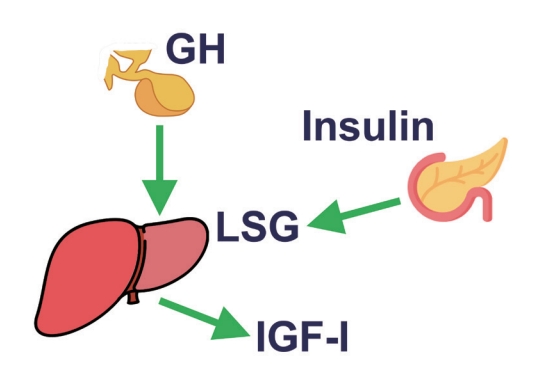
The Fascinating Interplay between Growth Hormone, Insulin-Like Growth Factor-1, and Insulin
Eline C. Nijenhuis-Noort, Kirsten A. Berk, Sebastian J. C. M. M. Neggers, Aart J. van der Lely
Endocrinol Metab. 2024;39(1):83-89.   Published online January 9, 2024
DOI: https://doi.org/10.3803/EnM.2024.101
  • 140,838 View
  • 1,413 Download
  • 44 Web of Science
  • 47 Crossref
AbstractAbstract PDFPubReader   ePub   
This review intends to provide the reader with a practical overview of several (patho)physiological conditions in which knowledge of the interplay between growth hormone (GH), insulin-like growth factor-1 (IGF-1), and insulin is important. This might help treating physicians in making the right decisions on how to intervene and improve metabolism for the benefit of patients, and to understand why and how metabolism responds in their specific cases. We will specifically address the interplay between GH, IGF-1, and insulin in type 1 and 2 diabetes mellitus, liver cirrhosis, and acromegaly as examples in which this knowledge is truly necessary.

Citations

Citations to this article as recorded by  
  • Targeting cardiometabolic risk in type 1 diabetes through incretin physiology
    Ruth Frampton, Samantha Hocking, Jennifer R. Snaith, Jerry R. Greenfield
    Trends in Endocrinology & Metabolism.2026; 37(2): 135.     CrossRef
  • Critical regulatory roles of non-coding RNAs in driving cancer sensitivity to Carmustine: a systematic review
    Seyed Mostafa Rahimi, Abouzar Bagheri
    Naunyn-Schmiedeberg's Archives of Pharmacology.2026; 399(3): 3335.     CrossRef
  • Zhi-Shen Pill ameliorates impaired glucose tolerance by targeting pancreatic β-cell and adipocyte pathways
    Yinshan Huang, Xuan Ren, Xiudao Song, Kaiwen Xu, Lijuan Jin, Hui Zhu, Wei Chen, Wei Mu, Chunbo Jiang, Guoqiang Liang
    Journal of Ethnopharmacology.2026; 357: 120931.     CrossRef
  • Human growth hormone‐induced mitotic maladaptation in podocytes and implications in diabetic kidney disease
    Bharath Banoth, Sumathi Raviraj, Anil Kumar Pasupulati
    Journal of Neuroendocrinology.2026;[Epub]     CrossRef
  • Dairy intake and risk of type 2 diabetes and metabolic syndrome: A narrative review
    Karani Santhanakrishnan Vimaleswaran, Viswanathan Mohan
    Nutrition.2026; 144: 113064.     CrossRef
  • Maternal diet shapes milk bile acids to regulate neonatal growth through TGR5
    Lufuno Phophi, Haley M. Wilt, Zhengzheng Hu, Rishi Gadikota, Mallory Cadiz, Mikayla S. Manzi, Freddie D. Ortiz Martinez, Sarayu Vanga, Elizabeth G. Chapman, Scott A. Tibbetts, Stephanie M. Karst
    Cell Reports.2026; 45(1): 116744.     CrossRef
  • Dietary Defective Jujube as a Corn Substitute: Impacts on Growth Performance, Meat Traits, and Alternaria Toxin Exposure in Lambs
    Letian Zhang, Haoyang Hui, Muhammad Faheem, Yanfeng Xue, Ning Chen, Xiaoling Zhou
    Animals.2026; 16(2): 255.     CrossRef
  • Insulin Receptor Family Autoantibodies in Patients with Type B Insulin Resistance
    Jennifer E Lee, Thilo S Chillon, Waldemar B Minich, Brent S Abel, Marissa Lightbourne, Lutz Schomburg, Rebecca J Brown
    The Journal of Clinical Endocrinology & Metabolism.2026;[Epub]     CrossRef
  • The relationship between IGF-1 and cardiovascular diseases and the potential mediating role of TyG-related index: evidence from a cohort study
    Haipeng Chen, Ning Huang, Yang Huang, Jin Chen, Xu Luo
    BMC Cardiovascular Disorders.2026;[Epub]     CrossRef
  • IGF-1 as a mediator in the association between body mass index and risk of liver cancer: A prospective analysis of 432,203 participants from the UK biobank
    Wenwen Yang, Zhixian Bao, Yuhua Chen, Jie Gao, Rui Ji
    Growth Hormone & IGF Research.2026; 84: 101684.     CrossRef
  • Associations of insulin-like growth factor 1 and IGF binding proteins 2 and 3 with lipids in toddlers
    Johanna Neiß, Hans Demmelmair, Fabian Geyer, Alexander Triebswetter, Dudung Angkasa, Joaquin Escribano, Natalia Ferré, Mariona Gispert-Llauradó, Berthold Koletzko, Susanne Bechtold-Dalla Pozza, Veit Grote
    Lipids in Health and Disease.2026;[Epub]     CrossRef
  • Mechanisms in diabetes mellitus: Relationships to metabolism and/or neoplasia
    John A. D'Elia, Bijan Roshan, Larry A. Weinrauch
    Journal of Diabetes and its Complications.2026; 40(4): 109289.     CrossRef
  • Corrigendum to ‘What type 1 diabetes endotype is most suitable for anti-CD3 antibodies prevention trials?’ [JDC, Vol. 39, Issue 10, October 2025, 109132]
    Maria Aurora Roma-Wilson, Paolo Pozzilli
    Journal of Diabetes and its Complications.2026; 40(3): 109230.     CrossRef
  • Maternal Bacillus probiotic regulates offspring growth and immunity via spleen IGF-1/mTOR and FOXO1/IL-10 pathways
    Tahany Saleh Aldayel, Heba M. A. Abdelrazek, Nadia A. El-Fahla, Noran M. Tawfik, Dalia A. Eltamany, Dalia W. Zeidan, Sherine Abbas
    Scientific Reports.2026;[Epub]     CrossRef
  • Multi-omic analysis of the liver-breast axis reveals key hepatic mediators of breast cancer progression
    Gao Yuanze, Fei Wang, Kumar Ganesan, Jianping Chen
    Science China Life Sciences.2026;[Epub]     CrossRef
  • Metformin inhibits PDGFβ signaling to suppress hyaluronan and cytokine production in thyroid eye disease
    Farha Husain, Charkira C. Patrick, Elisa Roztocil, Steven E. Feldon, Collynn F. Woeller
    Experimental Eye Research.2026; 267: 110982.     CrossRef
  • A one-week reduced-carbohydrate diet lowers insulin requirements and shifts the IGF axis with no detectable short-term change in endothelial function in a randomized, crossover trial of adults with type 1 diabetes
    M. Naweed Akbar, T. Jordan Smith, Sivaprakasam Chinnarasu, Wendi Welch, Wang Zuofei, Bridget Litts, Lauren M. LeStourgeon, Mohammad Saleem, Mohd Mabood Khan, Annet Kirabo, Justin M. Gregory
    Cardiovascular Diabetology – Endocrinology Reports.2026;[Epub]     CrossRef
  • Teprotumumab N01 for thyroid eye disease in China: clinical outcomes and quantitative MRI correlations
    Qiuyu Wang, Junning Cheng, Chunhui Yang, Jian Song, Yuqing Chen, Ya Shen, Lefeng Qu, Ruili Wei
    Frontiers in Medicine.2026;[Epub]     CrossRef
  • Insulin-Like Growth Factor Signaling in Alzheimer’s Disease: Pathophysiology and Therapeutic Strategies
    Jie Miao, Yanli Zhang, Chen Su, Qiandan Zheng, Junhong Guo
    Molecular Neurobiology.2025; 62(3): 3195.     CrossRef
  • GHRH in diabetes and metabolism
    Charlotte Steenblock, Stefan R. Bornstein
    Reviews in Endocrine and Metabolic Disorders.2025; 26(3): 413.     CrossRef
  • Signaling pathways and targeted therapies in Ewing sarcoma
    Ke Jia, Li Cao, Yihan Yu, Doudou Jing, Wei Wu, Brian Andrew Van Tine, Zengwu Shao
    Pharmacology & Therapeutics.2025; 266: 108765.     CrossRef
  • Expanding the Clinical and Mutational Spectrum of Biallelic POC1A Variants: Characterization of Four Patients and a Comprehensive Review of POC1A‐Related Phenotypes
    Umut Altunoglu, Gozde Tutku Turgut, Esin Karakılıç Özturan, Tuğba Kalaycı, Mert Kaya, Güven Toksoy, Firdevs Baş, Hülya Kayserili, Feyza Darendeliler
    Clinical Genetics.2025; 107(4): 390.     CrossRef
  • Bridging Pubertal Changes and Endotype Based Therapy in Type 1 Diabetes
    M. A. Roma‐Wilson, R. Buzzetti, S. Zampetti
    Diabetes/Metabolism Research and Reviews.2025;[Epub]     CrossRef
  • Training with electrical muscle stimulation: a novel method to improve Body Mass Index, lipid profile, growth hormone, and cortisol in overweight subjects
    Elnaz RIYAHI, Jalil REISI, Sayyed M. MARANDI, Milad ABDOLLAHI
    The Journal of Sports Medicine and Physical Fitness.2025;[Epub]     CrossRef
  • Bilateral ovarian juvenile granulosa cell tumor in a neonate with Donohue syndrome: a case report and review of literature
    Amany Reda Elbahbity, Amr Abdelhamid AbouZeid, Mohammad Hassan Mohamed, Mohammad Hassan Elibiary, Soha M. khafagy, Amira Mostafa Rashad, Shaimaa Mahmoud Abdelraouf, Sohair Abdelbaset Zayed, Manal Fawzy Gadalla, Shaimaa Abdelsattar Mohammad
    Egyptian Pediatric Association Gazette.2025;[Epub]     CrossRef
  • Association of IGF-1 and IGFBP-3 with metabolic abnormalities among children and adolescents
    Zhenghao Zhao, Yuanyuan Ma, Xinyi Zhang, Xiaoxiao Liu, Yang Li, Zhongze Fang, Rongxiu Zheng, Jing Li
    Frontiers in Endocrinology.2025;[Epub]     CrossRef
  • Early Cardiovascular and Metabolic Benefits of rhGH Therapy in Adult Patients with Severe Growth Hormone Deficiency: Impact on Oxidative Stress Parameters
    Maria Kościuszko, Angelika Buczyńska, Justyna Hryniewicka, Dorota Jankowska, Agnieszka Adamska, Katarzyna Siewko, Małgorzata Jacewicz-Święcka, Marcin Zaniuk, Adam Jacek Krętowski, Anna Popławska-Kita
    International Journal of Molecular Sciences.2025; 26(12): 5434.     CrossRef
  • Effects of warm-season feeding on yak growth, antioxidant capacity, immune function, and fecal microbiota
    Yining Xie, Yangji Cidan, Zhuoma Cisang, Deji Gusang, Quzha Danzeng, Wangdui Basang, Yanbin Zhu, Jinshui Lin, Lizhuang Hao, Tariq Shah
    Microbiology Spectrum.2025;[Epub]     CrossRef
  • Post-Exercise Whey Protein Supplementation: Effects on IGF-1, Strength, and Body Composition in Pre-Menopausal Women, a Randomised Controlled Trial
    Marc Murray, Lara Vlietstra, Alyssa M. D. Best, Stacy T. Sims, James A. Loehr, Nancy J. Rehrer
    Nutrients.2025; 17(12): 2033.     CrossRef
  • Diagnostic accuracy of triglyceride to glucose index and triglyceride/high-density lipoprotein index for insulin resistance among children and adolescents: A systematic review
    Miguel Cabanillas-Lazo, Carlos Quispe-Vicuña, Milagros Pascual-Guevara, Claudia Cruzalegui-Bazán, Arturo Duran-Pecho, José Paz-Ibarra, Victor Velásquez-Rimachi, Qian Wu
    PLOS One.2025; 20(6): e0326179.     CrossRef
  • Diabetes and Bone Health: A Comprehensive Review of Impacts and Mechanisms
    Prabhat Upadhyay, Sudhir Kumar
    Diabetes/Metabolism Research and Reviews.2025;[Epub]     CrossRef
  • High Blood Lead Levels as A Risk Factor of Stunting: A Study of Children in Agricultural Areas
    Alfan Afandi, Suhartono Suhartono, Budiyono Budiyono, Ani Margawati, Apoina Kartini
    JURNAL KESEHATAN LINGKUNGAN .2025; 17(1): 45.     CrossRef
  • Viral Infections in Type 2 Diabetes: A Dangerous Liaison
    Azizul Haque, Anudeep B. Pant
    Viruses.2025; 17(9): 1150.     CrossRef
  • Intranasal nanoparticle therapy for arsenic-induced neurotoxicity: Restoring IGF-1 signaling and advancing translational neuroprotection
    Nourhan Elsayed, Jhi Biau Foo
    Neuroscience.2025; 585: 107.     CrossRef
  • Serum IGF-1 May be less reliable when assessing the GH-IGF-1 axis in the elderly
    Angelo Milioto, Gudmundur Johannsson, Daniela Esposito
    Pituitary.2025;[Epub]     CrossRef
  • Sex Hormones and Metabolic Dysfunction-Associated Steatotic Liver Disease
    Ralf Weiskirchen, Amedeo Lonardo
    International Journal of Molecular Sciences.2025; 26(19): 9594.     CrossRef
  • Regenerative therapeutic effects of conditioned medium from human umbilical cord‑derived mesenchymal stem cells as an adjuvant to insulin therapy in a rat model of type 2 diabetes
    Siufui Hendrawan, Jennifer Lheman, Olivia Marcelina, Lydia Tantoso, Hans Baer, Shirly Gunawan
    World Academy of Sciences Journal.2025; 7(6): 1.     CrossRef
  • Prevalence of Liver Steatosis and Fibrosis Assessed by Transient Elastography in a High Cardiovascular-Risk Outpatient Cohort Including T1DM and T2DM Patients
    Alina N. Saidi, Willy B. Theel, Diederick E. Grobbee, Aart-Jan van der Lely, Femme Dirksmeier-Harinck, Marco Alings, Ellen van der Zwan-van Beek, Simone P. Rauh, Moniba Rasheed, Manuel Castro Cabezas
    Diabetology.2025; 6(11): 129.     CrossRef
  • Interconnected Mechanistic Pathways, Molecular Biomarkers, and Therapeutic Approach of Oral Cancer in Patients with Diabetes Mellitus
    Viviana Elian, Violeta Popovici, Mihnea Ioan Nicolescu, Alexandra Maria Nicolescu, Sorina Maria Aurelian, Emma Adriana Ozon
    Current Issues in Molecular Biology.2025; 47(11): 929.     CrossRef
  • Adverse events with usage of human growth hormone: a review
    Ludwik K. Branski, Sarita Thanedar, Nafis Deen, Kevin W. Cho, Gongkai Liu, Gabriel Hundeshagen, David N. Herndon, Linda E. Sousse
    Discover Medicine.2025;[Epub]     CrossRef
  • Unlocking Gut-Driven Metabolic Repair: The Role of Glucomannan Porang (Amorphophallus muelleri Blume) in Insulin Resistance and Short-Chain Fatty Acid Modulation in a Type 2 Diabetes Mellitus Rat Model
    Azizah H. Safitri, Rahmata A. Sayyida, Eni Widayati, Nurina Tyagita
    Tropical Journal of Natural Product Research.2025;[Epub]     CrossRef
  • Effects of Short-Term (20-Day) Alternate-Day Modified Fasting and Time-Restricted Feeding on Fasting Glucose and IGF-1 in Obese Young Women
    Dian Aristia Rachmayanti, Purwo Sri Rejeki, Raden Argarini, Hermina Novida, Sri Soenarti, Shariff Halim, Chy’as Diuranil Astrid Permataputri, Sheeny Priska Purnomo
    Diseases.2025; 13(12): 390.     CrossRef
  • Human Cancers Derived from Either Genetic or Lifestyle Factors Are Initiated by Impaired Estrogen Signaling
    Zsuzsanna Suba
    Cancers.2025; 18(1): 78.     CrossRef
  • IGF-1 and IGF-2 as Molecules Linked to Causes and Consequences of Obesity from Fetal Life to Adulthood: A Systematic Review
    Justyna Szydlowska-Gladysz, Adrianna Edyta Gorecka, Julia Stepien, Izabela Rysz, Iwona Ben-Skowronek
    International Journal of Molecular Sciences.2024; 25(7): 3966.     CrossRef
  • Insulin resistance reduction, intermittent fasting, and human growth hormone: secondary analysis of a randomized trial
    Benjamin D. Horne, Jeffrey L. Anderson, Heidi T. May, Tami L. Bair, Viet T. Le, Leslie Iverson, Kirk U. Knowlton, Joseph B. Muhlestein
    npj Metabolic Health and Disease.2024;[Epub]     CrossRef
  • Growth hormone/insulin-like growth factor I axis in health and disease states: an update on the role of intra-portal insulin
    Kevin C. J. Yuen, Rikke Hjortebjerg, Ashok Ainkaran Ganeshalingam, David R. Clemmons, Jan Frystyk
    Frontiers in Endocrinology.2024;[Epub]     CrossRef
  • Comprehensive Management of Diabetes Mellitus in the Elderly: A Review
    Bharat Kumar, Ravi Kant, Gopal Krishana Bohra
    Journal of Cardio-diabetes and Metabolic Disorders.2023; 3(2): 21.     CrossRef
Close layer
Mineral, Bone & Muscle
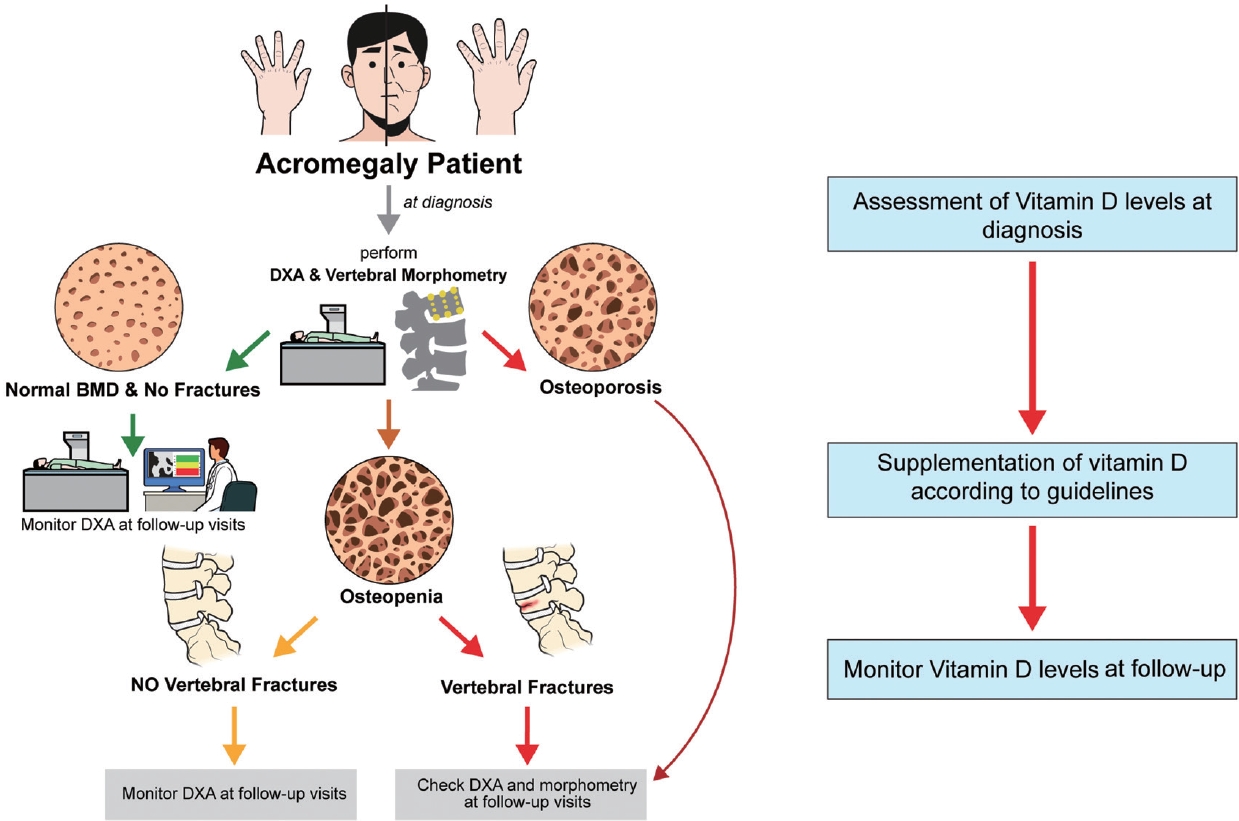
Acromegaly and Bone: An Update
Andrea Giustina
Endocrinol Metab. 2023;38(6):655-666.   Published online December 22, 2023
DOI: https://doi.org/10.3803/EnM.2023.601
  • 14,889 View
  • 382 Download
  • 28 Web of Science
  • 32 Crossref
AbstractAbstract PDFPubReader   ePub   
Since our discovery in 2006 that acromegaly is associated with an increased risk of vertebral fractures, many authors have confirmed this finding in both cross-sectional and prospective studies. Due to the high epidemiological and clinical impact of this newly discovered comorbidity of acromegaly, this topic has progressively become more important and prominent over the years, and the pertinent literature has been enriched by new findings on the pathophysiology and treatment. The aim of this narrative review was to discuss these novel findings, integrating them with the seminal observations, in order to give the reader an updated view of how the field of acromegaly and bone is developing, from strong clinical observations to a mechanistic understanding and possible prevention and treatment.

Citations

Citations to this article as recorded by  
  • Integrative Machine Learning Approach for Predicting Resistance to First-generation Receptor Ligands in Acromegaly
    Wei Lin, Songchang Shi, Yuanyuan Zheng, Edward Laws, Timothy R Smith, Le Min
    The Journal of Clinical Endocrinology & Metabolism.2026; 111(2): 484.     CrossRef
  • Association between vertebral fracture risk and bone mineral density in patients with acromegaly
    Shuaiming Chen, Min Liu, Huiwen Tan, Lin Ji, Yerong Yu, Shu Jiang, Bowen Cai, Wei Wang, Songping Zheng, Xin Zan, Huan Xu, Jing Li, Jianwei Li
    Pituitary.2026;[Epub]     CrossRef
  • The Journey of Acromegaly Towards Treatment: A Single-Center Study
    Varvara Chalmantzi, Sophia Vlachou, Maria Eleni Chondrogianni, Maria Panagaki, Ariadni Spyroglou, Marina Tsoli, Eva Kassi, Gregory Kaltsas, Krystallenia I. Alexandraki
    Journal of Personalized Medicine.2026; 16(2): 85.     CrossRef
  • Cancer Risk in Patients with Acromegaly: Insights from a Single Center in Ankara
    Murat Cinel, Ozgur Demir, Rovsan Hasenov, Sule Canlar, Caglar Keskin, Asena Gökçay Canpolat, Mustafa Sahin, Sevim Güllü, Demet Corapcioglu
    Journal of Clinical Medicine.2026; 15(4): 1573.     CrossRef
  • Glucocorticoid-Induced Osteoporosis: Pathogenesis, the Impact of Different Administration Routes on Bone Mineral Density, and Fracture Risk and Treatment Options—A Narrative Review
    Monika Kapszewicz, Marta Michalska-Kasiczak, Ewa Sewerynek
    Journal of Clinical Medicine.2026; 15(7): 2488.     CrossRef
  • Increased prevalence of morphometric vertebral fractures in patients with hypercalcitoninemia due to medullary thyroid carcinoma
    Luigi di Filippo, Vincenzo Franzese, Giuseppina Incampo, Anna Maria Formenti, Lucrezia Albanese, Mauro Doga, Debora Onorati, Riccardo Maggiore, Riccardo Rosati, Francesca Perticone, Raffaele Giubbini, Andrea Giustina
    Bone.2026; 208: 117872.     CrossRef
  • Vitamin D and hip protectors in osteosarcopenia: a combined hip fracture preventing approach
    Alessandro Giustina, Andrea Giustina
    Reviews in Endocrine and Metabolic Disorders.2025; 26(1): 1.     CrossRef
  • Long-Term Prognosis and Systemic Impact of Acromegaly: Analyses Utilizing Korean National Health Insurance Data
    Sangmo Hong, Kyungdo Han, Cheol-Young Park
    Endocrinology and Metabolism.2025; 40(1): 1.     CrossRef
  • Frailty and pituitary surgery: a systematic review
    Mendel Castle-Kirszbaum, Ann McCormack, Christopher Ovenden, Jeremy Kam, James King, Yi Yuen Wang, Tony Goldschlager
    Pituitary.2025;[Epub]     CrossRef
  • Artificial intelligence in acromegaly: Why, when and how
    Alessandro Giustina, Andrea Giustina
    Pituitary.2025;[Epub]     CrossRef
  • Muscle dysfunction is associated with poor quality of life in long-term controlled patients with acromegaly
    Luciana Martel-Duguech, Helena Bascuñana, Jordi Cuartero, Susan M. Webb, Elena Valassi
    Pituitary.2025;[Epub]     CrossRef
  • Evaluation of bone density and microstructure by DXA, TBS and HR-pQCT: an assessment of cortical porosity and its association with vertebral fractures in patients with acromegaly
    PG Ornellas, EMF Gama, LMC Mendonça, C Villela-Nogueira, FP Paranhos-Neto, L Kasuki, MR Gadelha, MLF Farias, M Madeira
    Journal of Endocrinological Investigation.2025; 48(9): 2087.     CrossRef
  • Growth Hormone and Bone: Preclinical and Clinical Perspectives
    Kevin C.J. Yuen
    Endocrine Practice.2025; 31(9): 1197.     CrossRef
  • Development and application of HDA-ABi-GRU-based on the interpersonal problems scale of personality disorders in acromegaly patients
    Shashi Kiran Tagilapalli, Lei Shi, Zhentian Wu, Canhui Tian, Yanmei Tie, Dongsheng He, Haijun Wang, Wenli Chen
    Neurocomputing.2025; 653: 131138.     CrossRef
  • Collaboration Between Endocrinologists and Dentists in the Care of Patients with Acromegaly—A Narrative Review
    Beata Wiśniewska, Kosma Piekarski, Sandra Spychała, Ewelina Golusińska-Kardach, Maria Stelmachowska-Banaś, Marzena Wyganowska
    Journal of Clinical Medicine.2025; 14(15): 5511.     CrossRef
  • Skeletal Health in Pituitary and Neuroendocrine Diseases: Prevention and Treatments of Bone Fragility
    Flavia Costanza, Antonella Giampietro, Laura De Marinis, Antonio Bianchi, Sabrina Chiloiro, Alfredo Pontecorvi
    Targets.2025; 3(3): 26.     CrossRef
  • Consensus on acromegaly therapeutic outcomes: an update
    Shlomo Melmed, Luigi di Filippo, Maria Fleseriu, Moisés Mercado, Niki Karavitaki, Mark Gurnell, Roberto Salvatori, Stylianos Tsagarakis, Marco Losa, Pietro Maffei, Alberto M. Pereira, Eliza B. Geer, Laurence Katznelson, Aart Jan van der Lely, Jens Bollers
    Nature Reviews Endocrinology.2025; 21(11): 718.     CrossRef
  • ACROMEGALY – ETIOLOGY, SYMPTOMS, TREATMENT. LITERATURE REVIEW
    Michał Ochwat, Katarzyna Dąbek, Aleksandra Kajtel, Anna Skowronek, Martyna Piekarska-Magiera, Adam Sielicki, Maria Ochwat, Tomasz Skowronek, Michał Oborski, Zofia Sudoł
    International Journal of Innovative Technologies in Social Science.2025;[Epub]     CrossRef
  • Acromegaly treatment and bone: a bidirectional relationship
    Sabrina Chiloiro, Chiara Palumbo, Antonella Giampietro, Laura De Marinis, Antonio Bianchi, Andrea Giustina, Alfredo Pontecorvi
    Pituitary.2025;[Epub]     CrossRef
  • Dental Implantology in Acromegaly: Pathophysiological Challenges, Biomaterial Interactions, and Future Directions—A Narrative Review
    Beata Wiśniewska, Sandra Spychała, Kosma Piekarski, Ewelina Golusińska-Kardach, Maria Stelmachowska-Banaś, Marzena Wyganowska
    Journal of Functional Biomaterials.2025; 16(11): 411.     CrossRef
  • New insights into the vitamin D/PTH axis in endocrine-driven metabolic bone diseases
    Luigi di Filippo, John P. Bilezikian, Ernesto Canalis, Umberto Terenzi, Andrea Giustina
    Endocrine.2024; 85(3): 1007.     CrossRef
  • Bone health and skeletal fragility in second- and third-line medical therapies for acromegaly: preliminary results from a pilot single center experience
    Sabrina Chiloiro, Antonella Giampietro, Amato Infante, Pier Paolo Mattogno, Liverana Lauretti, Alessandro Olivi, Laura De Marinis, Alfredo Pontecorvi, Francesco Doglietto, Antonio Bianchi
    Pituitary.2024; 27(3): 303.     CrossRef
  • Standards of care for medical management of acromegaly in pituitary tumor centers of excellence (PTCOE)
    Andrea Giustina, M. M. Uygur, S. Frara, A. Barkan, N. R. Biermasz, P. Chanson, P. Freda, M. Gadelha, L. Haberbosch, U. B. Kaiser, S. Lamberts, E. Laws, L. B. Nachtigall, V. Popovic, M. Reincke, A. J. van der Lely, J. A. H. Wass, S. Melmed, F. F. Casanueva
    Pituitary.2024; 27(4): 381.     CrossRef
  • Vertebral fractures in patients with non-functioning pituitary adenomas - a new frontier?
    Nicholas A. Tritos
    Pituitary.2024; 27(4): 311.     CrossRef
  • Suspected silent pituitary somatotroph neuroendocrine tumor associated with acromegaly-like bone disorders: a case report
    Tongxin Xiao, Xinxin Mao, Ou Wang, Yong Yao, Kan Deng, Huijuan Zhu, Lian Duan
    BMC Endocrine Disorders.2024;[Epub]     CrossRef
  • Skeletal fragility in pituitary disease: how can we predict fracture risk?
    Fabio Bioletto, Alessandro Maria Berton, Marco Barale, Luigi Simone Aversa, Lorenzo Sauro, Michela Presti, Francesca Mocellini, Noemi Sagone, Ezio Ghigo, Massimo Procopio, Silvia Grottoli
    Pituitary.2024; 27(6): 789.     CrossRef
  • Vitamin D in pituitary driven osteopathies
    Sabrina Chiloiro, Flavia Costanza, Elena Riccardi, Antonella Giampietro, Laura De Marinis, Antonio Bianchi, Alfredo Pontecorvi, Andrea Giustina
    Pituitary.2024; 27(6): 847.     CrossRef
  • GH receptor polymorphisms guide second-line therapies to prevent acromegaly skeletal fragility: preliminary results of a pilot study
    Sabrina Chiloiro, Flavia Costanza, Antonella Giampietro, Amato Infante, Pier Paolo Mattogno, Flavia Angelini, Consolato Gullì, Liverana Lauretti, Mario Rigante, Alessandro Olivi, Laura De Marinis, Francesco Doglietto, Antonio Bianchi, Alfredo Pontecorvi
    Frontiers in Endocrinology.2024;[Epub]     CrossRef
  • Growth hormone and bone: a basic perspective
    Simona Bolamperti, Isabella Villa, Luigi di Filippo
    Pituitary.2024; 27(6): 745.     CrossRef
  • Approach to the patient with controlled acromegaly and acromegalic arthropathy: clinical diagnosis and management
    Iris C. M. Pelsma, Herman M. Kroon, Cornelie D. Andela, Enrike M. J. van der Linden, Margreet Kloppenburg, Nienke R. Biermasz, Kim M. J. A. Claessen
    Pituitary.2024; 27(6): 824.     CrossRef
  • Modern approach to bone comorbidity in prolactinoma
    Meliha Melin Uygur, Sara Menotti, Simona Santoro, Andrea Giustina
    Pituitary.2024; 27(6): 802.     CrossRef
  • Novel approach to bone comorbidity in resistant acromegaly
    Stefano Frara, Matteo Acanfora, Vincenzo Franzese, Maria Luisa Brandi, Marco Losa, Andrea Giustina
    Pituitary.2024; 27(6): 813.     CrossRef
Close layer
Songwon Lecture 2022
Hypothalamus and pituitary gland
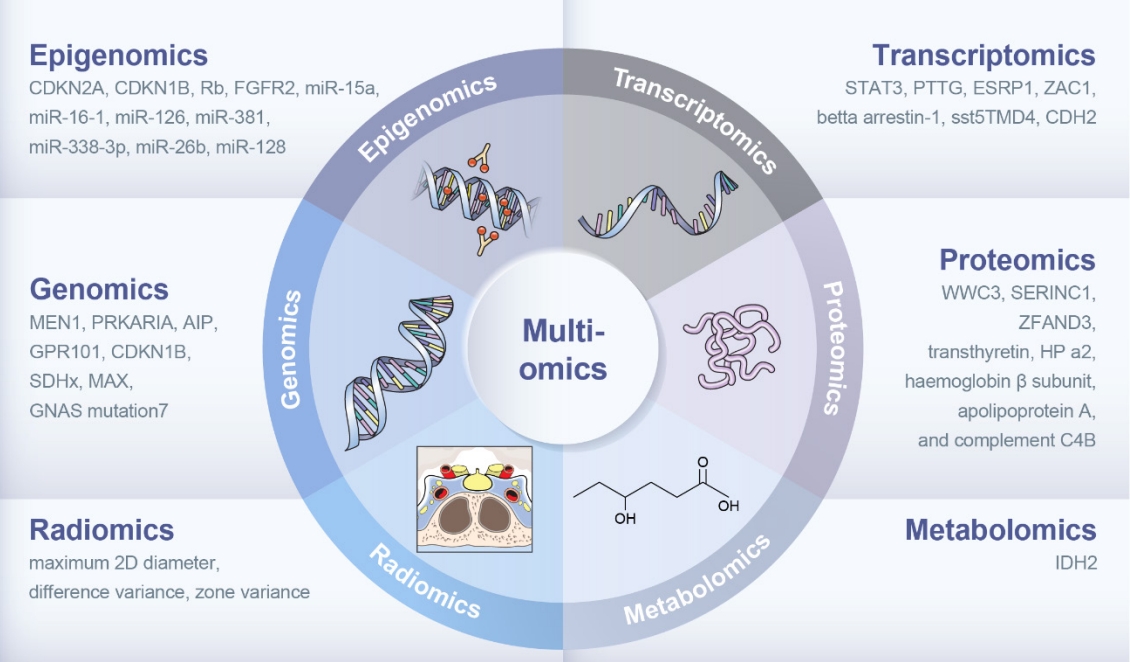
Multiomics Approach to Acromegaly: Unveiling Translational Insights for Precision Medicine
Kyungwon Kim, Cheol Ryong Ku, Eun Jig Lee
Endocrinol Metab. 2023;38(5):463-471.   Published online October 13, 2023
DOI: https://doi.org/10.3803/EnM.2023.1820
  • 7,580 View
  • 227 Download
  • 1 Web of Science
  • 1 Crossref
AbstractAbstract PDFPubReader   ePub   
The clinical characteristics and prognoses of acromegaly vary among patients. Assessment of current and novel predictors can lead to multilevel categorization of patients, allowing integration into new clinical guidelines and a reduction in the increased morbidity and mortality associated with acromegaly. Despite advances in the diagnosis and treatment of acromegaly, its pathophysiology remains unclear. Recent advancements in multiomics technologies, including genomics, transcriptomics, proteomics, metabolomics, and radiomics, have offered new opportunities to unravel the complex pathophysiology of acromegaly. This review comprehensively explores the emerging role of multiomics approaches in elucidating the molecular landscape of acromegaly. We discuss the potential implications of multiomics data integration in the development of novel diagnostic tools, identification of therapeutic targets, and the prospects of precision medicine in acromegaly management. By integrating diverse omics datasets, these approaches can provide valuable insights into disease mechanisms, facilitate the identification of diagnostic biomarkers, and identify potential therapeutic targets for precision medicine in the management of acromegaly.

Citations

Citations to this article as recorded by  
  • “Micromegaly”: Acromegaly with apparently normal GH, an entity on its own?
    Lucio Vilar, Luciana Ansaneli Naves, Manoel Ricardo Alves Martins, Antônio Ribeiro-Oliveira Jr
    Best Practice & Research Clinical Endocrinology & Metabolism.2024; 38(3): 101878.     CrossRef
Close layer
Review Article
Hypothalamus and Pituitary Gland
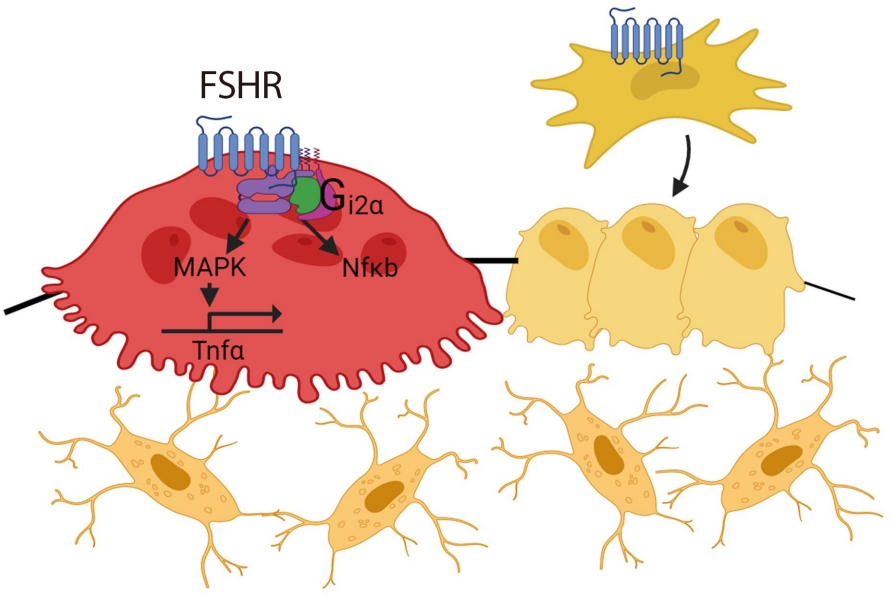
Independent Skeletal Actions of Pituitary Hormones
Se-Min Kim, Farhath Sultana, Funda Korkmaz, Daria Lizneva, Tony Yuen, Mone Zaidi
Endocrinol Metab. 2022;37(5):719-731.   Published online September 28, 2022
DOI: https://doi.org/10.3803/EnM.2022.1573
  • 9,633 View
  • 285 Download
  • 11 Web of Science
  • 10 Crossref
AbstractAbstract PDFPubReader   ePub   
Over the past years, pituitary hormones and their receptors have been shown to have non-traditional actions that allow them to bypass the hypothalamus-pituitary-effector glands axis. Bone cells—osteoblasts and osteoclasts—express receptors for growth hormone, follicle stimulating hormone (FSH), thyroid stimulating hormone (TSH), adrenocorticotrophic hormone (ACTH), prolactin, oxytocin, and vasopressin. Independent skeletal actions of pituitary hormones on bone have been studied using genetically modified mice with haploinsufficiency and by activating or inactivating the receptors pharmacologically, without altering systemic effector hormone levels. On another front, the discovery of a TSH variant (TSH-βv) in immune cells in the bone marrow and skeletal action of FSHβ through tumor necrosis factor α provides new insights underscoring the integrated physiology of bone-immune-endocrine axis. Here we discuss the interaction of each pituitary hormone with bone and the potential it holds in understanding bone physiology and as a therapeutic target.

Citations

Citations to this article as recorded by  
  • Plasma proteomic profiles reveal proteins and three characteristic patterns associated with osteoporosis: A prospective cohort study
    Yi Zheng, Jincheng Li, Yucan Li, Jiacheng Wang, Chen Suo, Yanfeng Jiang, Li Jin, Kelin Xu, Xingdong Chen
    Journal of Advanced Research.2025; 75: 491.     CrossRef
  • Fracture risks in patients aged 50 years and older with panhypopituitarism: a nationwide cohort study
    Seung Shin Park, Hyunmook Jeong, Chang Ho Ahn, Min Jeong Park, Sung Hye Kong, Sang Wan Kim, Chan Soo Shin, Yong Hwy Kim, Kwangsoo Kim, Jung Hee Kim
    Osteoporosis International.2025; 36(10): 1951.     CrossRef
  • Cushing’s disease and bone
    Aleksandra Zdrojowy-Wełna, Barbara Stachowska, Marek Bolanowski
    Pituitary.2024; 27(6): 837.     CrossRef
  • Skeletal fragility in pituitary disease: how can we predict fracture risk?
    Fabio Bioletto, Alessandro Maria Berton, Marco Barale, Luigi Simone Aversa, Lorenzo Sauro, Michela Presti, Francesca Mocellini, Noemi Sagone, Ezio Ghigo, Massimo Procopio, Silvia Grottoli
    Pituitary.2024; 27(6): 789.     CrossRef
  • Role of oxytocin in bone
    Tianming Wang, Jianya Ye, Yongqiang Zhang, Jiayi Li, Tianxiao Yang, Yufeng Wang, Xiao Jiang, Qingqiang Yao
    Frontiers in Endocrinology.2024;[Epub]     CrossRef
  • Modern approach to bone comorbidity in prolactinoma
    Meliha Melin Uygur, Sara Menotti, Simona Santoro, Andrea Giustina
    Pituitary.2024; 27(6): 802.     CrossRef
  • New tools for bone health assessment in secreting pituitary adenomas
    Meliha Melin Uygur, Stefano Frara, Luigi di Filippo, Andrea Giustina
    Trends in Endocrinology & Metabolism.2023; 34(4): 231.     CrossRef
  • A Causality between Thyroid Function and Bone Mineral Density in Childhood: Abnormal Thyrotropin May Be Another Pediatric Predictor of Bone Fragility
    Dongjin Lee, Moon Ahn
    Metabolites.2023; 13(3): 372.     CrossRef
  • The mechanism of oxytocin and its receptors in regulating cells in bone metabolism
    Liu Feixiang, Feng Yanchen, Li Xiang, Zhang Yunke, Miao Jinxin, Wang Jianru, Lin Zixuan
    Frontiers in Pharmacology.2023;[Epub]     CrossRef
  • To investigate the mechanism of Yiwei Decoction in the treatment of premature ovarian insufficiency-related osteoporosis using transcriptomics, network pharmacology and molecular docking techniques
    Weisen Fan, Yan Meng, Jing Zhang, Muzhen Li, Yingjie Zhang, Xintian Qu, Xin Xiu
    Scientific Reports.2023;[Epub]     CrossRef
Close layer
Original Article
Hypothalamus and Pituitary Gland
Metabolic Impacts of Discontinuation and Resumption of Recombinant Human Growth Hormone Treatment during the Transition Period in Patients with Childhood-Onset Growth Hormone Deficiency
Yun Jeong Lee, Yunha Choi, Han-Wook Yoo, Young Ah Lee, Choong Ho Shin, Han Saem Choi, Ho-Seong Kim, Jae Hyun Kim, Jung Eun Moon, Cheol Woo Ko, Moon Bae Ahn, Byung-Kyu Suh, Jin-Ho Choi
Endocrinol Metab. 2022;37(2):359-368.   Published online April 25, 2022
DOI: https://doi.org/10.3803/EnM.2021.1384
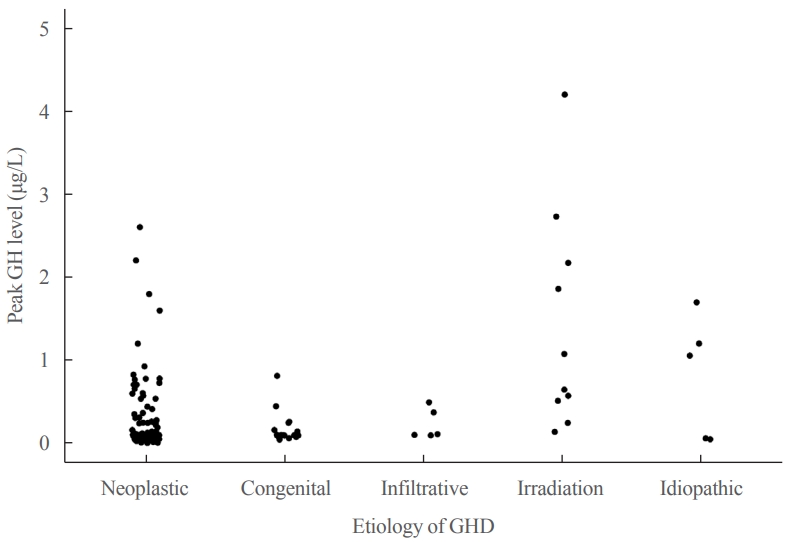
  • 11,518 View
  • 239 Download
  • 14 Web of Science
  • 14 Crossref
AbstractAbstract PDFSupplementary MaterialPubReader   ePub   
Background
Discontinuing growth hormone (GH) treatment during the transition to adulthood has been associated with adverse health outcomes in patients with childhood-onset growth hormone deficiency (CO-GHD). This study investigated the metabolic changes associated with interrupting GH treatment in adolescents with CO-GHD during the transition period.
Methods
This study included 187 patients with CO-GHD who were confirmed to have adult GHD and were treated at six academic centers in Korea. Data on clinical parameters, including anthropometric measurements, metabolic profiles, and bone mineral density (BMD) at the end of childhood GH treatment, were collected at the time of re-evaluation for GHD and 1 year after treatment resumption.
Results
Most patients (n=182, 97.3%) had organic GHD. The median age at treatment discontinuation and re-evaluation was 15.6 and 18.7 years, respectively. The median duration of treatment interruption was 2.8 years. During treatment discontinuation, body mass index Z-scores and total cholesterol, low-density lipoprotein, and non-high-density lipoprotein (HDL) cholesterol levels increased, whereas fasting glucose levels decreased. One year after GH treatment resumption, fasting glucose levels, HDL cholesterol levels, and femoral neck BMD increased significantly. Longer GH interruption (>2 years, 60.4%) resulted in worse lipid profiles at re-evaluation. The duration of interruption was positively correlated with fasting glucose and non-HDL cholesterol levels after adjusting for covariates.
Conclusion
GH treatment interruption during the transition period resulted in worse metabolic parameters, and a longer interruption period was correlated with poorer outcomes. GH treatment should be resumed early in patients with CO-GHD during the transition period.

Citations

Citations to this article as recorded by  
  • Impact of non-weight-dependent low-dose somatropin on bone accrual in childhood-onset GH deficient in the transition: an 18-month randomized controlled trial
    Valesca Mansur Kuba, Antonia B.S. Castro, Cláudio Leone, Durval Damiani
    Jornal de Pediatria.2025; 101(2): 255.     CrossRef
  • Sex-Specific Cardiovascular Risks and Mortality in Patients with Panhypopituitarism: A Nationwide Cohort Study
    Seung Shin Park, Hyunmook Jeong, Chang Ho Ahn, Min Jeong Park, Yong Hwy Kim, Kwangsoo Kim, Jung Hee Kim
    Endocrinology and Metabolism.2025; 40(3): 469.     CrossRef
  • Ghrelin regulating liver activity and its potential effects on liver fibrosis and Echinococcosis
    Jiang Zhu, Tanfang Zhou, Meng Menggen, Kalibixiati Aimulajiang, Hao Wen
    Frontiers in Cellular and Infection Microbiology.2024;[Epub]     CrossRef
  • Composición de la microbiota en pacientes con déficit de hormona de crecimiento antes y después de recibir tratamiento
    Patricia García Navas, María Yolanda Ruíz del Prado, Pablo Villoslada Blanco, Emma Recio Fernández, María Ruíz del Campo, Patricia Pérez Matute
    Anales de Pediatría.2024; 100(6): 404.     CrossRef
  • Composition of the microbiota in patients with growth hormone deficiency before and after treatment with growth hormone
    Patricia García Navas, María Yolanda Ruíz del Prado, Pablo Villoslada Blanco, Emma Recio Fernández, María Ruíz del Campo, Patricia Pérez Matute
    Anales de Pediatría (English Edition).2024; 100(6): 404.     CrossRef
  • Clinical Management of Postoperative Growth Hormone Deficiency in Hypothalamic-Pituitary Tumors
    Pedro Iglesias
    Journal of Clinical Medicine.2024; 13(15): 4307.     CrossRef
  • An Overview of Cardiovascular Risk in Pituitary Disorders
    Georgia Ntali, Vyron Markussis, Alexandra Chrisoulidou
    Medicina.2024; 60(8): 1241.     CrossRef
  • The role of IGF1 in determining body composition in children and adolescents with growth hormone deficiency and those with idiopathic short stature
    Hussein Zaitoon, Michal Yackobovitch-Gavan, Eyas Midlej, Adi Uretzky, Irina Laurian, Anna Dorfman, Hagar Interator, Yael Lebenthal, Avivit Brener
    Endocrine.2024; 86(3): 1110.     CrossRef
  • Policy for transitioning childhood-onset growth hormone deficiency from pediatric to adult endocrine care in Belgium
    Willem Staels, Jean De Schepper, Marianne Becker, Philippe Lysy, Daniel Klink, Karl Logghe, Marieken den Brinker, Anne Rochtus, Bruno Lapauw, Martine Cools, Orsalia Alexopoulou, Marie Bex, Bernard Corvilain, Laurent Crenier, Christophe De Block, Julian Do
    Frontiers in Endocrinology.2024;[Epub]     CrossRef
  • Transition Period and Young Adulthood in Patients with Childhood Onset Growth Hormone Deficiency (COGHD): Impact of Growth Hormone Replacement on Bone Mass and Body Composition
    Mirjana Doknic, Marko Stojanovic, Aleksandra Markovic
    International Journal of Molecular Sciences.2024; 25(19): 10313.     CrossRef
  • Baseline Clinical Factors Associated with Cessation of Growth Hormone Therapy in Patients with Severe Growth Hormone Deficiency - Real World Evidence
    Nageswary Nadarajah, Emmanuel Ssemmondo, Shani Brooks, Remi Akinyombo, Kazeem Adeleke, Harshal Deshmukh, Thozhukat Sathyapalan
    International Journal of Endocrinology and Metabolism.2024;[Epub]     CrossRef
  • Clinical and genetic features of childhood-onset congenital combined pituitary hormone deficiency: a retrospective, single-center cohort study
    Yoonha Lee, Young Ah Lee, Jung Min Ko, Choong Ho Shin, Yun Jeong Lee
    Annals of Pediatric Endocrinology & Metabolism.2024; 29(6): 379.     CrossRef
  • Relationship between the Stimulated Peak Growth Hormone Level and Metabolic Parameters in Children with Growth Hormone Deficiency
    Seong Yong Lee
    The Ewha Medical Journal.2023;[Epub]     CrossRef
  • Dyslipidaemia and growth hormone deficiency – A comprehensive review
    Matthias Hepprich, Fahim Ebrahimi, Emanuel Christ
    Best Practice & Research Clinical Endocrinology & Metabolism.2023; 37(6): 101821.     CrossRef
Close layer
Review Article
Miscellanenous
Cushing Syndrome Associated Myopathy: It Is Time for a Change
Martin Reincke
Endocrinol Metab. 2021;36(3):564-571.   Published online June 18, 2021
DOI: https://doi.org/10.3803/EnM.2021.1069
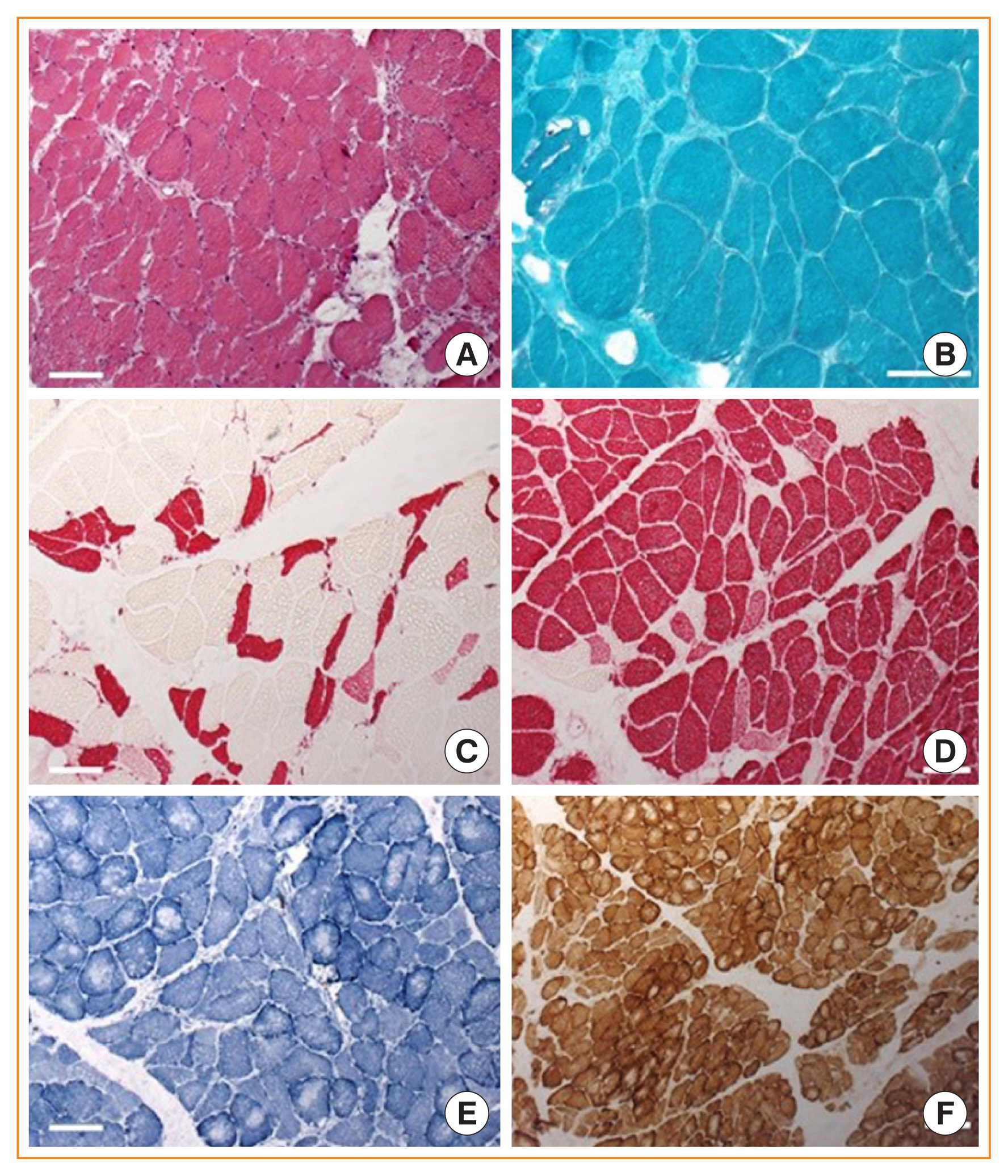
  • 13,762 View
  • 246 Download
  • 21 Web of Science
  • 20 Crossref
AbstractAbstract PDFPubReader   ePub   
Cushing syndrome is the result of excessive levels of glucocorticoids. Endogenous Cushing syndrome is rare with an incidence of two to three cases per million per year. Clinically, the presentation consists of a characteristic phenotype including skin symptoms and metabolic manifestations. A frequent co-morbidity with high impact on quality of life is Cushing syndrome associated myopathy. It characteristically affects the proximal myopathy, impairing stair climbing and straightening up. The pathophysiology is complex and involves protein degradation via the forkhead box O3 (FOXO3) pathway, intramuscular fat accumulation, and inactivity-associated muscle atrophy. Surgical remission of Cushing syndrome is the most important step for recovery of muscle function. Restoration depends on age, co-morbidities and postoperative insulin-like growth factor concentrations. At average, functionality remains impaired during the long-term compared to age and sex matched control persons. Growth hormone therapy in individuals with impaired growth hormone secretion could be an option but has not been proved in a randomized trial.

Citations

Citations to this article as recorded by  
  • Cushing syndrome of different etiologies - cardiometabolic complications, venous thromboembolic events and mortality: data from ERCUSYN Krakow database
    Mari Minasyan, Aleksandra Gamrat-Żmuda, Agata Bryk-Wiązania, Wiktoria Suchy, Anna Bogusławska, Ewelina Rzepka, Beata Piwońska-Solska, Katarzyna Majka, Alicja Hubalewska-Dydejczyk, Elena Valassi, Aleksandra Gilis-Januszewska
    Frontiers in Endocrinology.2026;[Epub]     CrossRef
  • Osteosarcopenic adiposity and its relation to cancer and chronic diseases: Implications for research to delineate mechanisms and improve clinical outcomes
    Jasminka Z. Ilich, Biljana Pokimica, Danijela Ristić-Medić, Snjezana Petrović, Aleksandra Arsić, Nadja Vasiljević, Vesna Vučić, Owen J. Kelly
    Ageing Research Reviews.2025; 103: 102601.     CrossRef
  • Glucocorticoid-Mediated Skeletal Muscle Atrophy: Molecular Mechanisms and Potential Therapeutic Targets
    Uttapol Permpoon, Jiyeong Moon, Chul Young Kim, Tae-gyu Nam
    International Journal of Molecular Sciences.2025; 26(15): 7616.     CrossRef
  • Side effects and ineffectiveness of standard therapy for idiopathic recurrent pericarditis: status of the problem and description of clinical cases. Case report
    Angelina A. Petrukhina, Alfia А. Safiullina, Yulia F. Osmolovskaya, Igor V. Zhirov, Olga V. Stukalova, Victor N. Shitov, Sergey N. Tereshchenko
    Terapevticheskii arkhiv.2025; 97(8): 719.     CrossRef
  • Long-Term Consequences of Cushing Syndrome: A Systematic Literature Review
    Soraya Puglisi, Anna Maria Elena Perini, Cristina Botto, Francesco Oliva, Massimo Terzolo
    The Journal of Clinical Endocrinology & Metabolism.2024; 109(3): e901.     CrossRef
  • Perioperative Management of an Unusual Case of Dual Etiology Myopathy Undergoing Surgery for an Adrenal Tumor
    Himanshu Sekhar Satapathy, Sakshi Gera, Lalit Sehgal
    Journal of Indian College of Anaesthesiologists.2024; 3(2): 86.     CrossRef
  • The Link between Mitochondrial Dysfunction and Sarcopenia: An Update Focusing on the Role of Pyruvate Dehydrogenase Kinase 4
    Min-Ji Kim, Ibotombi Singh Sinam, Zerwa Siddique, Jae-Han Jeon, In-Kyu Lee
    Diabetes & Metabolism Journal.2023; 47(2): 153.     CrossRef
  • Intelligent Systems for Muscle Tracking: A Review on Sensor‐Algorithm Synergy
    Arjun Putcha, Tien Nguyen, Regina Smith, Rachel Choffin, Wubin Bai
    Advanced Intelligent Systems.2023;[Epub]     CrossRef
  • Sarcopenia in youth
    Han Na Jung, Chang Hee Jung, You-Cheol Hwang
    Metabolism.2023; 144: 155557.     CrossRef
  • Cushing Syndrome
    Martin Reincke, Maria Fleseriu
    JAMA.2023; 330(2): 170.     CrossRef
  • Musculoskeletal complications of Cushing syndrome
    Dorota Leszczyńska, Alicja Szatko, Lucyna Papierska, Wojciech Zgliczyński, Piotr Glinicki
    Rheumatology.2023; 61(4): 271.     CrossRef
  • Circulating myomiRNAs as biomarkers in patients with Cushing’s syndrome
    C. Pivonello, R. Patalano, C. Simeoli, T. Montò, M. Negri, F. Amatrudo, N. Di Paola, A. Larocca, E. M. Crescenzo, R. Pirchio, D. Solari, C. de Angelis, R. S. Auriemma, L. M. Cavallo, A. Colao, R. Pivonello
    Journal of Endocrinological Investigation.2023; 47(3): 655.     CrossRef
  • Low-grade inflammation during the glucocorticoid withdrawal phase in patients with Cushing's syndrome
    Frederick Vogel, Leah Braun, Stephanie Zopp, Elisabeth Nowak, Jochen Schreiner, Irina Benz, German Rubinstein, Heike Künzel, Katrin Ritzel, Matthias Kroiss, Jürgen Honegger, Felix Beuschlein, Katharina Schilbach, Daniel Teupser, Martin Bidlingmaier, Marti
    European Journal of Endocrinology.2023; 188(4): 375.     CrossRef
  • An odd case of immune-mediated necrotizing myopathy, complicated with sagittal, transverse and sigmoid sinus thrombosis
    Andreea Trandafir, Violeta Claudia Bonjincă, Delia Tulba, Gelu Onose
    Balneo and PRM Research Journal.2023; 14(Vol.14, no): 630.     CrossRef
  • Morbidität und Mortalität beim Cushing-Syndrom
    Frederick Vogel, Leah Braun, Martin Reincke
    Der Internist.2022; 63(1): 34.     CrossRef
  • Pathophysiology of Mild Hypercortisolism: From the Bench to the Bedside
    Vittoria Favero, Arianna Cremaschi, Chiara Parazzoli, Alberto Falchetti, Agostino Gaudio, Luigi Gennari, Alfredo Scillitani, Fabio Vescini, Valentina Morelli, Carmen Aresta, Iacopo Chiodini
    International Journal of Molecular Sciences.2022; 23(2): 673.     CrossRef
  • Long‐term morbidity and mortality in patients with Cushing's syndrome
    Leah T. Braun, Frederick Vogel, Martin Reincke
    Journal of Neuroendocrinology.2022;[Epub]     CrossRef
  • Clinical presentation and etiology of Cushing's syndrome: Data from ERCUSYN
    Elena Valassi
    Journal of Neuroendocrinology.2022;[Epub]     CrossRef
  • Pyruvate dehydrogenase kinase 4 promotes ubiquitin–proteasome system‐dependent muscle atrophy
    Ibotombi Singh Sinam, Dipanjan Chanda, Themis Thoudam, Min‐Ji Kim, Byung‐Gyu Kim, Hyeon‐Ji Kang, Jung Yi Lee, Seung‐Hoon Baek, Shin‐Yoon Kim, Bum Jin Shim, Dongryeol Ryu, Jae‐Han Jeon, In‐Kyu Lee
    Journal of Cachexia, Sarcopenia and Muscle.2022; 13(6): 3122.     CrossRef
  • Consensus on diagnosis and management of Cushing's disease: a guideline update
    Maria Fleseriu, Richard Auchus, Irina Bancos, Anat Ben-Shlomo, Jerome Bertherat, Nienke R Biermasz, Cesar L Boguszewski, Marcello D Bronstein, Michael Buchfelder, John D Carmichael, Felipe F Casanueva, Frederic Castinetti, Philippe Chanson, James Findling
    The Lancet Diabetes & Endocrinology.2021; 9(12): 847.     CrossRef
Close layer
Original Article
Clinical Study
Associations of GNAS Mutations with Surgical Outcomes in Patients with Growth Hormone-Secreting Pituitary Adenoma
Hyein Jung, Kyungwon Kim, Daham Kim, Ju Hyung Moon, Eui Hyun Kim, Se Hoon Kim, Cheol Ryong Ku, Eun Jig Lee
Endocrinol Metab. 2021;36(2):342-350.   Published online March 23, 2021
DOI: https://doi.org/10.3803/EnM.2020.875
  • 8,889 View
  • 169 Download
  • 19 Web of Science
  • 17 Crossref
AbstractAbstract PDFPubReader   ePub   
Background
The guanine nucleotide-binding protein, alpha stimulating (GNAS) gene has been associated with growth hormone (GH)-secreting pituitary adenoma. We investigated the prevalence of GNAS mutations in Korean patients with acromegaly and assessed whether mutation status correlated with biochemical or clinical characteristics.
Methods
We studied 126 patients with acromegaly who underwent surgery between 2005 and 2014 at Severance Hospital. We performed GNAS gene analysis and evaluated age, sex, hormone levels, postoperative biochemical remission, and immunohistochemical staining results of the tumor.
Results
GNAS mutations were present in 75 patients (59.5%). Patients with and without GNAS mutations showed similar age distribution and Knosp classification. The proportion of female patients was 76.5% and 48.0% in the GNAS-negative and GNAS-mutation groups, respectively (P=0.006). In immunohistochemical staining, the GNAS-mutation group showed higher GH expression in pituitary tumor tissues than the mutation-negative group (98.7% vs. 92.2%, P=0.015). Patients with GNAS mutations had higher preoperative insulin-like growth factor-1 levels (791.3 ng/mL vs. 697.0 ng/mL, P=0.045) and lower immediate postoperative basal (0.9 ng/mL vs. 1.0 ng/mL, P=0.191) and nadir GH levels (0.3 ng/mL vs. 0.6 ng/mL, P=0.012) in oral glucose tolerance tests. Finally, the GNAS-mutation group showed significantly higher surgical remission rates than the mutation-negative group, both at 1 week and 6 months after surgical resection (70.7% vs. 54.9%, P=0.011; 85.3% vs. 82.4%, P=0.007, respectively).
Conclusion
GNAS mutations in GH-secreting pituitary tumors are associated with higher preoperative insulin-like growth factor-1 levels and surgical remission rates and lower immediate postoperative nadir GH levels. Thus, GNAS mutation status can predict surgical responsiveness in patients with acromegaly.

Citations

Citations to this article as recorded by  
  • Clinical characteristics associated with somatic GNAS mutations in acromegaly: a systematic review and institutional experience
    Brendan R. Dillon, Margaret Ruddy, Emily C. McQuade, Shruti N. Shah, Alberta Twi-Yeboah, Benjamin A. Levinson, Nidhi Agrawal
    Frontiers in Endocrinology.2026;[Epub]     CrossRef
  • Molecular biology of pituitary neuroendocrine tumors
    Reilly L. Kidwell, James Trippett, Manish K. Aghi
    Journal of Neuro-Oncology.2026;[Epub]     CrossRef
  • Rapid intraoperative boundary diagnosis of somatotroph pituitary neuroendocrine tumors using real-time PCR
    Yoshiki Sato, Kazuhito Takeuchi, Fumiharu Ohka, Yuichi Nagata, Sachi Maeda, Tomoki Matsuyama, Toshiaki Hirose, Shoichi Deguchi, Eriko Okumura, Kenichiro Iwami, Ryuta Saito
    Acta Neuropathologica Communications.2026;[Epub]     CrossRef
  • Contract to kill: GNAS mutation
    Pratima Raut, Poompozhil Mathivanan, Surinder K. Batra, Moorthy P. Ponnusamy
    Molecular Cancer.2025;[Epub]     CrossRef
  • Benign tumors broaden the field of application for immunotherapy
    Mohamed A. Youssef, Hisham Al-Sharif, Brian T. McGrath, Maria M. Picken, I. Caroline Le Poole
    Frontiers in Immunology.2025;[Epub]     CrossRef
  • Progress in the pathogenesis and treatment of pituitary neuroendocrine tumors (PitNETs): From molecular mechanisms to emerging therapies
    Na Wu, Naijia Wu, Nan Wang, Yonghong Zhu
    Molecular and Cellular Probes.2025; 83: 102039.     CrossRef
  • Single-cell and spatial transcriptome analyses reveal tumor heterogeneity and immune remodeling involved in pituitary neuroendocrine tumor progression
    Wan Su, Zhang Ye, Jifang Liu, Kan Deng, Jinghua Liu, Huijuan Zhu, Lian Duan, Chen Shi, Linjie Wang, Yuxing Zhao, Fengying Gong, Yi Zhang, Bo Hou, Hui You, Feng Feng, Qing Ling, Yu Xiao, Yongdong Guo, Wenyi Fan, Sumei Zhang, Zixin Zhang, Xiaomin Hu, Yong Y
    Nature Communications.2025;[Epub]     CrossRef
  • Unraveling the link between GNAS R201 mutation and colorectal cancer
    Mohammad Amin Behmanesh, Paniz Rafiee, Forough Eidikhosh, Abbas Moridnia
    Scientific Reports.2025;[Epub]     CrossRef
  • The PitNET Puzzle: From Zero to Linking Molecular Behavior with Neurosurgical Aspects
    Amira Kamel, Ligia Gabriela Tataranu, Bianca-Cristina Cristutiu, Anica Dricu, Radu Eugen Rizea
    Medicina.2025; 61(11): 1973.     CrossRef
  • Genetic diagnosis in acromegaly and gigantism: From research to clinical practice
    Claudia Ramírez-Rentería, Laura C. Hernández-Ramírez
    Best Practice & Research Clinical Endocrinology & Metabolism.2024; 38(3): 101892.     CrossRef
  • Unlocking the Genetic Secrets of Acromegaly: Exploring the Role of Genetics in a Rare Disorder
    Ioana Balinisteanu, Lavinia Caba, Andreea Florea, Roxana Popescu, Laura Florea, Maria-Christina Ungureanu, Letitia Leustean, Eusebiu Vlad Gorduza, Cristina Preda
    Current Issues in Molecular Biology.2024; 46(8): 9093.     CrossRef
  • Advancements in Molecular Diagnosis and Pharmacotherapeutic Strategies for Invasive Pituitary Adenomas
    Dingkai Xu, Ling Wang, Maohua Zheng
    Immunity, Inflammation and Disease.2024;[Epub]     CrossRef
  • GNAS mutations suppress cell invasion by activating MEG3 in growth hormone–secreting pituitary adenoma
    CHAO TANG, CHUNYU ZHONG, JUNHAO ZHU, FENG YUAN, JIN YANG, YONG XU, CHIYUAN MA
    Oncology Research.2024; 32(6): 1079.     CrossRef
  • CD8/PD-L1 immunohistochemical reactivity and gene alterations in cutaneous squamous cell carcinoma
    Haruto Nishida, Yoshihiko Kondo, Takahiro Kusaba, Kazuhiro Kawamura, Yuzo Oyama, Tsutomu Daa, Avaniyapuram Kannan Murugan
    PLOS ONE.2023; 18(2): e0281647.     CrossRef
  • Dynamic monitoring of circulating tumor DNA to analyze genetic characteristics and resistance profile of lorlatinib in ALK positive previously treated NSCLC
    Xiya Ma, Kun Zhang, Jing Xu, Hongjun Gao, Shaoxing Yang, Haifeng Qin, Hong Wang, Fang Gao, Xiaoqing Liu
    Thoracic Cancer.2023; 14(20): 1980.     CrossRef
  • Multiomics Approach to Acromegaly: Unveiling Translational Insights for Precision Medicine
    Kyungwon Kim, Cheol Ryong Ku, Eun Jig Lee
    Endocrinology and Metabolism.2023; 38(5): 463.     CrossRef
  • Hotspots of Somatic Genetic Variation in Pituitary Neuroendocrine Tumors
    Mariana Torres-Morán, Alexa L. Franco-Álvarez, Rosa G. Rebollar-Vega, Laura C. Hernández-Ramírez
    Cancers.2023; 15(23): 5685.     CrossRef
Close layer
Brief Report
Hypothalamus and Pituitary gland
Reference Ranges of Serum Insulin-Like Growth Factor-I and Insulin-Like Growth Factor Binding Protein-3: Results from a Multicenter Study in Healthy Korean Adults
In-Kyung Jeong, Jong Kyu Byun, Junghyun Noh, Sang Wan Kim, Yoon-Sok Chung, Tae Sun Park, Sung-Woon Kim
Endocrinol Metab. 2020;35(4):954-959.   Published online December 1, 2020
DOI: https://doi.org/10.3803/EnM.2020.785
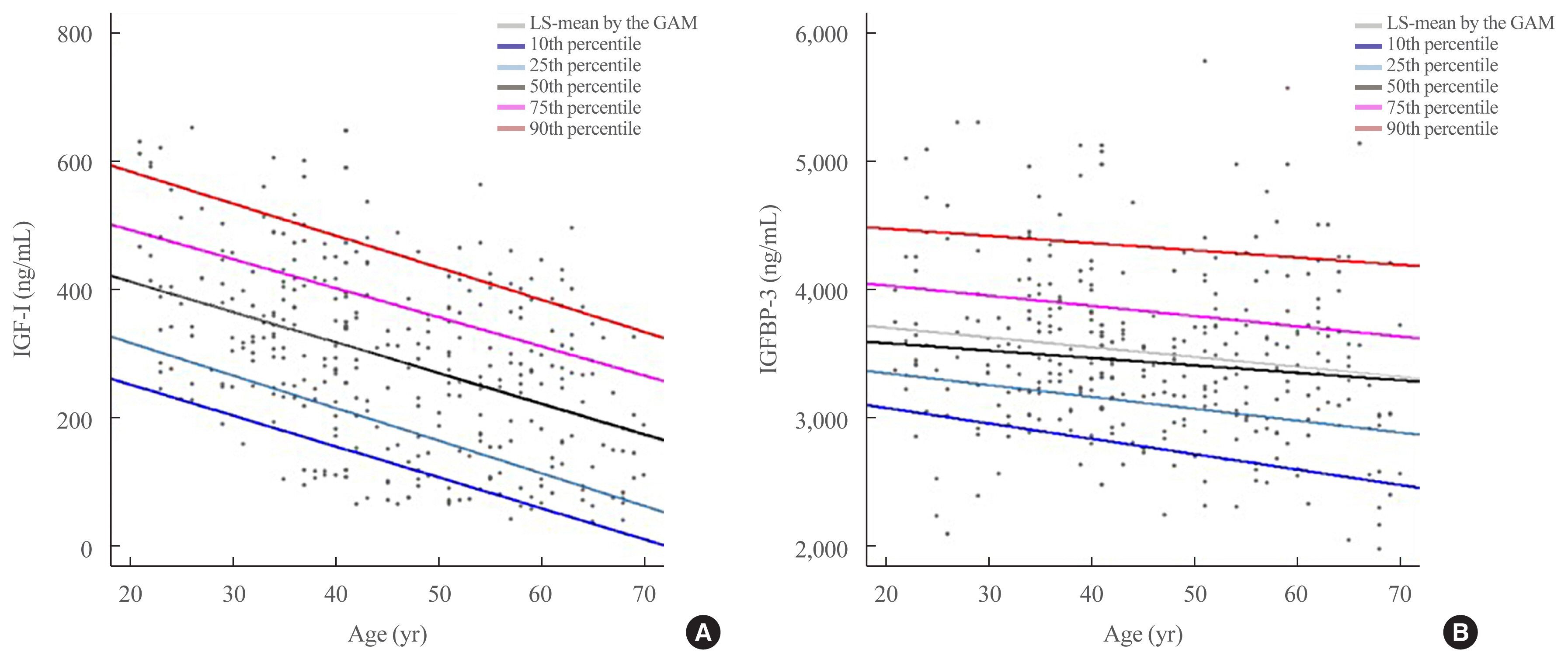
  • 9,985 View
  • 175 Download
  • 5 Web of Science
  • 4 Crossref
AbstractAbstract PDFSupplementary MaterialPubReader   ePub   
Insulin-like growth factor-I (IGF-I) plays a pivotal role in the diagnosis and treatment of growth hormone (GH) excess or deficiency. The GH study group of the Korean Endocrine Society aims to establish the Korean reference ranges of serum IGF-I and insulin-like growth factor binding protein-3 (IGFBP-3) and assess the relationship between IGF-I and IGFBP-3 and clinical parameters. Fasting serum was collected from healthy Korean adults at health promotion centers of five hospitals nationwide. Serum IGF-I and IGFBP-3 were measured via an immunoradiometric assay using a DSL kit (Diagnostic Systems Laboratories). Serum samples from 354 subjects (180 male, 174 female) were analyzed based on sex at 10-year intervals from 21 to 70 years. IGF-I levels were inversely correlated with age. After adjustment of age, the IGF-I/IGFBP-3 ratio was significantly negatively associated with blood pressure and free thyroxine and positively associated with weight, hemoglobin, creatinine, alanine transferase, fasting glucose, and thyroid stimulating hormone. Therefore, age- and sex-specific reference ranges of serum IGF-I and IGFBP-3 can be efficient in evaluating GH excess or deficiency in Korean population.

Citations

Citations to this article as recorded by  
  • Surgical outcomes of endoscopic endonasal surgery for nonfunctioning pituitary adenoma in elderly patients: a comprehensive analysis beyond age
    Sun Mo Nam, Jong Ha Hwang, Hye Seok Park, Seung Shin Park, Jung Hee Kim, Min-Sung Kim, Chul-Kee Park, Hee-Pyoung Park, Yong Hwy Kim
    BMC Endocrine Disorders.2026;[Epub]     CrossRef
  • Serum IGF-1 and IGFBP-3 levels in healthy Korean men aged 19–40 years: a cross-sectional analysis of reference ranges and seasonal variation
    Soo-Min Jung, Shi-Hyang Lee, Hyoeun Lee, Eun Na Kim, Kyun-Seop Bae
    Translational and Clinical Pharmacology.2025; 33(3): 145.     CrossRef
  • Association of Uterine Leiomyoma with Type 2 Diabetes Mellitus in Young Women: A Population-Based Cohort Study
    Ji-Hee Sung, Kyung-Soo Kim, Kyungdo Han, Cheol-Young Park
    Diabetes & Metabolism Journal.2024; 48(6): 1105.     CrossRef
  • Capillary blood as a complementary matrix for doping control purposes. Application to the definition of the individual longitudinal profile of IGF-1
    Carlotta Stacchini, Francesco Botrè, Xavier de la Torre, Monica Mazzarino
    Journal of Pharmaceutical and Biomedical Analysis.2023; 227: 115274.     CrossRef
Close layer
Special Article
Miscellaneous
Diagnosis and Treatment of Growth Hormone Deficiency: A Position Statement from Korean Endocrine Society and Korean Society of Pediatric Endocrinology
Jung Hee Kim, Hyun Wook Chae, Sang Ouk Chin, Cheol Ryong Ku, Kyeong Hye Park, Dong Jun Lim, Kwang Joon Kim, Jung Soo Lim, Gyuri Kim, Yun Mi Choi, Seong Hee Ahn, Min Ji Jeon, Yul Hwangbo, Ju Hee Lee, Bu Kyung Kim, Yong Jun Choi, Kyung Ae Lee, Seong-Su Moon, Hwa Young Ahn, Hoon Sung Choi, Sang Mo Hong, Dong Yeob Shin, Ji A Seo, Se Hwa Kim, Seungjoon Oh, Sung Hoon Yu, Byung Joon Kim, Choong Ho Shin, Sung-Woon Kim, Chong Hwa Kim, Eun Jig Lee
Endocrinol Metab. 2020;35(2):272-287.   Published online June 24, 2020
DOI: https://doi.org/10.3803/EnM.2020.35.2.272
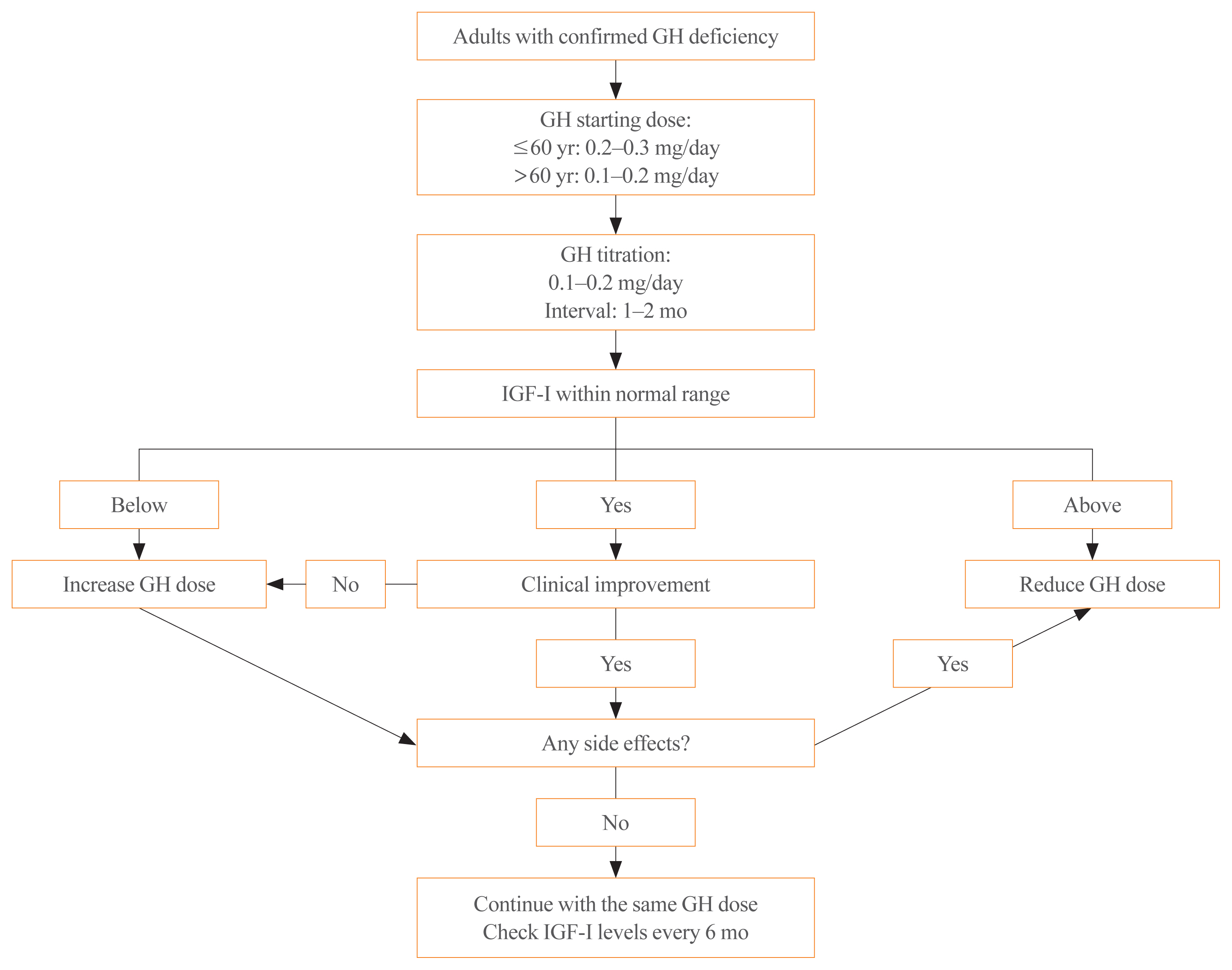
  • 28,341 View
  • 803 Download
  • 29 Web of Science
  • 30 Crossref
AbstractAbstract PDFPubReader   ePub   
Growth hormone (GH) deficiency is caused by congenital or acquired causes and occurs in childhood or adulthood. GH replacement therapy brings benefits to body composition, exercise capacity, skeletal health, cardiovascular outcomes, and quality of life. Before initiating GH replacement, GH deficiency should be confirmed through proper stimulation tests, and in cases with proven genetic causes or structural lesions, repeated GH stimulation testing is not necessary. The dosing regimen of GH replacement therapy should be individualized, with the goal of minimizing side effects and maximizing clinical improvements. The Korean Endocrine Society and the Korean Society of Pediatric Endocrinology have developed a position statement on the diagnosis and treatment of GH deficiency. This position statement is based on a systematic review of evidence and expert opinions.

Citations

Citations to this article as recorded by  
  • GHRH in diabetes and metabolism
    Charlotte Steenblock, Stefan R. Bornstein
    Reviews in Endocrine and Metabolic Disorders.2025; 26(3): 413.     CrossRef
  • Biomarkers of GH deficiency identified in untreated and GH-treated Pit-1 mutant mice
    Sarmed Al-Samerria, Huiting Xu, M. Elena Diaz-Rubio, Joseph Phelan, Chi Su, Keer Ma, Anna Newen, Kiana Li, Sayaka Yamada, Ariel L. Negron, Fredric Wondisford, Sally Radovick
    Frontiers in Endocrinology.2025;[Epub]     CrossRef
  • The TUITEK® patient support program improved caregiver-related behaviors on growth hormone treatment adherence
    Ekaterina Koledova, Pen-Hua Su, Yen-Ju Chen, Aria Assefi, Matias Debicki, Debbie Cooke, Amrit Jheeta, Alexander B. Jones, Jung Eun Moon
    Frontiers in Endocrinology.2025;[Epub]     CrossRef
  • Otolaryngological Problems Among Patients with Growth Hormone Deficiency—A Systematic Review
    Gazala Abdulaziz-Opiela, Paweł Witkowski, Yasmina Późniak, Julia Bajdor, Joanna Bautembach, Małgorzata Myśliwiec, Bogusław Mikaszewski
    Journal of Clinical Medicine.2025; 14(9): 3064.     CrossRef
  • Serum levels of leucine-rich α–2 glycoprotein 1 (LRG1), pro-neurotensin (PNT), fatty acid-binding protein 4 (FABP4) and furin in pediatric growth hormone deficiency before and after 1-year growth hormone replacement therapy
    Zhibo Zhou, Yuxin Sun, Zeyan Zheng, Xiaoyuan Guo, Hongbo Yang, Shi Chen, Hui Pan, Huijuan Zhu
    Cytokine.2025; 195: 157022.     CrossRef
  • Growth hormone in disease and treatment (Review)
    Saikat Fakir, Md Matiur Rahman Sarker, Madan Sigdel, Nektarios Barabutis
    Medicine International.2025; 5(6): 1.     CrossRef
  • Once-Weekly Somapacitan as an Alternative Management of Growth Hormone Deficiency in Prepubertal Children: A Systematic Review and Meta-Analysis of Randomized Controlled Trial
    Ghina Tsurayya, Cut Alifiya Nazhifah, Muhammad Rahmat Pirwanja, Putri Oktaviani Zulfa, Muhammad Raihan Ramadhan Tatroman, Fajar Fakri, Muhammad Iqhrammullah
    Children.2024; 11(2): 227.     CrossRef
  • Efficacy, safety, and patient satisfaction of norditropin and sogroya in patients with growth hormone deficiency: a systematic review and meta-analysis of randomized controlled trials
    Obieda Altobaishat, Mohamed Abouzid, Mostafa Hossam El Din Moawad, Abdulrahman Sharaf, Yazan Al-Ajlouni, Tungki Pratama Umar, Abdallah Bani-salameh, Mohammad Tanashat, Omar Abdullah Bataineh, Abdulqadir J. Nashwan
    Endocrine.2024; 85(2): 545.     CrossRef
  • Growth Hormone Deficiency and Growth Hormone Stimulation Test
    胜彬 孙
    Advances in Clinical Medicine.2024; 14(06): 1587.     CrossRef
  • Clinical Management of Postoperative Growth Hormone Deficiency in Hypothalamic-Pituitary Tumors
    Pedro Iglesias
    Journal of Clinical Medicine.2024; 13(15): 4307.     CrossRef
  • Isolated Growth Hormone Deficiency
    Anastasia Ibba, Chiara Guzzetti, Lavinia Sanfilippo, Sandro Loche
    Endocrines.2024; 5(3): 341.     CrossRef
  • L‐DOPA Test in the Diagnosis of Childhood Short Stature: Evaluation of Growth Hormone Peaks Over Time
    Barbara Castelli, Rita De Santis, Simona Carrera, Marco Andrea Malanima, Salvatore De Masi, Stefano Stagi
    Endocrinology, Diabetes & Metabolism.2024;[Epub]     CrossRef
  • Hsa_circ_0002473 inhibits GH3 cell proliferation and GH secretion as a competitive endogenous RNA for has-miR-4645-3p
    Kaiyu Pan, Xiaoguang Jiang, Xiaohong Hu, Jianhua Zhan, Chengyue Zhang
    Journal of Pediatric Endocrinology and Metabolism.2024; 37(12): 1054.     CrossRef
  • Baseline Clinical Factors Associated with Cessation of Growth Hormone Therapy in Patients with Severe Growth Hormone Deficiency - Real World Evidence
    Nageswary Nadarajah, Emmanuel Ssemmondo, Shani Brooks, Remi Akinyombo, Kazeem Adeleke, Harshal Deshmukh, Thozhukat Sathyapalan
    International Journal of Endocrinology and Metabolism.2024;[Epub]     CrossRef
  • Cohort profile: Multicenter Networks for Ideal Outcomes of Rare Pediatric Endocrine and Metabolic Diseases in Korea (OUTSPREAD study)
    Yun Jeong Lee, Chong Kun Cheon, Junghwan Suh, Jung-Eun Moon, Moon Bae Ahn, Seong Hwan Chang, Jieun Lee, Jin Ho Choi, Minsun Kim, Han Hyuk Lim, Jaehyun Kim, Shin-Hye Kim, Hae Sang Lee, Yena Lee, Eungu Kang, Se Young Kim, Yong Hee Hong, Seung Yang, Heon-Seo
    Annals of Pediatric Endocrinology & Metabolism.2024; 29(6): 349.     CrossRef
  • Pituitary abnormalities in patients with pediatric growth hormone deficiency in a single tertiary center
    Hyeon Jun Jung, Jeong Rye Kim, Jeesuk Yu
    Annals of Pediatric Endocrinology & Metabolism.2024; 29(6): 365.     CrossRef
  • Evaluation of Adult Height in Patients with Non-Permanent Idiopathic GH Deficiency
    Agnese Murianni, Anna Lussu, Chiara Guzzetti, Anastasia Ibba, Letizia Casula, Mariacarolina Salerno, Marco Cappa, Sandro Loche
    Endocrines.2023; 4(1): 169.     CrossRef
  • The effect of hypothalamic involvement and growth hormone treatment on cardiovascular risk factors during the transition period in patients with childhood-onset craniopharyngioma
    Sang Hee Park, Yun Jeong Lee, Jung-Eun Cheon, Choong Ho Shin, Hae Woon Jung, Young Ah Lee
    Annals of Pediatric Endocrinology & Metabolism.2023; 28(2): 107.     CrossRef
  • Continuous Glucose Monitoring: A Possible Aid for Detecting Hypoglycemic Events during Insulin Tolerance Tests
    Soo Yeun Sim, Moon Bae Ahn
    Sensors.2023; 23(15): 6892.     CrossRef
  • The risk patients with AGHD have of developing CVD
    Eisha Javed, Maha Zehra, Naz Elahi
    International Journal of Cardiology Cardiovascular Risk and Prevention.2023; 19: 200221.     CrossRef
  • Diagnosis of GH Deficiency Without GH Stimulation Tests
    Anastasia Ibba, Sandro Loche
    Frontiers in Endocrinology.2022;[Epub]     CrossRef
  • Metabolic Impacts of Discontinuation and Resumption of Recombinant Human Growth Hormone Treatment during the Transition Period in Patients with Childhood-Onset Growth Hormone Deficiency
    Yun Jeong Lee, Yunha Choi, Han-Wook Yoo, Young Ah Lee, Choong Ho Shin, Han Saem Choi, Ho-Seong Kim, Jae Hyun Kim, Jung Eun Moon, Cheol Woo Ko, Moon Bae Ahn, Byung-Kyu Suh, Jin-Ho Choi
    Endocrinology and Metabolism.2022; 37(2): 359.     CrossRef
  • A Radiomics-Based Model with the Potential to Differentiate Growth Hormone Deficiency and Idiopathic Short Stature on Sella MRI
    Taeyoun Lee, Kyungchul Song, Beomseok Sohn, Jihwan Eom, Sung Soo Ahn, Ho-Seong Kim, Seung-Koo Lee
    Yonsei Medical Journal.2022; 63(9): 856.     CrossRef
  • Phenotypic spectrum of patients with mutations in CHD7: clinical implications of endocrinological findings
    Ja Hye Kim, Yunha Choi, Soojin Hwang, Gu-Hwan Kim, Han-Wook Yoo, Jin-Ho Choi
    Endocrine Connections.2022;[Epub]     CrossRef
  • Immune Checkpoint Inhibitors and Endocrine Disorders: A Position Statement from the Korean Endocrine Society
    Hyemi Kwon, Eun Roh, Chang Ho Ahn, Hee Kyung Kim, Cheol Ryong Ku, Kyong Yeun Jung, Ju Hee Lee, Eun Heui Kim, Sunghwan Suh, Sangmo Hong, Jeonghoon Ha, Jun Sung Moon, Jin Hwa Kim, Mi-kyung Kim
    Endocrinology and Metabolism.2022; 37(6): 839.     CrossRef
  • Laron syndrome: clinic, diagnostics (а clinical case)
    P.M. Lіashuk, R.P. Lіashuk, N.I. Stankova, M.B. Kudina
    INTERNATIONAL JOURNAL OF ENDOCRINOLOGY (Ukraine).2022; 18(3): 193.     CrossRef
  • Diagnosis for Pheochromocytoma and Paraganglioma: A Joint Position Statement of the Korean Pheochromocytoma and Paraganglioma Task Force
    Eu Jeong Ku, Kyoung Jin Kim, Jung Hee Kim, Mi Kyung Kim, Chang Ho Ahn, Kyung Ae Lee, Seung Hun Lee, You-Bin Lee, Kyeong Hye Park, Yun Mi Choi, Namki Hong, A Ram Hong, Sang-Wook Kang, Byung Kwan Park, Moon-Woo Seong, Myungshin Kim, Kyeong Cheon Jung, Chan
    Endocrinology and Metabolism.2021; 36(2): 322.     CrossRef
  • Asian Conference on Tumor Ablation Guidelines for Adrenal Tumor Ablation
    Byung Kwan Park, Masashi Fujimori, Shu-Huei Shen, Uei Pua
    Endocrinology and Metabolism.2021; 36(3): 553.     CrossRef
  • Asian Conference on Tumor Ablation guidelines for renal cell carcinoma
    Byung Kwan Park, Shu-Huei Shen, Masashi Fujimori, Yi Wang
    Investigative and Clinical Urology.2021; 62(4): 378.     CrossRef
  • Diagnosis and Treatment of Adult Growth Hormone Deficiency
    Jung Hee Kim
    The Korean Journal of Medicine.2021; 96(5): 400.     CrossRef
Close layer
Review Article
Hypothalamus and Pituitary gland
Precision Therapy in Acromegaly Caused by Pituitary Tumors: How Close Is It to Reality?
Cheol Ryong Ku, Vladimir Melnikov, Zhaoyun Zhang, Eun Jig Lee
Endocrinol Metab. 2020;35(2):206-216.   Published online June 24, 2020
DOI: https://doi.org/10.3803/EnM.2020.35.2.206
  • 11,858 View
  • 297 Download
  • 10 Web of Science
  • 10 Crossref
AbstractAbstract PDFPubReader   ePub   
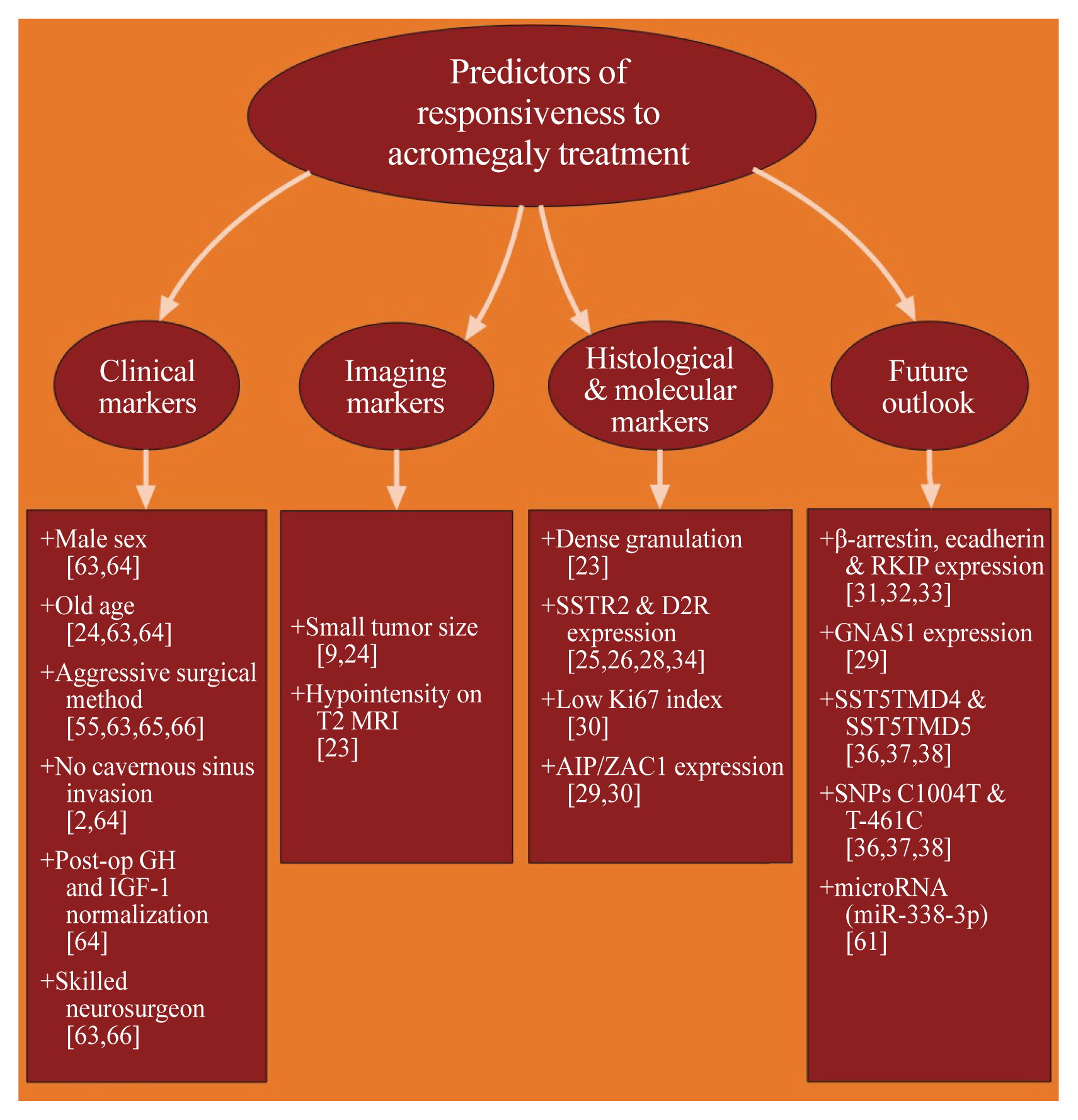
Acromegaly presents with an enigmatic range of symptoms and comorbidities caused by chronic and progressive growth hormone elevations, commonly due to endocrinologic hypersecretion from a pituitary gland tumor. Comprehensive national acromegaly databases have been appearing over the years, allowing for international comparisons of data, although still presenting varying prevalence and incidence rates. Lack of large-scale analysis in geographical and ethnic differences in clinical presentation and management requires further research. Assessment of current and novel predictors of responsiveness to distinct therapy can lead to multilevel categorization of patients, allowing integration into new clinical guidelines and reduction of increased morbidity and mortality associated with acromegaly. This review compares current data from epidemiological studies and assesses the present-day application of prognostic factors in medical practice, the reality of precision therapy, as well as its future prospects in acromegaly, with a special focus on its relevance to the South Korean population.

Citations

Citations to this article as recorded by  
  • Biomarkers of response to treatment in acromegaly
    Leandro Kasuki, Elisa Lamback, Ximene Antunes, Mônica R. Gadelha
    Expert Review of Endocrinology & Metabolism.2024; 19(1): 71.     CrossRef
  • Predictors of morphofunctional features of somatotrophic tumors and of the effectiveness of treatment with first-generation somatostatin receptor ligands
    E. V. Pronin, V. S. Pronin, M. B. Antsiferov, A. V. Petryaykin, T. M. Alexeeva, A. M. Lapshina, L. S. Urusova, A. N. Khoruzhaya, S. M. Tamaeva
    Meditsinskiy sovet = Medical Council.2024; (6): 98.     CrossRef
  • Elucidating Clinical Queries for Tailored Therapy in Patients with Prolactinoma
    Min-Ho Lee, Jae Won Hong, Kyungwon Kim, Cheol Ryong Ku, Eun Jig Lee
    Endocrinology and Metabolism.2024; 39(6): 819.     CrossRef
  • Multiomics Approach to Acromegaly: Unveiling Translational Insights for Precision Medicine
    Kyungwon Kim, Cheol Ryong Ku, Eun Jig Lee
    Endocrinology and Metabolism.2023; 38(5): 463.     CrossRef
  • Risk of depression in patients with acromegaly in Korea (2006-2016): a nationwide population-based study
    Shinje Moon, Sangmo Hong, Kyungdo Han, Cheol-Young Park
    European Journal of Endocrinology.2023; 189(3): 363.     CrossRef
  • The Future of Somatostatin Receptor Ligands in Acromegaly
    Monica R Gadelha, Luiz Eduardo Wildemberg, Leandro Kasuki
    The Journal of Clinical Endocrinology & Metabolism.2022; 107(2): 297.     CrossRef
  • Innovative therapeutics in acromegaly
    Leandro Kasuki, Mônica R. Gadelha
    Best Practice & Research Clinical Endocrinology & Metabolism.2022; 36(6): 101679.     CrossRef
  • Risk of Neurodegenerative Diseases in Patients With Acromegaly
    Sangmo Hong, Kyungdo Han, Kyung-Soo Kim, Cheol-Young Park
    Neurology.2022;[Epub]     CrossRef
  • Machine Learning-based Prediction Model for Treatment of Acromegaly With First-generation Somatostatin Receptor Ligands
    Luiz Eduardo Wildemberg, Aline Helen da Silva Camacho, Renan Lyra Miranda, Paula C L Elias, Nina R de Castro Musolino, Debora Nazato, Raquel Jallad, Martha K P Huayllas, Jose Italo S Mota, Tobias Almeida, Evandro Portes, Antonio Ribeiro-Oliveira, Lucio Vi
    The Journal of Clinical Endocrinology & Metabolism.2021; 106(7): 2047.     CrossRef
  • Skin anomalies in acromegalic patients (Review of the practical aspects)
    Florica Sandru, Adelina Popa, Dan Paduraru, Alexandru Filipescu, Mara Carsote, Adina Ghemigian
    Experimental and Therapeutic Medicine.2021;[Epub]     CrossRef
Close layer
Original Articles
Endocrine Research
Therapeutic Effect of a Novel Chimeric Molecule Targeting Both Somatostatin and Dopamine Receptors on Growth Hormone-Secreting Pituitary Adenomas
Jean Kim, Ju Hun Oh, Heather Harlem, Michael D. Culler, Cheol Ryong Ku, Eun Jig Lee
Endocrinol Metab. 2020;35(1):177-187.   Published online March 19, 2020
DOI: https://doi.org/10.3803/EnM.2020.35.1.177
  • 8,631 View
  • 122 Download
  • 5 Web of Science
  • 6 Crossref
AbstractAbstract PDFPubReader   ePub   
Background

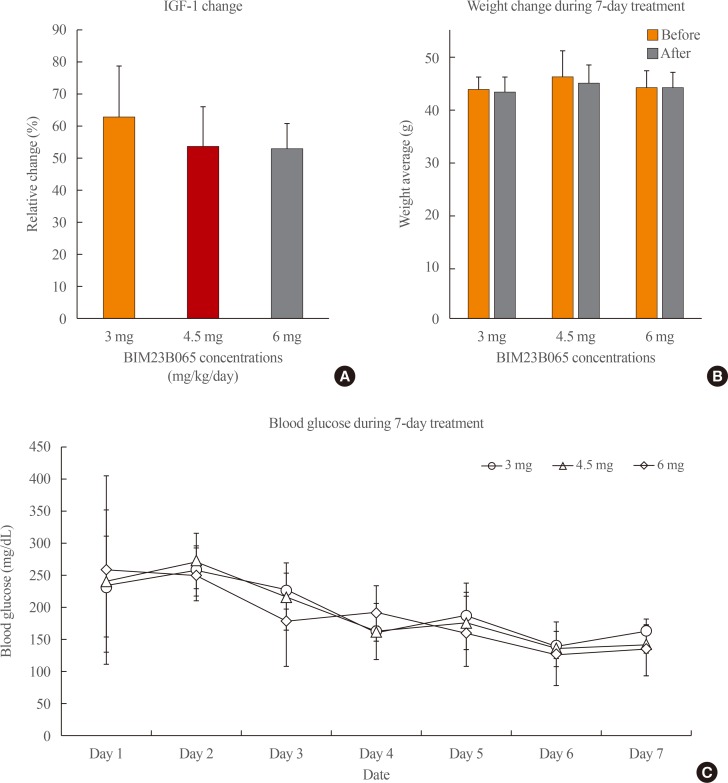
Acromegaly is a rare disease primarily caused by growth hormone (GH)-secreting pituitary adenomas, and its treatment is costly. Moreover, some patients are unresponsive to treatment. Hence, there are increasing efforts to develop new drugs with improved effectiveness for this disease. BIM23B065 is a novel chimeric molecule that acts on both somatostatin and dopamine receptors. This study aimed to investigate the effects of BIM23B065 compared with those of a somatostatin receptor analog and a dopamine agonist.

Methods

The effects of BIM23B065 on the proliferation, GH and insulin-like growth factor-1 (IGF-1) levels, and extracellular signal-regulated kinase (ERK) 1/2 and cyclic AMP response element binding (CREB) phosphorylation of GH3 cells were investigated with MTS assay, enzyme-linked immunosorbent assay, and Western blotting, respectively. The dosage and treatment duration of BIM23B065 were tested in animal models of GH-secreting pituitary adenoma. The effect of BIM23B065 (3 mg/kg/day) on changes in IGF-1 levels before and after treatment was further investigated.

Results

In vitro, BIM23B065 treatment decreased GH release in the culture media and downregulated ERK 1/2 and CREB phosphorylation to 22% and 26%, respectively. In vivo, IGF-1 expression decreased to 50 % after 4 weeks of treatment with BIM23B065 using an osmotic pump implant. Moreover, magnetic resonance imaging results showed that the tumor size decreased significantly following treatment with BIM23B065 for 4 weeks.

Conclusion

The novel chimeric molecule was effective in decreasing IGF-1 and GH levels and may serve as an effective therapeutic agent for acromegaly.

Citations

Citations to this article as recorded by  
  • Targeting dopamine pathways with hybrid molecules: Emerging outlook for cancer treatment
    Piotr Koch, Natalia Pielaszkiewicz, Krystian Małek, Wojciech Kamysz, Patrycja Kleczkowska
    European Journal of Pharmaceutics and Biopharmaceutics.2026; 222: 115031.     CrossRef
  • Pituitary Tumorigenesis—Implications for Management
    Rodanthi Vamvoukaki, Maria Chrysoulaki, Grigoria Betsi, Paraskevi Xekouki
    Medicina.2023; 59(4): 812.     CrossRef
  • Current and Emerging Medical Therapies in Pituitary Tumors
    Nicolas Sahakian, Frédéric Castinetti, Thierry Brue, Thomas Cuny
    Journal of Clinical Medicine.2022; 11(4): 955.     CrossRef
  • Characterization of the ability of a, second-generation SST-DA chimeric molecule, TBR-065, to suppress GH secretion from human GH-secreting adenoma cells
    Thomas Cuny, Thomas Graillon, Célines Defilles, Rakesh Datta, Shengwen Zhang, Dominique Figarella-Branger, Henry Dufour, Grégory Mougel, Thierry Brue, Tanya Landsman, Heather A. Halem, Michael D. Culler, Anne Barlier, Alexandru Saveanu
    Pituitary.2021; 24(3): 351.     CrossRef
  • Efficacy of a Novel Second-Generation Somatostatin-Dopamine Chimera (TBR-065) in Human Medullary Thyroid Cancer: A Preclinical Study
    Alessandra Dicitore, Maria Celeste Cantone, Germano Gaudenzi, Davide Saronni, Silvia Carra, Maria Orietta Borghi, Manuela Albertelli, Diego Ferone, Leo J. Hofland, Luca Persani, Giovanni Vitale
    Neuroendocrinology.2021; 111(10): 937.     CrossRef
  • Emerging drugs for the treatment of acromegaly
    Claudia Campana, Giuliana Corica, Federica Nista, Francesco Cocchiara, Giulia Graziani, Keyvan Khorrami, Marta Franco, Mara Boschetti, Diego Ferone, Federico Gatto
    Expert Opinion on Emerging Drugs.2020; 25(4): 409.     CrossRef
Close layer
Clinical Effects of E. coli Derived Recombinant Human Growth Hormone (DA - 3001) in Patients with Growth Hormone Deficiency.
Sei Won Yang, Jeh Hoon Shin, Duk Hi Kim, Byung Churl Lee, Hyung Ro Moon
J Korean Endocr Soc. 1995;10(4):377-385.   Published online November 7, 2019
  • 1,910 View
  • 32 Download
AbstractAbstract PDF
Recently, methionyl-hGH was produced in the E. coil K-12, W3110 by recombinant DNA technology in Korea. In this paper, the clinical efficacy and immunogenicity of this GH were studied in 43 patients with growth hormone deficency.The subjects of this study were aged 4.3-18.5 years and each patient received GH 0.5-0.71U/kg week subcutaneously, 6-7 times a week for 1 year. During treatment, height, body weight and bone age were checked. Blood count, urinalysis, blood chemistry and thyroid hormonal concentrations were checked before and every 3 months. The measurement of IGF-1 was performed and assay of antibody against hGH was performed before and every 6 months.The height velocities significantly increased from 3.7+-3.0 cm/year to 11.0+-4.2 cm/year and 9.9+-3.2 cm/year at 6 and 12 months after GH therapy, respectively. The Height SDS were significantly improved after GH therapy with increasing ratio of bone age to chronological age from 0.60+-0.19 at pretreatment to 0.68+-0.16 at 6 month, 0.69+-0.16 at 12 month of therapy. The plasma IGF-1 levels significantly increased during treatment. Three out of 35 patients(8.3%) showed antibody against hGH after 1 year of treatment. Thoughout study, we could not observe any remarkable side effect with GH treatment.These results indicate that this E. coli derived methionyl recombinant growth hormone is effective in improving the index of linear growth in the children with growth hormone deficiency without significant side effect.
Close layer
Correlation between Urinary Growth Hormone Level and Peak Serum Growth Hormone Level in Growth Hormone Provocation Test Using Insulin and L - dopa.
Woo Yeong Chung, Byung Kiu Park, Chul Ho Kim
J Korean Endocr Soc. 1995;10(4):370-376.   Published online November 7, 2019
  • 1,633 View
  • 21 Download
AbstractAbstract PDF
To investigate the correlation between urinary growth hormone(GH) level and peak serum GH level, urinary GH value measured by overnight collection of urine for 10 hours and serum GH value in response to GH provocation test using insulin and L-dopa were measured in 9 cases of GH complete deficiency(GCD), 19 cases of GH partial deficiency(GPD) and 40 cases of GH normal short stature(GHN). Urinary GH values were measured by the EIA method using PICOIA HGH plate(Joo Woo Pharmaceutical Co., Japan). Urinary GH was expressed in terms of nanograms per gm creatinine(ng/gCr). Serum GH was measured by immunoradiometric assay using "Daiichi kit"(Je Il Pharmaceutical Co., Japan). Wilcoxon ranked sum test and student's t-test were used to assess the significance of differences between the groups of the patients. The correlation between urinary GH level and peak serum GH level was assessed by the parametric Pearson correlation test. The correlation between peak serum GH level in GH provocation test using insulin and urinary GH level measured by overnight 10 hours collection method showed statistically significant results in all the patients(Y=0.464072X +9.208044, r=0.48987, p=0.0001) and in the GH deficiency groups(GCD+GPD) (Y=0.924659X +9.2385509, r=0.80437, p=0.0001). In case of L-dopa stimulation test, urinary GH values were also positively correlated with peak serum GH level when all the patients were participated(Y=0.572988X +8.312993, r=0.58212, p=0.0001). In contrast, no correlation was found when patients were confined to GH deficiency group(GCD+GPD)(Y=0.127712X +8.3129939, r=0.08044, p=0.6841).
Close layer
In Situ Hybridization Analysis of Human Growth Hormone and Prolactin Secreting Pitultary Adenomas.
Jae Wha Jo, Eun Jig Lee, Moon Suk Nam, Kyung Rae Kim, Sung Kil Lim, Hyun Chul Lee, Kap Bum Huh, Tae Seung Kim, Sun Ho Kim, Joong Uhn Choi, Kyu Chang Lee, Hyun Joo Jung, Sang Seop Chung
J Korean Endocr Soc. 1994;9(2):82-92.   Published online November 6, 2019
  • 1,980 View
  • 30 Download
AbstractAbstract PDF
A non-isotopic in situ hybridization method with biotin-labelled oligonucleotide probes was used to examine growth hormone(GH) and prolactin(PRL) gene expression in 32 patients with pituitary adenomas; 13 were prolactinomas, 8 GH secreting adenomas, and 11 mixed GH and PRL secreting adenomas.Positive immunostaining for GH was found in all patients with GH secreting adenomas, and mixed GH and PRL secreting adenomas. Positive immunostaining for PRL was found in all patients with prolactinomas and 9(81.8%) of 11 mixed GH and PRL secreting adenomas, 5(62.5%) of 8 GH secreting adenomas. Immunohistochemistry revealed that 13 were lactotrope adenomas, 5 somatotrope adenomas, and 14 GH and PRL cell adenomas.In situ hybridization revealed that GH mRNA expression was found in all the patients with somatotrope adenomas and GH and PRL cell adenomas, and 6(46.1%) of 13 lactotrope adenomas. PRL mRNA expression was 100% in lactotrope and GH and PRL cell adenomas, and 4(80.0%) of 5 somatotrope adenomas.The patients with a clinical diagnosis of acromegaly had detectable PRL mRNA in their neoplasm and it is suggested that the PRL cells in the adenomas did not result from dedifferentiation, but from the neoplastic stimulus for some mixed tumors probably occurred in cells previously committed to produce PRL and GH. In lactotrope adenomas, the PRL cells of the patients without expression of GH mRNA may be arised from cells programmed to secrete PRL or precussor PRL cells rather than from mixed GH-PRL cells. The finding that some patients produced mRNA detectable by in situ hybridization, but no hormone detectable by immunohistochemistry within tumor was suggested of a silent adenoma.These observations indicated that in situ hybridization studies may improve the classification of pituitary adenomas and may provide a precise knowledge of the biology of these neoplasms.
Close layer
Changes of Bone Turnover Markers after Treatment with Growth Hormone Therapy in Children with Growth Retardation.
In Myung Yang, Jeong Taek Woo, Sung Woon Kim, Jin Woo Kim, Young Seol Kim, Young Kil Choi, Ki Oak han, Duk Yoon Kim, Hyung In Yang
J Korean Endocr Soc. 1994;9(4):344-349.   Published online November 6, 2019
  • 1,776 View
  • 26 Download
AbstractAbstract PDF
The effects of growth hormone(GH) deficiency and recombinant human GH replacement(0.5IU/kg per week) on bone mineral metabolism in 21GH-deficiency children were studied. All children had significantly reduction of bone density(Z score;-1.4+-0.71). After 1 month of therapy, the levels of serum insulin-like growth factor 1(IGF-1), osteocalcin(OC) and carboxyterminal propeptede of type 1 procollagen(PICP) were significantly elevated. But IGFBP-3 were not shown to change significantly. The changes in serum levels of PICP during the first month of recombinant human GH treatment were positively related to growth velocity, whereas the changes in IGF-1 and OC during the first month of therapy were not. We conclude that the recombinant human GH treatment caused significant modifications of mineral metablism and that the measurement of the changes of biochemical markers of bone metablism espacially PICP may be a useful tool in prediction improved growth velocity during long term GH replacement therpy.
Close layer
Clinical Study
Impaired Cortisol and Growth Hormone Counterregulatory Responses among Severe Hypoglycemic Patients with Type 2 Diabetes Mellitus
Young A Rhyu, Ju-Young Jang, Sooyoun Park, Jee Hyun An, Dong-Lim Kim, Suk Kyeong Kim, Kee-Ho Song
Endocrinol Metab. 2019;34(2):187-194.   Published online June 24, 2019
DOI: https://doi.org/10.3803/EnM.2019.34.2.187
  • 13,223 View
  • 109 Download
  • 14 Web of Science
  • 19 Crossref
AbstractAbstract PDFPubReader   ePub   
Background

Elevated levels of cortisol and growth hormone are critical counterregulatory responses to severe hypoglycemia. However, the proportion and clinical characteristics of patients with type 2 diabetes mellitus (DM) who fail to show appropriate cortisol and/or growth hormone secretion in response to severe hypoglycemia have not been investigated.

Methods

We measured plasma cortisol and growth hormone levels in type 2 DM patients with severe hypoglycemia who visited the emergency department between 2006 and 2015.

Results

Of 112 hypoglycemic patients, 23 (20.5%) had an impaired cortisol response (<18 µg/dL) and 82 patients (73.2%) had an impaired growth hormone response (<5 ng/mL). Nineteen patients (17.0%) had impaired responses to both cortisol and growth hormone. The patients with impaired responses of cortisol, growth hormone, and both hormones were significantly older and more likely to be female, and had higher admission rates, lower growth hormone levels, and lower adrenocorticotropic hormone levels than the patients with a normal hormonal response. Multivariate logistic regression analysis indicated that an impaired growth hormone response was significantly associated with advanced age, shorter DM duration, a higher admission rate, and a higher body mass index (BMI). An impaired cortisol response was significantly associated with growth hormone levels. Patients with an impaired growth hormone response had higher admission rates than patients with a normal response.

Conclusion

A considerable number of type 2 DM patients had impaired cortisol and/or growth hormone responses to severe hypoglycemia. Advanced age, shorter DM duration, and higher BMI were independently associated with an abnormal growth hormone response.

Citations

Citations to this article as recorded by  
  • Distinct Pituitary-Adrenal Responses to Hypoglycemia in Type 1 and Type 2 Diabetes
    Yun Hu, Reng-na Yan, Ting-ting Cai, Xiao-wei Zhu, Jian-hua Ma, Bo Ding
    Endocrinology and Metabolism.2026; 41(1): 162.     CrossRef
  • Discordant Cortisol Responses to Spontaneous Hypoglycaemia Versus Adrenocorticotropic Hormone Stimulation: A Diagnostic Challenge for Hypothalamic-Pituitary-Adrenal Axis Assessment
    Pushpa Machineni, Asha Ranjan, Adlyne R. Asirvatham, Shriraam Mahadevan
    Indian Journal of Endocrinology and Metabolism.2026; 30(1): 85.     CrossRef
  • Congenital hyperinsulinism in an individual with CHARGE syndrome and a pathogenic CHD7 variant
    Consuelo Ibeas, Franco Giraudo, Jonna M E Männistö, Sarah E Flanagan, Verónica Mericq
    JCEM Case Reports.2026;[Epub]     CrossRef
  • Glucagon-like peptide-1 and impaired counterregulatory responses to hypoglycemia in type 1 diabetes
    Gabriel Reis Rocha, Fabrício Freire de Melo
    World Journal of Diabetes.2025;[Epub]     CrossRef
  • Differences in the insulin counterregulatory hormones between obese and nonobese male patients with type 2 diabetes mellitus
    Rong Huang, Yujie Bao, Yuanli Xiong, Jianhua Ma, Bo Ding
    Scientific Reports.2025;[Epub]     CrossRef
  • Glucagon in glucose homeostasis and metabolic disease: from physiology to therapeutics
    Abdulbasit Amin, Toyin Mohammed Salman
    Journal of Basic and Clinical Physiology and Pharmacology.2025; 36(2-3): 139.     CrossRef
  • The deleterious effects of sofosbuvir and ribavirin (antiviral drugs against hepatitis C virus) on different body systems in male albino rats regarding reproductive, hematological, biochemical, hepatic, and renal profiles and histopathological changes
    Rana A. Ali, Eatemad A. Awadalla, Yahia A. Amin, Samer S. Fouad, Maha Abd-El Baki Ahmed, Mohammed H. Hassan, Emaad Abdel-Kahaar, Rehab H. Abdel-Aziz
    Scientific Reports.2024;[Epub]     CrossRef
  • Diagnostic Modalities, Management Considerations, and Outcomes of Insulinoma: A Case Series from a Tertiary Care Centre
    Anirudh J. Shetty, Liza Das, Satyam S. Jayant, Sanjay K. Bhadada, Rajender Kumar, Ajay Gulati, Surinder S. Rana, Harmandeep Singh, Uma N. Saikia, Arunanshu Behera, Bhagwant R. Mittal, Rama Walia, Pinaki Dutta
    Indian Journal of Endocrinology and Metabolism.2024; 28(3): 279.     CrossRef
  • Prediabetes and mild hepatosteatosis are associated with blunted cortisol response to glucagon but not to growth hormone
    Ozlem Deveci, Zuleyha Karaca, Fatih Tanriverdi, Kamil Deveci, Aysa Hacioglu, Kursad Unluhizarci, Fahrettin Kelestimur
    Annales d'Endocrinologie.2023; 84(2): 254.     CrossRef
  • Evaluación del cortisol plasmático durante el test de ayuno en pacientes con síndrome hipoglucémico por hiperinsulinismo endógeno. Experiencia de 15 años
    María Eugenia Gullace, María Victoria Ortuño, Teresa Mabel Canteros, Belén Bosco, Cintia Rodriguez, Javier Giunta, Lucas Costa, Andrea Kozak, Valeria de Miguel, Luis Grosembacher
    Endocrinología, Diabetes y Nutrición.2023; 70(10): 634.     CrossRef
  • Evaluation of plasma cortisol during fasting test in patients with endogenous hyperinsulinemic hypoglycemia. Fifteen years experience
    María Eugenia Gullace, María Victoria Ortuño, Teresa Mabel Canteros, Belén Bosco, Cintia Rodriguez, Javier Giunta, Lucas Costa, Andrea Kozak, Valeria de Miguel, Luis Grosembacher
    Endocrinología, Diabetes y Nutrición (English ed.).2023; 70(10): 634.     CrossRef
  • Cerebrospinal fluid levels of hypothalamic-pituitary-adrenal axis hormones in MCI and dementia due to Alzheimer’s disease: a systematic review
    Felipe Duarte-Zambrano, Jorge A. Barrero, Ismena Mockus
    Dementia & Neuropsychologia.2023;[Epub]     CrossRef
  • PTEN Deletion in Adult Mice Induces Hypoinsulinemia With Concomitant Low Glucose Levels
    Maria Crespo-Masip, Aurora Pérez-Gómez, Carla Guzmán, Sandra Rayego, Nuria Doladé, Alicia García-Carrasco, Ramiro Jover, José Manuel Valdivielso
    Frontiers in Endocrinology.2022;[Epub]     CrossRef
  • Beta Blockers can Mask not only Hypoglycemia but also Hypotension
    Goran Koracevic, Sladjana Micic, Milovan Stojanovic, Radmila Velickovic Radovanovic, Milan Pavlovic, Tomislav Kostic, Dragan Djordjevic, Nebojsa Antonijevic, Maja Koracevic, Vesna Atanaskovic, Sonja Dakic
    Current Pharmaceutical Design.2022; 28(20): 1660.     CrossRef
  • Atherosclerosis Risk Factors in Patients with Reactive Hypoglycemia
    Małgorzata Landowska, Agata Żebrowska, Konrad Fajer, Patrycja Adamek, Aleksandra Kruk, Bernadetta Kałuża, Edward Franek
    Diabetes, Metabolic Syndrome and Obesity: Targets and Therapy.2022; Volume 15: 3133.     CrossRef
  • Depression with Comorbid Diabetes: What Evidence Exists for Treatments Using Traditional Chinese Medicine and Natural Products?
    Yanting Lu, Tao An, Hu Tian, Xueqin Gao, Furong Wang, Shijun Wang, Ke Ma
    Frontiers in Pharmacology.2021;[Epub]     CrossRef
  • Hepatocyte-specific glucose-6-phosphatase deficiency disturbs platelet aggregation and decreases blood monocytes upon fasting-induced hypoglycemia
    Anouk M. La Rose, Venetia Bazioti, Joanne A. Hoogerland, Arthur F. Svendsen, Anouk G. Groenen, Martijn van Faassen, Martijn G.S. Rutten, Niels J. Kloosterhuis, Bertien Dethmers-Ausema, J. Hendrik Nijland, Gilles Mithieux, Fabienne Rajas, Folkert Kuipers,
    Molecular Metabolism.2021; 53: 101265.     CrossRef
  • Effects of tofogliflozin on adrenocorticotropic hormone, renin and aldosterone, and cortisol levels in elderly patients with diabetes mellitus
    Toshihiro Higashikawa, Tomohiko Ito, Takurou Mizuno, Keiichirou Ishigami, Kengo Kuroki, Naoto Maekawa, Daisuke Usuda, Takuro Morita, Kazu Hamada, Susumu Takagi, Kento Takeshima, Shinya Yamada, Ryusho Sangen, Toshihide Izumida, Hideyuki Mori, Jun Kiyosawa,
    Medicine.2021; 100(45): e27638.     CrossRef
  • Stress, glucocorticoid signaling pathway, and metabolic disorders
    Roldan M. de Guia
    Diabetes & Metabolic Syndrome: Clinical Research & Reviews.2020; 14(5): 1273.     CrossRef
Close layer
Review Article
Adrenal gland
Diagnosis and Treatment of Hypopituitarism
Seong Yeon Kim
Endocrinol Metab. 2015;30(4):443-455.   Published online December 31, 2015
DOI: https://doi.org/10.3803/EnM.2015.30.4.443
  • 30,748 View
  • 790 Download
  • 61 Web of Science
  • 74 Crossref
AbstractAbstract PDFPubReader   

Hypopituitarism is a chronic endocrine illness that caused by varied etiologies. Clinical manifestations of hypopituitarism are variable, often insidious in onset and dependent on the degree and severity of hormone deficiency. However, it is associated with increased mortality and morbidity. Therefore, early diagnosis and prompt treatment is necessary. Hypopituitarism can be easily diagnosed by measuring basal pituitary and target hormone levels except growth hormone (GH) and adrenocorticotropic hormone (ACTH) deficiency. Dynamic stimulation tests are indicated in equivocal basal hormone levels and GH/ACTH deficiency. Knowledge of the use and limitations of these stimulation tests is mandatory for proper interpretation. It is necessary for physicians to inform their patients that they may require lifetime treatment. Hormone replacement therapy should be individualized according to the specific needs of each patient, taking into account possible interactions. Long-term endocrinological follow-up of hypopituitary patients is important to monitor hormonal replacement regimes and avoid under- or overtreatment.

Citations

Citations to this article as recorded by  
  • Traumatic Brain Injury – Prevalence, Pathophysiology and Treatment of Neuroendocrine Dysfunction: A Narrative Review
    Saumya Susan Zacharia, Kripa Elizabeth Cherian, Raji Thomas, Thomas Vizhalil Paul
    Indian Journal of Physical Medicine and Rehabilitation.2026; 36(1): 7.     CrossRef
  • Navigating the “specific etiology” steatohepatitis category: Evaluation and management of nonalcohol/nonmetabolic dysfunction–associated steatohepatitis
    Mohammad Qasim Khan, Sara Hassan, Blanca C. Lizaola-Mayo, Mamatha Bhat, Kymberly D. Watt
    Hepatology.2025; 82(2): 504.     CrossRef
  • Protective Strategies for Pituitary Function During Endoscopic Transnasal Pituitary Adenoma Surgery: A Single-center Experience
    Jihu Yang, Fengmin Zhang, Sihao Chen, Xiejun Zhang, Yufei Liu, Wenjian Zheng, Fanfan Chen, Lei Chen, Guodong Huang
    Journal of Craniofacial Surgery.2025; 36(4): 1207.     CrossRef
  • A disturbed communication between hypothalamic-pituitary-ovary axis and gut microbiota in female infertility: is diet to blame?
    Fatima Ahmad, Salma H Ahmed, Fadi Choucair, Spyridon Chouliaras, Johnny Awwad, Annalisa Terranegra
    Journal of Translational Medicine.2025;[Epub]     CrossRef
  • Cardiovascular Consequences Unveiled: A Comprehensive Review of Hypopituitarism’s Impact on the Heart
    Mengmei Li, Xiaowen Zhen, Hongqiao Sun, Jing Wang
    Cardiology in Review.2025;[Epub]     CrossRef
  • Development of a Long-Acting Follicle-Stimulating Hormone Using Serum Albumin Fab-Associated Technology for Female Infertility
    Daham Kim, Yoon Hee Cho, Min Jeong Kang, So Jeong Lee, Soohyun Lee, Bo Hyon Yun, Hyunjin Chi, Jeongsuk An, Kyungsun Lee, Jaekyu Han, Susan Chi, Moo Young Song, Sang-Hoon Cha, Eun Jig Lee
    Endocrinology and Metabolism.2025; 40(1): 146.     CrossRef
  • Machine Learning-Based Modeling for Predicting Hypopituitarism After Cranial Trauma
    Ai Chen, Hua Zhong, Jie Peng, Tao Luo, Su Jun
    World Neurosurgery.2025; 199: 124018.     CrossRef
  • Extracorporeal cardiopulmonary resuscitation for sudden cardiac arrest induced by septic shock-related adrenal crisis
    Martin Pažitný, Matúš Maruniak, Martin Ilenin, Dušan Rybár, Tomáš Grendel
    Turkish Journal of Emergency Medicine.2025; 25(3): 242.     CrossRef
  • CHARACTERISTICS OF ADRENAL INSUFFICIENCY IN PATIENTS UNDERGOING HEMODIALYSIS FOR END-STAGE KIDNEY FAILURE
    Mehmet Polat, Seda Basmaz
    Problems of Endocrine Pathology.2025; 82(3): 14.     CrossRef
  • Progression From Isolated Posterior Pituitary Dysfunction to Combined Anterior Hormone Deficiencies With Pituitary Stalk Enlargement in Suspected Lymphocytic Hypophysitis: A Case Report
    Hironobu Sasaki, Kazuma Yagi, Yoko Kuga, Haruki Katahira
    Cureus.2025;[Epub]     CrossRef
  • Nomogram prediction model for postoperative anterior pituitary dysfunction in patients with nonfunctioning pituitary adenomas: A multidimensional analysis and validation of Short-Term and Mid-to-Long-Term outcomes
    Zihong Yao, Danxia Xu, Yuxin Xie, Haixue Jing, Hui Chen
    Endocrine.2025;[Epub]     CrossRef
  • Central Endocrine Complications Among Childhood Cancer Survivors Treated With Radiation Therapy: A PENTEC Comprehensive Review
    Greg Wheeler, Clemens Grassberger, Josephine Samers, Mary Dwyer, Kirsty Wiltshire, Patricia Daly, Beatriz Alvarez, Belinda A. Campbell, Amanda J. Kerr, Tomas Kron, Frances K. Duane, Margaret Zacharin, Peter Downie, Elizabeth Kyriakou, Cecile M. Ronckers,
    International Journal of Radiation Oncology*Biology*Physics.2024; 119(2): 457.     CrossRef
  • Pituitary stem cells: past, present and future perspectives
    María Inés Pérez Millán, Leonard Y. M. Cheung, Florencia Mercogliano, Maria Andrea Camilletti, Gonzalo T. Chirino Felker, Lucia N. Moro, Santiago Miriuka, Michelle L. Brinkmeier, Sally A. Camper
    Nature Reviews Endocrinology.2024; 20(2): 77.     CrossRef
  • Idiopathic isolated adrenocorticotropic hormone deficiency: a systematic review of a heterogeneous and underreported disease
    E. Van Mieghem, C. De Block, C. De Herdt
    Pituitary.2024; 27(1): 23.     CrossRef
  • Perioperative growth hormone levels as an early predictor of new-onset secondary adrenal insufficiency following transsphenoidal pituitary tumor resection
    Fon-Yih Tsuang, Shyang-Rong Shih, Ham-Min Tseng, Huan-Chih Wang
    Asian Journal of Surgery.2024; 47(4): 1746.     CrossRef
  • A comprehensive review of the new FIGO classification of ovulatory disorders
    Adam H Balen, Jennifer Tamblyn, Karolina Skorupskaite, Malcolm G Munro
    Human Reproduction Update.2024; 30(3): 355.     CrossRef
  • Panhypopituitarism caused by a suprasellar germinoma: A case report
    Jelena Roganovic, Lea Saric, Silvije Segulja, Ana Dordevic, Mia Radosevic
    World Journal of Clinical Cases.2024; 12(10): 1844.     CrossRef
  • Utility of copeptin in predicting non-pathological postoperative polyuria in patients affected by acromegaly undergoing pituitary neurosurgery
    Emanuele Varaldo, Nunzia Prencipe, Alessandro Maria Berton, Luigi Simone Aversa, Fabio Bioletto, Raffaele De Marco, Valentina Gasco, Francesco Zenga, Silvia Grottoli
    Pituitary.2024; 27(5): 488.     CrossRef
  • Neuroendocrine challenges and clinical outcomes in men with chronic traumatic brain injury: a cross-sectional study
    Saumya Susan Zacharia, Raji Thomas, Johns T Johnson, Nitin Kapoor, Saraswathi Ramanathan, Hesarghatta S Asha, Kripa Elizabeth Cherian, Thomas V Paul
    Pituitary.2024; 27(5): 693.     CrossRef
  • Manifestations of Endocrine Disease in the Lower Extremities: Beyond the Diabetic Foot
    Kleoniki I. Athanasiadou, Christothea A. Tsiridis, Ioanna A. Paschou, Stavroula A. Paschou, Nikolaos Papanas
    The International Journal of Lower Extremity Wounds.2024;[Epub]     CrossRef
  • Unveiling a syndrome through recurrent hypoglycemia
    Saadi AlJadir
    Obstetrics & Gynecology International Journal.2024; 15(5): 247.     CrossRef
  • Hypopituitarism in a patient with breast cancer
    Łukasz Lisak, Aleksandra Kaźmierczak, Anna Kaletka
    Biuletyn Głównej Biblioteki Lekarskiej.2024; 57(383): 83.     CrossRef
  • Decreased mannan-binding lectin level in adults with hypopituitarism; dependence on appropriate hormone replacement therapies
    Aleksandra E. Matusiak, Jan Stępniak, Andrzej Lewiński, Małgorzata Karbownik-Lewińska
    Frontiers in Immunology.2023;[Epub]     CrossRef
  • Post-Operative Medium- and Long-Term Endocrine Outcomes in Patients with Non-Functioning Pituitary Adenomas—Machine Learning Analysis
    Ziad Hussein, Robert W. Slack, Hani J. Marcus, Evangelos B. Mazomenos, Stephanie E. Baldeweg
    Cancers.2023; 15(10): 2771.     CrossRef
  • The TRH test provides valuable information in the diagnosis of central hypothyroidism in patients with known pituitary disease and low T4 levels
    Sara Ellegaard Christensen, Liv Norma Smith, Christian Alexander H. Rosendal, Helga Angela Gulisano, Kåre Schmidt Ettrup, Peter Vestergaard, Eigil Husted Nielsen, Jesper Scott Karmisholt, Jakob Dal
    Frontiers in Endocrinology.2023;[Epub]     CrossRef
  • Sheehan’s syndrome unveiled after decades without a diagnosis: A case report
    Hadi Rabee’, Tamara Braik, Rezeq Alnatour, Alaa Shamlawi, Ammar Rashed
    SAGE Open Medical Case Reports.2023;[Epub]     CrossRef
  • PAN-HIPOPITUITARISMO SECUNDÁRIO A INFECÇÃO POR SARS-COV-2: RELATO DE CASO
    Rosyane Luz Rufino De Lima, Viviane dos Reis Vieira Yance
    REVISTA FOCO.2023; 16(12): e3832.     CrossRef
  • Regulation of the Hypothalamic-Pituitary-Testicular Axis: Pathophysiology of Hypogonadism
    Aditi Sharma, Channa N. Jayasena, Waljit S. Dhillo
    Endocrinology and Metabolism Clinics of North America.2022; 51(1): 29.     CrossRef
  • Penetrating brain injury with hypopituitarism
    Rachel D. Appelbaum, Kristina E. Neri, Kristin A. Rebo, Samuel P. Carmichael
    Trauma Case Reports.2022; 38: 100628.     CrossRef
  • Risk of Mental Illnesses in Patients With Hypopituitarism: A Nationwide Population-Based Cohort Study
    I-Hua Wei, Chih-Chia Huang
    Psychiatry Investigation.2022; 19(6): 418.     CrossRef
  • Pituitary Apoplexy and Subdural Hematoma after Caesarean Section
    Van Trung Hoang, The Huan Hoang, Thanh Tam Thi Nguyen, Vichit Chansomphou, Duc Thanh Hoang, Kyousuke Takeuchi
    Case Reports in Obstetrics and Gynecology.2022; 2022: 1.     CrossRef
  • A Unique Case Mimicking Sepsis

    Journal of Acute Care.2022; 1(1): 29.     CrossRef
  • Correlation between shift work and non-alcoholic fatty liver disease among male workers in the steel manufacturing company of Korea: a cross-sectional study
    Kiseok Kim, Yong-Jin Lee, Soon-Chan Kwon, Young-Sun Min, Hyun Kyo Lee, Gwangin Baek, Sang Hyeon Kim, Eun-Chul Jang
    Annals of Occupational and Environmental Medicine.2022;[Epub]     CrossRef
  • Non-alcoholic fatty liver disease across endocrinopathies: Interaction with sex hormones
    Sara Arefhosseini, Mehrangiz Ebrahimi-Mameghani, Farzad Najafipour, Helda Tutunchi
    Frontiers in Endocrinology.2022;[Epub]     CrossRef
  • Primary hypothyroidism and postmenopause as the causes of delayed diagnosis of panhypopituitarism in a patient with nonfunctional pituitary adenoma
    E. G. Ryzhkova, D. O. Ladygina
    Problems of Endocrinology.2022; 68(5): 32.     CrossRef
  • Efficacy and Safety of Stereotactic Radiotherapy in Cushing’s Disease: A Single Center Experience
    Tugce Apaydin, Hande Mefkure Ozkaya, Sebnem Memis Durmaz, Rasim Meral, Pinar Kadioglu
    Experimental and Clinical Endocrinology & Diabetes.2021; 129(07): 482.     CrossRef
  • Metabolic and Endocrine Challenges
    Gennaro Martucci, Eleonora Bonicolini, Dhruv Parekh, Onn Shaun Thein, Mario Scherkl, Karin Amrein
    Seminars in Respiratory and Critical Care Medicine.2021; 42(01): 078.     CrossRef
  • The Effect of Pituitary Gland Disorders on Glucose Metabolism: From Pathophysiology to Management
    Guy I. Sydney, Konstantinos Michalakis, Ilias P. Nikas, Eleftherios Spartalis, Stavroula A. Paschou
    Hormone and Metabolic Research.2021; 53(01): 16.     CrossRef
  • Congenital hypopituitarism in two brothers with a duplication of the ‘acrogigantism gene’ GPR101: clinical findings and review of the literature
    Melitza S. M. Elizabeth, Annemieke J. M. H. Verkerk, Anita C. S. Hokken-Koelega, Joost A. M. Verlouw, Jesús Argente, Roland Pfaeffle, Sebastian J. C. M. M. Neggers, Jenny A. Visser, Laura C. G. de Graaff
    Pituitary.2021; 24(2): 229.     CrossRef
  • Association between Nonalcoholic Fatty Liver Disease and Endocrinopathies: Clinical Implications
    Ana-Maria Singeap, Carol Stanciu, Laura Huiban, Cristina Maria Muzica, Tudor Cuciureanu, Irina Girleanu, Stefan Chiriac, Sebastian Zenovia, Robert Nastasa, Catalin Sfarti, Camelia Cojocariu, Anca Trifan, Branka Filipović
    Canadian Journal of Gastroenterology and Hepatology.2021;[Epub]     CrossRef
  • The evaluation of pituitary damage associated with cardiac arrest: An experimental rodent model
    Yu Okuma, Tomoaki Aoki, Santiago J. Miyara, Kei Hayashida, Mitsuaki Nishikimi, Ryosuke Takegawa, Tai Yin, Junhwan Kim, Lance B. Becker, Koichiro Shinozaki
    Scientific Reports.2021;[Epub]     CrossRef
  • Functional Restoration of Pituitary after Pituitary Allotransplantation into Hypophysectomized Rats
    Jai Ho Choi, Jung Eun Lee, Hong-Lim Kim, Seung Hyun Ko, Se Hoon Kim, Seung Ho Yang
    Cells.2021; 10(2): 267.     CrossRef
  • Experience of a Pituitary Clinic for US Military Veterans With Traumatic Brain Injury
    Jonathan Lee, Lindsey J Anderson, Dorota Migula, Kevin C J Yuen, Lisa McPeak, Jose M Garcia
    Journal of the Endocrine Society.2021;[Epub]     CrossRef
  • Biogenic zinc-oxide nanoparticles of Moringa oleifera leaves abrogates rotenone induced neuroendocrine toxicity by regulation of oxidative stress and acetylcholinesterase activity
    J.K. Akintunde, T.I. Farai, M.R. Arogundade, J.T. Adeleke
    Biochemistry and Biophysics Reports.2021; 26: 100999.     CrossRef
  • Heart Rate Variability in Postoperative Patients with Nonfunctioning Pituitary Adenoma
    Jeonghoon Ha, Hansang Baek, Chaiho Jeong, Minsoo Yeo, Seung-Hwan Lee, Jae Hyoung Cho, Ki-Hyun Baek, Moo Il Kang, Dong-Jun Lim
    Endocrinology and Metabolism.2021; 36(3): 678.     CrossRef
  • Aetiologies and clinical patterns of hypopituitarism in Sudanese children
    Samar Hassan, Renson Mukhwana, Salwa Musa, Areej Ibrahim, Omer Babiker, Mohamed Abdullah
    Sudanese Journal of Paediatrics.2021; : 53.     CrossRef
  • Recent advances in proteomics and its implications in pituitary endocrine disorders
    Arghya Banerjee, Atul Goel, Abhidha Shah, Sanjeeva Srivastava
    Biochimica et Biophysica Acta (BBA) - Proteins and Proteomics.2021; 1869(11): 140700.     CrossRef
  • Morning Serum Cortisol as a Predictor for the HPA Axis Recovery in Cushing’s Disease
    Q. Cui, D. Liu, B. Xiang, Q. Sun, L. Fan, M. He, Y. Wang, X. Zhu, H. Ye, Giorgio Borretta
    International Journal of Endocrinology.2021; 2021: 1.     CrossRef
  • Three different faces of TACI mutations
    Sukru Cekic, Fatih Cicek, Yasin Karali, Orhan Gorukmez, Erdal Eren, Sara Sebnem Kilic
    Scandinavian Journal of Immunology.2020;[Epub]     CrossRef
  • Treatment of a Woman with Inoperable Meningioma Using Mifepristone for 26 Years
    Maria das Dores Medina-Lopes, Luiz Augusto Casulari
    Case Reports in Neurological Medicine.2020; 2020: 1.     CrossRef
  • Diagnosis and Treatment of Growth Hormone Deficiency: A Position Statement from Korean Endocrine Society and Korean Society of Pediatric Endocrinology
    Jung Hee Kim, Hyun Wook Chae, Sang Ouk Chin, Cheol Ryong Ku, Kyeong Hye Park, Dong Jun Lim, Kwang Joon Kim, Jung Soo Lim, Gyuri Kim, Yun Mi Choi, Seong Hee Ahn, Min Ji Jeon, Yul Hwangbo, Ju Hee Lee, Bu Kyung Kim, Yong Jun Choi, Kyung Ae Lee, Seong-Su Moon
    Endocrinology and Metabolism.2020; 35(2): 272.     CrossRef
  • Phenytoin- Medication That Warrants Deviation From Standard Approach for Thyroid Lab Interpretation
    Vishwanath Pattan, Narsimha Candula, Ramesh Adhikari, Rahul Kashyap
    Cureus.2020;[Epub]     CrossRef
  • Pituitary Disorders in Pregnancy
    Whitney W. Woodmansee
    Neurologic Clinics.2019; 37(1): 63.     CrossRef
  • A clinical case of partial hypopituitarism
    T. E. Pomytkina
    Fundamental and Clinical Medicine.2019; 4(3): 122.     CrossRef
  • Mesencephalic Astrocyte-Derived Neurotrophic Factor (MANF) Is Highly Expressed in Mouse Tissues With Metabolic Function
    Tatiana Danilova, Emilia Galli, Emmi Pakarinen, Erik Palm, Päivi Lindholm, Mart Saarma, Maria Lindahl
    Frontiers in Endocrinology.2019;[Epub]     CrossRef
  • Functional survival of rat pituitary gland in hypothermic storage for pituitary transplantation
    Jai Ho Choi, Jung Eun Lee, Se Hoon Kim, Hong-Lim Kim, Sin Soo Jeun, Seung Ho Yang
    Pituitary.2019; 22(4): 353.     CrossRef
  • Fertility after transsphenoidal surgery in patients with prolactinomas: A meta-analysis
    Nayan Lamba, Nadia Noormohamed, Thomas Simjian, Mona Y. Alsheikh, Alykhan Jamal, Joanne Doucette, Hasan Zaidi, Timothy R. Smith, Rania A. Mekary
    Clinical Neurology and Neurosurgery.2019; 176: 53.     CrossRef
  • Traumatic brain injury and hypopituitarism
    Sarah Leeder
    Advances in Clinical Neuroscience & Rehabilitation.2019;[Epub]     CrossRef
  • Long-acting FC-fusion rhGH (GX-H9) shows potential for up to twice-monthly administration in GH-deficient adults
    Cheol Ryong Ku, Thierry Brue, Katharina Schilbach, Stanislav Ignatenko, Sandor Magony, Yoon-Sok Chung, Byung-Joon Kim, Kyu Yeon Hur, Ho-Cheol Kang, Jung Hee Kim, Min Seon Kim, Aldona Kowalska, Marek Bolanowski, Marek Ruchala, Svetozar Damjanovic, Juraj Pa
    European Journal of Endocrinology.2018; 179(3): 169.     CrossRef
  • Prolactinomas Resistant to Treatment With Dopamine Agonists: Long-Term Follow-Up of Six Cases
    Maria de Fátima de Magalhães Gonzaga, Lucas Faria de Castro, Luciana Ansaneli Naves, José Luiz Mendonça, Benicio Oton de Lima, Iruena Kessler, Luiz Augusto Casulari
    Frontiers in Endocrinology.2018;[Epub]     CrossRef
  • Oxytocin and Naltrexone Successfully Treat Hypothalamic Obesity in a Boy Post-Craniopharyngioma Resection
    Eugenie A Hsu, Jennifer L Miller, Francisco A Perez, Christian L Roth
    The Journal of Clinical Endocrinology & Metabolism.2018; 103(2): 370.     CrossRef
  • Spectrum of Sellar and Parasellar Region Lesions: A retrospective study from Basrah, Iraq
    Abbas Ali Mansour, Ali Hussain Ali Alhamza, Ammar Mohammed Saeed Abdullah Almomin, Ibrahim Abbood Zaboon, Nassar Taha Yaseen Alibrahim, Rudha Naser Hussein, Muayad Baheer Kadhim, Haider Ayad Yassin Alidrisi, Hussein Ali Nwayyir, Adel Gassab Mohammed, Dhey
    F1000Research.2018; 7: 430.     CrossRef
  • Delayed Complications After Transsphenoidal Surgery for Pituitary Adenomas
    Gmaan Alzhrani, Walavan Sivakumar, Min S. Park, Philipp Taussky, William T. Couldwell
    World Neurosurgery.2018; 109: 233.     CrossRef
  • Hypopituitarism: Case Study Involving Hypernatremia Prompting Discovery of a Pituitary Disorder in a Patient With Lymphoma
    Jace Johnny
    Clinical Journal of Oncology Nursing.2018; 22(4): E115.     CrossRef
  • Reflex and reflective testing strategies for early detection of pituitary dysfunction
    Manal Elnenaei, Derek Minney, David B. Clarke, Andrew Kumar-Misir, Syed Ali Imran
    Clinical Biochemistry.2018; 54: 78.     CrossRef
  • Clinical Parameters to Distinguish Silent Corticotroph Adenomas from Other Nonfunctioning Pituitary Adenomas
    Daham Kim, Cheol Ryong Ku, Se Hee Park, Ju Hyung Moon, Eui Hyun Kim, Sun Ho Kim, Eun Jig Lee
    World Neurosurgery.2018; 115: e464.     CrossRef
  • The Incidence of Anterior Pituitary Hormone Deficiencies in Patients with Pituitary Microadenoma and Idiopathic Hyperprolactinaemia. A Retrospective Single Centre Study

    Journal of Clinical Review & Case Reports.2018;[Epub]     CrossRef
  • Spectrum of Pituitary disorders: A retrospective study from Basrah, Iraq
    Abbas Ali Mansour, Ali Hussain Ali Alhamza, Ammar Mohammed Saeed Abdullah Almomin, Ibrahim Abbood Zaboon, Nassar Taha Yaseen Alibrahim, Rudha Naser Hussein, Muayad Baheer Kadhim, Haider Ayad Yassin Alidrisi, Hussein Ali Nwayyir, Adel Gassab Mohammed, Dhey
    F1000Research.2018; 7: 430.     CrossRef
  • Growth Hormone & Hypopituitarism
    Lahiry  Sandeep
    Journal of Analytical & Pharmaceutical Research.2017;[Epub]     CrossRef
  • Using the Complexity of Hypopituitarism Aetiology to Understand and Teach Hormone Function in Endocrinology
    Ayisha Qureshi
    MOJ Anatomy & Physiology.2017;[Epub]     CrossRef
  • Delayed diagnosis of pituitary stalk interruption syndrome with severe recurrent hyponatremia caused by adrenal insufficiency
    Kyung Mi Jang, Cheol Woo Ko
    Annals of Pediatric Endocrinology & Metabolism.2017; 22(3): 208.     CrossRef
  • Indicaciones e interpretación diagnóstica de las pruebas funcionales hipofisarias
    C. Tasende Fernández, M.J. Rodríguez Troyano, D.S. Trifu, P. Gómez Montes
    Medicine - Programa de Formación Médica Continuada Acreditado.2016; 12(15): 865.     CrossRef
  • Hypopituitarism in the elderly: a narrative review on clinical management of hypothalamic–pituitary–gonadal, hypothalamic–pituitary–thyroid and hypothalamic–pituitary–adrenal axes dysfunction
    L. Curtò, F. Trimarchi
    Journal of Endocrinological Investigation.2016; 39(10): 1115.     CrossRef
  • Hipopituitarismo. Panhipopituitarismo
    N. Peláez Torres, D.S. Trifu, M.P Gómez Montes, E. Atienza Sánchez
    Medicine - Programa de Formación Médica Continuada Acreditado.2016; 12(15): 857.     CrossRef
Close layer
Original Articles
Adrenal gland
Association between the Growth Hormone Receptor Exon 3 Polymorphism and Metabolic Factors in Korean Patients with Acromegaly
Hye Yoon Park, In Ryang Hwang, Jung Bum Seo, Su Won Kim, Hyun Ae Seo, In Kyu Lee, Jung Guk Kim
Endocrinol Metab. 2015;30(3):312-317.   Published online January 5, 2015
DOI: https://doi.org/10.3803/EnM.2015.30.3.312
  • 6,830 View
  • 36 Download
  • 7 Web of Science
  • 5 Crossref
AbstractAbstract PDFPubReader   
Background

This study investigated the association between the frequency of growth hormone receptor (GHR) exon 3 polymorphism (exon 3 deletion; d3-GHR) and metabolic factors in patients with acromegaly in Korea.

Methods

DNA was extracted from the peripheral blood of 30 unrelated patients with acromegaly. GHR genotypes were evaluated by polymerase chain reaction and correlated with demographic data and laboratory parameters.

Results

No patient had the d3/d3 genotype, while four (13.3%) had the d3/fl genotype, and 26 (86.7%) had the fl/fl genotype. Body mass index (BMI) in patients with the d3/fl genotype was significantly higher than in those with the fl/fl genotype (P=0.001). Age, gender, blood pressure, insulin-like growth factor-1, growth hormone, fasting plasma glucose, triglycerides, high density lipoprotein cholesterol, and low density lipoprotein cholesterol levels showed no significant differences between the two genotypes.

Conclusion

The d3-GHR polymorphism may be associated with high BMI but not with other demographic characteristics or laboratory parameters.

Citations

Citations to this article as recorded by  
  • The Exon 3-Deleted Growth Hormone Receptor (d3GHR) Polymorphism—A Favorable Backdoor Mechanism for the GHR Function
    Ghadeer Falah, Lital Sharvit, Gil Atzmon
    International Journal of Molecular Sciences.2023; 24(18): 13908.     CrossRef
  • Gender Specificity and Local Socioeconomic Influence on Association of GHR fl/d3 Polymorphism With Growth and Metabolism in Children and Adolescents
    Xiaotian Chen, Chunlan Liu, Song Yang, Yaming Yang, Yanchun Chen, Xianghai Zhao, Weiguang Zhu, Qihui Zhao, Chuan Ni, Xiangyuan Huang, Weili Yan, Chong Shen, Harvest F. Gu
    Frontiers in Pediatrics.2022;[Epub]     CrossRef
  • Exon 3-deleted growth hormone receptor isoform is not related to worse bone mineral density or microarchitecture or to increased fracture risk in acromegaly
    J. Pontes, M. Madeira, C. H. A. Lima, L. L. Ogino, F. de Paula Paranhos Neto, L. M. C. de Mendonça, M. L. F. Farias, L. Kasuki, M. R. Gadelha
    Journal of Endocrinological Investigation.2020; 43(2): 163.     CrossRef
  • MECHANISMS IN ENDOCRINOLOGY: Lessons from growth hormone receptor gene-disrupted mice: are there benefits of endocrine defects?
    Reetobrata Basu, Yanrong Qian, John J Kopchick
    European Journal of Endocrinology.2018; 178(5): R155.     CrossRef
  • MECHANISMS IN ENDOCRINOLOGY: Clinical and pharmacogenetic aspects of the growth hormone receptor polymorphism
    Cesar L Boguszewski, Edna J L Barbosa, Per-Arne Svensson, Gudmundur Johannsson, Camilla A M Glad
    European Journal of Endocrinology.2017; 177(6): R309.     CrossRef
Close layer
Adrenal gland
Using Growth Hormone Levels to Detect Macroadenoma in Patients with Acromegaly
Ji Young Park, Jae Hyeon Kim, Sun Wook Kim, Jae Hoon Chung, Yong-Ki Min, Myung-Shik Lee, Moon-Kyu Lee, Kwang-Won Kim
Endocrinol Metab. 2014;29(4):450-456.   Published online December 29, 2014
DOI: https://doi.org/10.3803/EnM.2014.29.4.450
  • 7,953 View
  • 35 Download
  • 8 Web of Science
  • 6 Crossref
AbstractAbstract PDFPubReader   
Background

The aim of this study was to assess the clinical differences between acromegalic patients with microadenoma and patients with macroadenoma, and to evaluate the predictive value of growth hormone (GH) levels for early detection of macroadenoma.

Methods

We performed a retrospective analysis of 215 patients diagnosed with a GH-secreting pituitary adenoma. The patients were divided into two groups: the microadenoma group and the macroadenoma group, and the clinical parameters were compared between these two groups. The most sensitive and specific GH values for predicting macroadenoma were selected using receiver operating characteristic (ROC) curves.

Results

Compared with the microadenoma group, the macroadenoma group had a significantly younger age, higher body mass index, higher prevalence of hyperprolactinemia and hypogonadism, and a lower proportion of positive suppression to octreotide. However, there were no significant differences in the gender or in the prevalence of diabetes between the two groups. The tumor diameter was positively correlated with all GH values during the oral glucose tolerance test (OGTT). All GH values were significantly higher in the macroadenoma group than the microadenoma group. Cut-off values for GH levels at 0, 30, 60, 90, and 120 minutes for optimal discrimination between macroadenoma and microadenoma were 5.6, 5.7, 6.3, 6.0, and 5.8 ng/mL, respectively. ROC curve analysis revealed that the GH value at 30 minutes had the highest area under the curve.

Conclusion

The GH level of 5.7 ng/mL or higher at 30 minutes during OGTT could provide sufficient information to detect macroadenoma at the time of diagnosis.

Citations

Citations to this article as recorded by  
  • Growth Hormone Assay-Adjusted Standardization Reveals Distinct Clinical Phenotypes in Acromegaly
    Betina Biagetti, Pedro Marques, Roser Ferrer, Luís Miguel Cardoso, Eva Venegas Moreno, Carmen Fajardo-Montañana, Laura Gonzalez-Fernandez, Marta María Pérez Pena, Rogelio García-Centeno, Claudia Lozano-Aida, Iría Novoa-Testa, Eider Pascual-Corrales, Raúl
    Endocrine Practice.2026; 32(2): 236.     CrossRef
  • Does size really matter? A closer look at the absolute size of growth hormone-secreting pituitary adenomas
    Katharina Schilbach, Gérald Raverot
    Pituitary.2024; 27(5): 440.     CrossRef
  • Sex differences in acromegaly at diagnosis: A nationwide cohort study and meta‐analysis of the literature
    Jakob Dal, Benedikte G. Skov, Marianne Andersen, Ulla Feldt‐Rasmussen, Claus L. Feltoft, Jesper Karmisholt, Eigil H. Nielsen, Olaf M. Dekkers, Jens Otto L. Jørgensen
    Clinical Endocrinology.2021; 94(4): 625.     CrossRef
  • Pretreatment serum GH levels and cardio-metabolic comorbidities in acromegaly; analysis of data from Iran Pituitary Tumor Registry
    Leila Hedayati Zafarghandi, Mohammad Ebrahim Khamseh, Milad Fooladgar, Shahrzad Mohseni, Mostafa Qorbani, Nahid Hashemi Madani, Mahboobeh Hemmatabadi, MohammadReza Mohajeri-Tehrani, Nooshin Shirzad
    Journal of Diabetes & Metabolic Disorders.2020; 19(1): 319.     CrossRef
  • Increased serum nesfatin-1 levels in patients with acromegaly
    Yakun Yang, Song Han, Zuocheng Yang, Pengfei Wang, Chang-Xiang Yan, Ning Liu
    Medicine.2020; 99(40): e22432.     CrossRef
  • Articles in 'Endocrinology and Metabolism' in 2014
    Won-Young Lee
    Endocrinology and Metabolism.2015; 30(1): 47.     CrossRef
Close layer
Review Articles
Adrenal gland
Characteristics of Acromegaly in Korea with a Literature Review
Jae Won Hong, Cheol Ryong Ku, Sun Ho Kim, Eun Jig Lee
Endocrinol Metab. 2013;28(3):164-168.   Published online September 13, 2013
DOI: https://doi.org/10.3803/EnM.2013.28.3.164
  • 6,913 View
  • 59 Download
  • 13 Crossref
AbstractAbstract PDFPubReader   

Acromegaly is a slowly progressive disease caused by excessive growth hormone (GH), which is related to a GH secreting pituitary tumor in most cases. Herein, we describe the epidemiology, clinical characteristics, and treatment of acromegaly in Korea with a literature review. The average annual incidence of acromegaly in Korea was 3.9 cases per million people, which was within the range of previous Western studies. The primary treatment for acromegaly was also transsphenoidal adenomectomy, which accounted for 90.4% of patients whose primary therapeutic options were known. The overall surgical remission rates were 89%, 87%, 64%, 70%, and 50% for modified Hardy classification I, II, IIIA, IIIB, and IV, respectively. An updated and larger study regarding the treatment outcome of medical/radiotherapy in Korean acromegalic patients is needed.

Citations

Citations to this article as recorded by  
  • Automatic acromegaly detection using deep learning on hand images: a multicenter observational study
    Yuka Ohmachi, Mizuho Nishio, Ichiro Abe, Kunihisa Kobayashi, Tomoko Iida, Manabu Shirakawa, Yuichi Nagata, Kazuhito Takeuchi, Akira Taguchi, Yasuyuki Kinoshita, Noriaki Fukuhara, Hiroshi Nishioka, Shigeyuki Tahara, Shingo Fujio, Takafumi Ogura, Masamichi
    The Journal of Clinical Endocrinology & Metabolism.2026;[Epub]     CrossRef
  • Risk of depression in patients with acromegaly in Korea (2006-2016): a nationwide population-based study
    Shinje Moon, Sangmo Hong, Kyungdo Han, Cheol-Young Park
    European Journal of Endocrinology.2023; 189(3): 363.     CrossRef
  • Increased Risk of Hip Fracture in Patients with Acromegaly: A Nationwide Cohort Study in Korea
    Jiwon Kim, Namki Hong, Jimi Choi, Ju Hyung Moon, Eui Hyun Kim, Eun Jig Lee, Sin Gon Kim, Cheol Ryong Ku
    Endocrinology and Metabolism.2023; 38(6): 690.     CrossRef
  • Selective screening of patients with associated somatic diseases as a method of early detection of acromegaly
    M. B. Antsiferov, V. S. Pronin, T. M. Alekseeva, O. A. Ionova, E. Y. Martynova, Yu. E. Poteshkin, N. A. Chubrova, K. Y. Zherebchikova
    Problems of Endocrinology.2021; 67(1): 20.     CrossRef
  • Precision Therapy in Acromegaly Caused by Pituitary Tumors: How Close Is It to Reality?
    Cheol Ryong Ku, Vladimir Melnikov, Zhaoyun Zhang, Eun Jig Lee
    Endocrinology and Metabolism.2020; 35(2): 206.     CrossRef
  • Patient Characteristics, Diagnostic Delays, Treatment Patterns, Treatment Outcomes, Comorbidities, and Treatment Costs of Acromegaly in China: A Nationwide Study
    Xiaopeng Guo, Kailu Wang, Siyue Yu, Lu Gao, Zihao Wang, Huijuan Zhu, Bing Xing, Shuyang Zhang, Dong Dong
    Frontiers in Endocrinology.2020;[Epub]     CrossRef
  • Epidemiología de la acromegalia en Ecuador
    Enrique López Gavilanez, Kempis Guerrero Franco, Narcisa Solórzano Zambrano, Manuel Navarro Chávez, Camilo López Estrella, Luis Vaca Burbano, Eduardo Marriott Díaz
    Endocrinología y Nutrición.2016; 63(7): 333.     CrossRef
  • A magnetic resonance imaging‐based classification system for indication of trans‐sphenoidal hypophysectomy in canine pituitary‐dependent hypercortisolism
    A. Sato, T. Teshima, H. Ishino, Y. Harada, T. Yogo, N. Kanno, D. Hasegawa, Y. Hara
    Journal of Small Animal Practice.2016; 57(5): 240.     CrossRef
  • Epidemiology of acromegaly in Ecuador
    Enrique López Gavilanez, Kempis Guerrero Franco, Narcisa Solórzano Zambrano, Manuel Navarro Chávez, Camilo López Estrella, Luis Vaca Burbano, Eduardo Marriott Díaz
    Endocrinología y Nutrición (English Edition).2016; 63(7): 333.     CrossRef
  • An Association Study Between Gene Polymorphisms of Folic Acid Metabolism Enzymes and Biochemical and Hormonal Parameters in Acromegaly
    Aslı Tetik Vardarlı, Ayhan Zengi, Vildan Bozok Çetintaş, Muammer Karadeniz, Sadık Tamsel, Ali Şahin Küçükaslan, Timur Köse, Füsun Saygılı, Zuhal Eroglu
    Genetic Testing and Molecular Biomarkers.2015; 19(8): 431.     CrossRef
  • Diagnosis, treatment and clinical perspectives of acromegaly
    Ferdinand Roelfsema, Gerrit van den Berg
    Expert Review of Endocrinology & Metabolism.2015; 10(6): 619.     CrossRef
  • Change in quality of life in patients with acromegaly after treatment with octreotide LAR: first application of AcroQoL in Korea
    Sang Ouk Chin, Choon Hee Chung, Yoon-Sok Chung, Byung-Joon Kim, Hee Young Kim, In-Ju Kim, Jung Guk Kim, Min-Seon Kim, Seong-Yeon Kim, Eun Jig Lee, Ki Young Lee, Sung-Woon Kim
    BMJ Open.2015; 5(6): e006898.     CrossRef
  • Brief Review of Articles in 'Endocrinology and Metabolism' in 2013
    Won-Young Lee
    Endocrinology and Metabolism.2014; 29(3): 251.     CrossRef
Close layer
Changes in Growth Hormone-Axis Function in Nutrient Excess or Deprivation.
Seungjoon Park
Endocrinol Metab. 2011;26(4):279-284.   Published online December 1, 2011
DOI: https://doi.org/10.3803/EnM.2011.26.4.279
  • 2,833 View
  • 38 Download
AbstractAbstract PDF
Growth hormone (GH) is produced in a select population of cells, somatotropes, located in the anterior pituitary gland. GH is released into the general circulation where it interacts with multiple peripheral tissues through its receptor, GH receptor, to regulate growth and metabolic function. GH-releasing hormone (GHRH) and somatostatin are the primary positive and negative regulators of GH secretion, respectively. More recently, ghrelin has emerged as an additional stimulatory hormone for GH release. In humans, GH levels decrease in states of nutrient excess, such as obesity, and increase in response to nutrient deprivation, such as fasting, type 1 diabetes, and anorexia nervosa. Considering that GH regulates metabolism of carbohydrate, lipid, and protein, clarifying the mechanisms by which metabolic changes alter pituitary GH synthesis and secretion will increase our knowledge on the pathophysiology and treatment of metabolic diseases. In this review, the effect of nutrient excess and nutrient deficiency on GH-axis function in humans and other mammals will be summarized, with particular emphasis on studies exploring the direct effects of systemic signals, including insulin-like growth factor 1 (IGF-1) and insulin, on somatotrope function. Additionally, new mouse models with somatotrope-specific knockout of IGF-1 and insulin receptors generated by using the Cre/loxP system will be discussed.
Close layer
Case Reports
A Case of Pituitary Adenoma with Simultaneous Secretion of TSH and GH.
Eun Young Lee, Cheol Ryong Ku, Hyun Min Kim, Woo Kyoung Lee, Jung Soo Lim, Sena Hwang, Do Hwan Kim, Dong Yeob Shin, Eun Jig Lee
Endocrinol Metab. 2011;26(2):160-165.   Published online June 1, 2011
DOI: https://doi.org/10.3803/EnM.2011.26.2.160
  • 4,482 View
  • 38 Download
  • 2 Crossref
AbstractAbstract PDF
Thyrotropin (TSH)-secreting pituitary adenoma is a very rare disease. In one-quarter of patients suffering from this disease, the pituitary tumor secretes other anterior pituitary hormones. Herein, we report a case of pituitary adenoma with simultaneous secretion of TSH and growth hormone (GH). A 34-year-old female visitied local hospital complaining of sweating, intermittent palpitation, and weight loss of 8 kg within 1 year. The patient had undergone trans-sphenoidal surgery 3 years prior for resolution of a TSH and GH co-secreting pituitary adenoma. She had been administered somatostatin analogue prior to visiting our hospital. The patient's GH levels were suppressed to below 1 ng/mL on the 75 g oral glucose tolerance test, and her basal insulin-like growth factor-I (IGF-I) level was within normal range. Thyroid function tests demonstrated increased levels of both free thyroxine and TSH. Sella-MRI revealed pituitary adenoma at the floor of the pituitary fossa, approximately 2 cm in height. Therefore, she was diagnosed with residual TSH-secreting pituitary adenoma. The patient again underwent trans-sphenoidal surgery and entered complete remission, based on hormone levels and MRI findings.

Citations

Citations to this article as recorded by  
  • Endoscopic Transsphenoidal Surgery of Pituitary Adenomas: Preliminary Results of the Neurosurgery Service of Hospital Cristo Redentor
    Gerson Perondi, Afonso Mariante, Fernando Azambuja, Gabriel Frizon Greggianin, Wanderson William dos Santos Dias, Giulia Pinzetta
    Arquivos Brasileiros de Neurocirurgia: Brazilian Neurosurgery.2023; 42(02): e89.     CrossRef
  • A case of a co-secreting TSH and growth hormone pituitary adenoma presenting with a thyroid nodule
    Laura Hamilton Adams, Derick Adams
    Endocrinology, Diabetes & Metabolism Case Reports.2018;[Epub]     CrossRef
Close layer
The Case of Accelerated Linear Growth Despite Growth Hormone and Insulin-like Growth Factor-I Deficiency.
Kyeong Ju Lee, Jong Ryeal Hahm, Tae Sik Jung, Jung Hwa Jung, Soo Kyoung Kim, Jong Ha Baek, Won Hyun Lee, Han wook Yoo, Soon Il Chung
J Korean Endocr Soc. 2009;24(3):206-211.   Published online September 1, 2009
DOI: https://doi.org/10.3803/jkes.2009.24.3.206
  • 8,789 View
  • 27 Download
  • 1 Crossref
AbstractAbstract PDF
Here we describe a male patient who attained normal height despite combined hypopituitarism with an abnormal growth hormone-insulin-like growth factor (IGF)-I axis. When he was an 18-year-old, he presented with a short stature and underdeveloped external genitalia. The patient had not undergone normal pubertal development and he displayed a height below the fifth percentile. Hormonal and radiological studies revealed the findings of severe anterior pituitary hormone deficiency and an atrophic pituitary gland. There had been no recent follow-ups with the patient or medical treatment since that time. In the current presentation, the patient, now 22 years of age, had attained normal height, yet he remained prepubertal and showed manifestations of delayed bone age and combined hypopituitarism. In addition, the patient's IGF-II levels were increased for his age.

Citations

Citations to this article as recorded by  
  • Growth Without GH: A Case Series and Literature Review
    Stefana Catalina Bilha, Cristina Preda, Letitia Leustean, Nada Akad, Anca Matei, Maria-Christina Ungureanu
    Journal of Clinical Medicine.2025; 14(24): 8957.     CrossRef
Close layer
Original Article
Discrepancy between the Growth Hormone and Insulin-like Growth Factor-I Concentrations in Patients with Acromegaly.
Ji Won Yoon, Mi Yeon Kang, Hwa Young Ahn, Jee Hyun An, Sang Wan Kim, Chan Soo Shin, Kyong Soo Park, Hak Chul Jang, Bo Youn Cho, Hong Kyu Lee, Seong Yeon Kim
J Korean Endocr Soc. 2008;23(6):395-403.   Published online December 1, 2008
DOI: https://doi.org/10.3803/jkes.2008.23.6.395
  • 2,680 View
  • 30 Download
AbstractAbstract PDF
BACKGROUND
This study was performed to evaluate the frequency and clinical characteristics of patients with active acromegaly and who show discordance of the growth hormone (GH) level and the insulin-like growth factor-I (IGF-I) level. METHODS: We reviewed the medical records of the patients who were diagnosed with acromegaly between 01/01/1995 and 6/30/2007 at Seoul National University Hospital. We selected only the patients whose basal GH and IGF-I levels were available. We investigated the pre- and post-operative clinical characteristics, as well as the blood concentrations of GH and IGF-I. The concordance rate between the two hormones was examined. The patients were considered to have active disease on the basis of their IGF-I levels above the normal range, after adjustment for age and gender, and their mean basal GH value was > or = 2.5 microgram/L. The hormone levels and the clinical parameters were compared between the hormone concordant and discordant groups. RESULTS: We reviewed the preoperative records of 103 acromegalic patients, and these patients met the above-mentioned criteria. 53 postoperative patients who were not cured by operation were monitored without them receiving radiation or medical therapy. Both the basal GH and IGF-I levels were above normal in 103 patients preoperatively, and the discordant rate was 0% (0/103 cases). Postoperatively, the discordant rate between the two hormones was increased to 30.2% (16/53 cases). Age, gender, body mass index and tumor size were insignificantly different between the concordant and discordant groups. However, postoperative residual tumors were less frequently observed in the discordant group (P = 0.006). CONCLUSION: For the patients with acromegaly, unlike the 0% discordance preoperatively, 30.2% of patients showed a discrepancy between their GH and IGF-I levels postoperatively. The patients who had hormonal discrepancy were less likely to have residual tumors after operation. Considering the frequency of this hormonal discrepancy, both hormone levels should be measured to evaluate the disease activity after treatment. Further, oral glucose tolerance testing should be performed and especially for the patients with an increased GH level, but who have a normal IGF-I concentration.
Close layer
Case Reports
A Case of Turner's Syndrome with Transient Hypopituitarism.
Ji Sun Nam, Min Ho Cho, Jung Min Roh, Hai Jin Kim, Ji Eun Yoon, Han Young Jung, Jong Suk Park, Eun Seok Kang, Chul Woo Ahn, Bong Soo Cha, Eun Jig Lee, Sung Kil Lim, Kyung Rae Kim, Hyun Chul Lee
J Korean Endocr Soc. 2007;22(4):266-271.   Published online August 1, 2007
DOI: https://doi.org/10.3803/jkes.2007.22.4.266
  • 2,673 View
  • 20 Download
AbstractAbstract PDF
Turner's syndrome is characterized by short stature and gonadal dysgenesis, and it is often associated with various systemic manifestations, such as cardiovascular, renal, thyroidal, gastrointestinal, and musculoskeletal disorders. Though very rare, it can also be accompanied by hypopituitarism. It is important to give a meticulous medical attention to short females with gonadal dysgenesis so that neither disease is neglected or gets delayed diagnosis. In this case, Turner's syndrome and hypopituitarism were diagnosed almost simultaneously, but hypopiuitarism was transient, and the normal pituitary function was recovered spontaneously without any treatment. Initial sella MRI showed mild congenital hypoplastic hypopituitarism, and combined pituitary function test was compatible with hypopituitarism, but after 5 years, though growth hormone deficiency was still present, otherwise normal pituitary function was noted without any change in MRI. Herein, we are reporting a case of Turner's syndrome with transient idiopathic hypopituitarism with the review of literature.
Close layer
Two Cases of Acromegaly with Empty Sella.
Hyun Sun Cho, Tae Seo Sohn, So Young Lee, Kyoung Hee Kim, Yu Kyung Park, Jung Min Lee, Hyun Shik Son
J Korean Endocr Soc. 2006;21(6):572-576.   Published online December 1, 2006
DOI: https://doi.org/10.3803/jkes.2006.21.6.572
  • 2,415 View
  • 39 Download
AbstractAbstract PDF
An empty sella may develop as a consequence of a primary congenital weakness of the diaphragm for which no secondary cause is evident. A secondary empty sella may develop after infarction of a pituitary adenoma or because of surgical or radiation-induced damage to the sellar diaphragm. Acromegaly is caused by growth hormone (GH) hypersecretion and the resultant elevated levels of circulating insulin like growth factor-1. The underlying abnormality in more than 98% of cases is hypersecretion of GH by a pituitary GH-producing tumor. Necrosis and hemorrhage, which frequently occur in pituitary adenomas, may lead to complete or partial disappearance of the adenoma, and subsequently, to an empty sella. We report two cases of acromegaly with empty sella, and the patients had no symptoms of pituitary apoplexy.
Close layer
Original Articles
The Changes in Atherosclerotic Markers and Adiopocytokines after Treatment with Growth Hormone for the Patients with Hypopituitarism and Growth Hormone Deficiency.
Hyun Won Shin, In Kyung Jeong, Goo Yeong Cho, Cheul Young Choi, Jong Yeop Kim, Yeong Je Chae, Min Ho Cho, Byung Wan Lee, Seong Jin Lee, Chul Young Park, Eun Gyoung Hong, Hyeon Kyu Kim, Doo Man Kim, Jae Myung Yu, Sung Hee Ihm, Moon Ki Choi, Hyung Joon Yoo, Sung Woo Park
J Korean Endocr Soc. 2006;21(6):515-525.   Published online December 1, 2006
DOI: https://doi.org/10.3803/jkes.2006.21.6.515
  • 3,309 View
  • 24 Download
  • 1 Crossref
AbstractAbstract PDF
BACKGROUND
It is known that patients with hypopituitarism have a high mortality rate due to the presence of atherosclerosis, cardiovascular diseases and stroke. The aim of this study was the effect of growth hormone (GH) on the atherosclerotic markers and the adipocytokine levels. METHOD: The study was conducted on 13 adult patients with hypopituitarism and growth hormone deficiency (GHD), and they had been stabilized after receiving hormone replacement therapy for other insufficient pituitary hormones, other than GH, for more than one year. Before treatment with GH, we compared the lipid metabolism, glucose metabolism, cardiovascular risk factors and adipocytokine levels, including adiponectin, leptin, TNF-alpha and IL-6, between the GHD patients and 13 healthy adults who were of a similar age and gender distribution. Patients with GHD were treated with 1 U/day of GH for 6 months. We measured insulin-like growth factor-I (IGF-I), blood pressure, body composition, lipid metabolism, glucose metabolism and hs-CRP, cardiac function, adiponectin, leptin, TNF-alpha and IL-6 levels, flow mediated vasodilation (FMD) and nitroglycerin mediated vasodilation (NMD) before and after GH treatment. RESULTS: The patients with hypopituitarism and GHD showed significantly higher levels of total cholesterol (P = 0.002), low-density lipoprotein cholesterol (LDL-C) (P = 0.036), hs-CRP (P = 0.0087) and leptin (P < 0.001) than did the normal healthy adults. However, there was no difference between the normal adults and the patients with GHD for the systolic and diastolic BP, the levels of apoA, apoB, fasting blood glucose(FBG) and HOMA-IR. In the subjects with GHD after treatment with GH, the level of fat mass (P = 0.0017), total cholesterol (P = 0.004), LDL-C (P = 0.001), leptin (P = 0.013), TNF-alpha (P < 0.001) and hs-CRP (P = 0.0001) were significantly reduced, while lean body mass (P = 0.0161), FFA (P = 0.049) and FMD (P = 0.0051) showed a significant increase. However, there was no significant difference in the level of the systolic and diastolic BP, LDL-C, apoA, apoB, LP (a), HOMA-IR, ejection fraction, left ventricular posterior wall, E/A ratio, intraventricular septum, NMD, intima-media thickness, adiponectin, IL-6, FBG and fasting insulin before and after GH treatment. CONCLUSION: The subjects with GHD were vulnerable to cardiovascular disease. GH therapy for 6 months had a positive effect on their various cardiovascular risk factors.

Citations

Citations to this article as recorded by  
  • Molecular Biology of Atherosclerosis
    In-Kyung Jeong
    Endocrinology and Metabolism.2010; 25(3): 166.     CrossRef
Close layer
The Relationship of Ghrelin and Leptin with the Biochemical Markers for Adult Growth Hormone Deficiency.
Chan Hee Jung, Eun Jung Rhee, Se Yeon Kim, Ki Won Oh, Won Young Lee, Sun Woo Kim
J Korean Endocr Soc. 2006;21(3):213-221.   Published online June 1, 2006
DOI: https://doi.org/10.3803/jkes.2006.21.3.213
  • 3,755 View
  • 21 Download
AbstractAbstract PDF
BACKGROUND
In spite of the increasing information that has recently been accumulated on the involvement of ghrelin and leptin in energy balance control, the relationship between ghrelin or leptin and the growth hormone (GH)-Insulin like growth factor-1 (IGF-1) axis in the pathological condition characterized by growth hormone deficiency (GHD) has been poorly clarified. Therefore, we performed this study to evaluate the correlation of the plasma levels of ghrelin and leptin with the anthropometric and biochemical markers in GHD adults and also in healthy adults. METHODS: For the 60 male adults (GHD, n = 12; healthy control, n = 48; average age, 54 years), we investigated the correlations between the serum leptin and ghrelin levels with the anthropometric and biochemical factors in the two groups, as divided by their GH status. The diagnosis of GHD was made on the basis of a peak response for serum GH of less than 5 micro/L to a GH provocative test (L-dopa test). All the subjects underwent assessment of waist circumference, BMI and percentage body fat for their body composition. The plasma ghrelin, leptin, insulin, GH and IGF-1 were measured. RESULTS: The groups were well-matched for their age, BMI, waist circumference and percentage of body fat. The ghrelin and leptin levels were not significantly different between the two groups. There was no correlation between the peak GH level or the area under the curve of growth hormone (GHAUC) and the ghrelin concentrations in the GHD subjects. Plasma leptin correlated positively with the percentage of body fat, the total cholesterol and the LDL-cholesterol, but it had no correlation with the peak GH or GHAUC in the GHD subjects. CONCLUSIONS: It is possible that the ghrelin concentrations appeared normal in the GHD subjects. Further studies are needed to clarify these controversies about the relation of ghrelin and leptin with the GH and IGF-1 levels.
Close layer
Case Reports
A Case of Early Gastric Cancer Coincidentally Developed in a Patient with Acromegaly.
Kyun Woo Park, So Young Lee, Hye Suk Son, Yi Sun Jang, Hye Soo Kim, Jong Min Lee, Bong Yun Cha, Kwang Woo Lee, Ho Young Son, Sung Koo Kang
J Korean Endocr Soc. 2006;21(2):165-169.   Published online April 1, 2006
DOI: https://doi.org/10.3803/jkes.2006.21.2.165
  • 2,393 View
  • 16 Download
AbstractAbstract PDF
Acromegaly is associated with an increased risk for a variety of cancers such as colon cancer, prostate cancer and breast cancer. However, there have been few reports of gastric cancer developing in an acromegaly patient. A 66-year-old man suffered with diabetes mellitus and hypertension for 15 years, and he visited the endocrinology department due to dizziness. On physical examination, the biochemical studies and the sella MRI, he showed the typical features of acromegaly with pituitary microadenoma. During the cancer screening studies to find the cause of anemia, early gastric cancer was diagnosed by pathologic examination of the tissue biopsies. We described the summary of characteristics of the patient and reviewed literature.
Close layer
Reversible Pituitary Dysfunction in a Patient with Cushing's Syndrome due to Adrenal Adenoma.
Jee Hyun Kong, Kyung Wook Kim, Hei Jin Kim, Ji Sun Nam, Jin A Park, Jong Sook Park, Chul Sik Kim, Byung Soo Moon, Soon Won Hong, Chul Woo Ahn, Kyung Rae Kim
J Korean Endocr Soc. 2006;21(2):146-152.   Published online April 1, 2006
DOI: https://doi.org/10.3803/jkes.2006.21.2.146
  • 2,488 View
  • 27 Download
AbstractAbstract PDF
A 45-year-old woman who complained of weight gain and irregular menstruation was diagnosed as having Cushing's syndrome due to a 3 cm sized left adrenal adenoma. She underwent left adrenalectomy, and she also underwent combined anterior pituitary tests before and 9 months after the surgery. The growth hormone and adrenocorticotropic hormone levels failed to respond to hypoglycemia before the surgery, but their responses recovered after the surgery. Cortisol and thyroid stimulating hormone failed to respond to hypoglycemia and thyrotropin releasing hormone (TRH) before the surgery, respectively, but these were improved after the surgery. Luteinizing hormone, follicle stimulating hormone, and prolactin adequately responded to gonadotropin-releasing hormone and TRH, respectively, before and after the surgery. However, the basal levels of these hormones were higher after adrenalectomy, suggesting that hypercortisolemia had a significant influence on all the pituitary hormones.
Close layer
Original Article
Growth Hormone Treatment in Prader-Willi Syndrome.
Ji Eun Park, Seung Won Lee, Kyoung Eun Song, Hyoung Suk Lee, Dae Jung Kim, Yoon Sok Chung, Kwan Woo Lee, Hyon Joo Kim
J Korean Endocr Soc. 2006;21(1):40-46.   Published online February 1, 2006
DOI: https://doi.org/10.3803/jkes.2006.21.1.40
  • 3,259 View
  • 37 Download
  • 2 Crossref
AbstractAbstract PDF
BACKGROUND
Prader-Willi syndrome (PWS) is a congenital disorder, which is clinically characterized by a short stature, muscular hypotonia, hypogonadism, mental retardation and hyperphagia, leading to early childhood obesity. Impaired growth hormone (GH) secretion, hypogonadism, and obesity are common in patients with PWS. The purpose of this study was to find the effects of growth hormone treatment in patients with PWS. METHODS: Six patients with PWS confirmed by a genetic study were recruited, and treated with growth hormone(Eutropin(R))(0.8-1 IU/kg/week) divided into five or seven day doses per week for six months. The heights and weights of the subjects were evaluated. GH status were evaluated using the serum insulin-like growth factor (IGF)-I level, the L-dopa test, and insulin-induced hypoglycemia tess. Glucose metabolism was evaluated using the random serum glucose and HbA1c levels. RESULTS: GH was found to be deficient in 2 out of 6 subjects by the insulin test, in 3 out of 6 by the IGF-I level, and in 5 out of in 5 by the L-dopa test. After six months of GH treatment, the height percentile was increased and weight percentile decreased. The serum glucose and HbA1c levels remained unchanged. CONCLUSION: Six months of GH treatment in patients with PWS improved the height and degree of obesity. This study has shown the beneficial effects of GH treatment for patients with PWS, and without significant side effects.

Citations

Citations to this article as recorded by  
  • Effects and adverse-effects of growth hormone therapy in children with Prader-Willi syndrome: A two year study
    Su Jin Kim, Joong Bum Cho, Min Jung Kwak, Eun Kyung Kwon, Kyung Hoon Paik, Dong-Kyu Jin
    Korean Journal of Pediatrics.2008; 51(7): 742.     CrossRef
  • Phenotype-genotype correlations and the efficacy of growth hormone treatment in Korean children with Prader-Willi syndrome
    Keun Wook Bae, Jung Min Ko, Han-Wook Yoo
    Korean Journal of Pediatrics.2008; 51(3): 315.     CrossRef
Close layer
Case Reports
A Case of Acromegaly with Gall Bladder Cancer.
Ji Sun Nam, Chul Sik Kim, Jee Hyun Kong, Hai Jin Kim, Jin A Park, Jong Suk Park, Chul Woo Ahn, Se Joon Lee, Bong Soo Cha, Sung Kil Lim, Kyung Rae Kim, Hyun Chul Lee
J Korean Endocr Soc. 2005;20(4):401-406.   Published online August 1, 2005
DOI: https://doi.org/10.3803/jkes.2005.20.4.401
  • 2,584 View
  • 26 Download
AbstractAbstract PDF
Acromegaly is a systemic endocrine disorder due to an excessive release of growth hormone, which increases the serum levels of insulin-like growth factor-1(IGF-1). Elevated levels of these hormones are assumed to increase the incidence of malignant tumors in patients with acromegaly, due to by stimulating the growth and maturation of cells. In particular, IGF-1 is considered to be closely related with the development of colon polyps and colon cancers. Studies suggest that various malignant tumors, including thyroid cancer, brain tumor and renal cell carcinomas, are also more common in patients with acromegaly. Here, a case of gall bladder cancer in a patient with acromegaly, and the possible relationships between these two disorders, is reported.
Close layer
Diabetic Ketoacidosis in a Patient with Acromegaly.
Eun Hee Koh, Min Kyung Kim, Jin Tae Park, Il Seong Nam-Goong, Joong Yeol Park, Ki Up Lee, Min Seon Kim
J Korean Endocr Soc. 2004;19(4):393-398.   Published online August 1, 2004
  • 1,741 View
  • 26 Download
AbstractAbstract PDF
Acromegaly is a chronic, debilitating condition caused by excessive secretion of growth hormone (GH). Impaired glucose tolerance is present in about 20-40% of acromegaly, with diabetes mellitus developing in about 10~15% of patients, but diabetic ketoacidosis is a rare association. Herein is reported a case of diabetic ketoacidosis in a 33 year-old female, with a 4 year history of typical acromegaly features. She presented with severe hyperglycemia and ketoacidosis, but with no other cause for this metabolic derangement. She had elevated plasma GH (50 ng/mL) and IGF-1 (1533 ng/mL) levels, and a pituitary macroadenoma. About 200 units of insulin per day were required for her glycemic control. However, the serum IGF-1 level and daily insulin requirement were significantly tapered after a transsphenoidal adenomectomy and long acting somatostatin analogue treatment. There was a good correlation with the daily insulin requirement and plasma IGF-1 level. This case demonstrates that severe GH excess can cause diabetic ketoacidosis, and that its successful treatment improves glucose metabolism.
Close layer
Original Articles
The One Year Effects of Growth Hormone Replacement on the Body Composition in the Normal Adults.
Eui Hyun Kim, Suk Chon, Kwan Pyo Koh, Seong Joon Oh, Jeong Taek Woo, Sung Woon Kim, Jin Woo Kim, Young Seol Kim
J Korean Endocr Soc. 2004;19(4):303-319.   Published online August 1, 2004
  • 1,633 View
  • 22 Download
AbstractAbstract PDF
BACKGROUND
The secretion of growth hormone [GH] declines by 14.4% every decade, leading to the suggestion that the elderly are functionally GH deficient, which may increase adipose tissue and decrease the bone mass and density, as well as other negative changes in body composition. Recently, many studies have shown that GH replacement therapy may restore the changes that occur in the body composition with aging. AIM: The GH and insulin like growth factor-I[IGF-I] profiles were identified during GH replacement therapy in the elderly and compared with those of GH deficient[GHD] patients. The metabolic effects of GH replacement on the body composition of the elderly was also investigated, especially the body fat, muscle and bone parameters. Subjects and METHODS: 98 healthy normal out-patients and 13 GHD patients, who had peak GH concentrations less than 5 ng/mL after an insulin tolerance test [ITT] or growth hormone releasing hormone [GHRH] stimulation test, were the subjects of this study. All were receiving appropriate thyroid, adrenal and gonadal hormone replacements. The dose of recombinant human GH [rhGH] was 0.02~0.04 mg [0.06~0.12 IU]/kg of body weight.per week, given nightly by a subcutaneous injection, six times a week, over a 52 week period. The GH was measures after the ITT and GHRH stimulation tests, and the IGF-1, lipid parameters [total cholesterol, triglyceride, HDL-, and LDL cholesterol], visceral adipose tissue [VAT], subcutaneous adipose tissue [SAT], VAT/SAT ratio, quadriceps muscle area, total body fat, total bone mineral density [BMD], alkaline phosphatase [ALP], osteocalcin and urine deoxypyridinoline [DYP], as well as anthropometry, were also assessed. RESULTS: All the anthropometry features between the normal and GHD subjects were very similar. The hormonal profiles were checked; the GH peaks of the ITT and GHRH stimulation tests were significantly higher in the normal compared to the GHD patients, but the GHRH test showed lower GH peaks in than those of the ITT test in the normal subjects. The IGF-I levels after GH replacement were constantly maintained in the normal and GHD groups after 3 week and until the 52nd week. According to the lipid profiles, the GHD group showed significantly decreased total cholesterol and LDL-cholesterol after 12 weeks of GH replacement. The normal male group revealed constantly increased triglyceride levels during the entire 52 weeks of GH replacement, but thr other lipid parameters remained completely unchanged. The normal female group showed no change in any of their lipid parameters. Although the amounts of VAT at the baseline were the same in all groups, only the normal males showed effective visceral fat removal, with significantly reduced VAT after 52 weeks of GH treatment. In the normal female and GHD groups the bone mineral density had a V shaped curve after GH replacement, and the ALP and osteocalcin levels were significantly increased after 26 weeks of GH therapy in the GHD group. CONCLUSION: The body compositions in the normal male, female and GHD groups were similar before the GH replacement therapy, and the serum IGF-I levels were well maintained in all these groups during GH replacement. Although the majority of aging symptoms were improved, the body compositions tended to return to their original stati in the normal groups. GH replacement is recommended in the elderly for better health and well-being
Close layer
Response to the Combined Pituitary Stimulation Test by CRH, GHRH, GnRH and TRH in Normal Human According to Age and Gender.
Sanghoon Lee, Sung Woon Kim, Gwanpyo Ko, Seungjoon Oh, Jeong taek Woo, Inmyung Yang, Jin Woo Kim, Young Seol Kim
J Korean Endocr Soc. 2004;19(1):24-32.   Published online February 1, 2004
  • 1,656 View
  • 23 Download
AbstractAbstract PDF
BACKGROUND
It has been already known that each trophic hormone in combined pituitary responsiveness according to gender and age brings about variable response, but in Korea, there has been no actual data. In this study, in order to assess the pituitary responsiveness, a combined pituitary stimulation test was performed in Korean subjects with the variation in CRH, GHRH, GnRH, and TRH according to their age and gender. Were these the variables that were changed according to age and gender? Clarify that. Also, it might be good to write out the abbreviations.) METHOD: Fourteen physically and mentally healthy male subjects and fourteen female subjects, also physically and mentally healthy, underwent the combined anterior pituitary stimulation test by CRH, GHRH, LHRH, and TRH. Each gender group was divided further into young(meanSE; male: 231, female: 221) and old (mean; male: 513, female: 522) groups. RESULTS: There were significant differences between the gender and age groups. The Peak GH level and maximal GH increment were significantly increased in young men compared to old men. The Peak ACTH level and maximal ACTH increment were significantly increased in old men as opposed to young men. The Peak PRL level, maximal PRL increment, Peak TSH level, and maximal TSH increment were significantly increased in old women compared to old men. The Peak FSH level was significantly increased in the two old groups compared to the young groups, which showedindependence in gender, and the maximal FSH increment was significantly increased in old men when compared with the young men. CONCLUSION: These results show that in order to for accurate interpretation of the response from the combined pituitary stimulation test, it is necessary to consider age and gender of the subjects. We suggest response values of the combined pituitary stimulation test in terms of age and gender in healthy Korean subjects.
Close layer
A Case of Atypical McCune-Albright Syndrome Associated with Hyperthyroidism and Hypersecretion of Growth Hormone.
Moon Bin You, Ki Hoon Kang, Byung Soo Lee, Eun Ha Chae, Myung Chan Kim, Jae Il Jung, Sun Hee Park, Hyo Jin Lee, Seok Tae Jung
J Korean Endocr Soc. 2003;18(4):426-432.   Published online August 1, 2003
  • 1,569 View
  • 20 Download
AbstractAbstract PDF
McCune-Albright syndrome is characterized by polyostotic fibrous dysplasia, Caf -au-lait pigmentation and precocious puberty or other endocrinopathy. It can be caused by substitution of His, Cys or Gly for Arg 201st amino acid of the Gs protein subunit. The case of a 32-year-old woman, with atypical McCune-Albright syndrome, is reported. She had no skin lesion or precocity puberty. The polyostotic fibrous dysplasia was examined by a simple radiological image and whole body scan. She developed hyperthyroidism, with a multinodular toxic goiter. No thyroid related autoantibodies were detected. The cause of hyperthyroidism was thought to be a non- autoimmune thyroid hyperfunction. The level of growth hormone was not suppressed by oral glucose load. After a bromocriptine suppression test, the level of growth hormone decreased. There was no mass in the pituitary gland on a sellar MRI. A case of atypical McCune-Albright syndrome, including hyperthyroidism and hypersecretion of growth hormone, is reported.
Close layer
Changes in Hypothalamic-pituitary-growth Hormone (GH) Axis by Fasting: Study on the Differences between Male and Female Rats.
Sookjin Sohn, Mina Lee, Seungjoon Park
J Korean Endocr Soc. 2002;17(4):473-485.   Published online August 1, 2002
  • 1,543 View
  • 19 Download
AbstractAbstract PDF
BACKGROUND
Fasting has a profound impact on GH synthesis, and is released in all mammalian species that have been studied. The male rat has long been used as a model to determine the mechanism on how fasting mediates these changes. However, many aspects of GH synthesis, release and function are known to be gender-dependent. This study was conducted in order to determine if changes in the GH-axis, in response to fasting, differs between the sexes. METHODS: Male and female rats (8~9 weeks; n=5/group) were fasted for 72h, or supplied food ad libitum. The mean circulating serum GH and IGF-I concentrations were measured by radioimmunoassay. The levels of hypothalamic GH-releasing hormone (GHRH), somatostatin (SRIF), neuropeptide Y (NPY) and pituitary GH mRNA were measured using an RNase protection assay. The levels of pituitary GHRH receptor (GHRH-R), GH secretagogue (GHS) receptor (GHS-R) and SRIF receptor (sst1-5) mRNA were measured by reverse transcription-polymerase chain reaction (RT-PCR). RESULTS: Fasting resulted in a comparable weight loss in both the males and the females, (18.0+/-0.9%) and (17.0 0.8%), respectively. In the fasted males, there was a characteristic decrease in the serum GH (98 60 vs. 7 4 ng/mL) and IGF-I (367 35 vs 152 12 ng/mL), associated with a decrease in the hypothalamic GHRH, and an increase in the NPY mRNA, levels of 52 6% and 138 6%, respectively, compared to those of the fed controls (p<0.05). In spite of the reduction in the GHRH, fasting did not alter the levels of the pituitary GH mRNA, and in fact increased the expression of the pituitary receptors, GHRH-R and GHS-R, to 185 15 and 169 25%, respectively, to those of the fed controls. In contrast to the positive impact of fasting on the GH-stimulatory receptors, fasting led to a dramatic decrease in the expressions of the somatostatin receptor subtypes, sst2 (29+/-5% of Fed) and sst4 (60+/-7% of Fed). Fasting had comparable effects on the GH-axis of the female rats, with two notable exceptions; first, fasting did not suppress the mean circulating GH levels (16 3 vs. 38 28 ng/mL) and second, did not alter the sst2 and sst4 expressions. CONCLUSION: These results corroborate the other reports regarding the effects of fasting on the expressions of hypothalamic neuropeptides, pituitary GHRH-R and sst2, in male rats. This is the first report demonstrating that fasting stimulates the expression of pituitary GHS-R in both sexes. This is of great interest given the fact that ghrelin, the putative GHS-R ligand, is also elevated by fasting. We propose that the upregulation of both ghrelin and GHS-R may play important roles in increasing the sensitivity of the pituitary to GHRH, in that these GH-stimulatory systems work synergistically. These changes may compensate for the fasting-induced suppression of hypothalamic GHRH input. We might speculate that such compensatory mechanisms are dominant in the female rat, in that circulating GH levels are not suppressed by fasting.
Close layer
Korean Adult Growth Hormone Deficiency Treatment Registry.
Sung Woon Kim, Seong Yeon Kim, Su Youn Nam, Yoon Sok Chung, Jae Hoon Chung, In Kyung Jung, Jong Ryeal Hahm, Minho Shong, Dong Sun Kim, Seong Keun Lee, Sung Dae Moon, Hyun Koo Yoon, Doo Man Kim, Sang Woo Kim, Hye Kyung Park
J Korean Endocr Soc. 2002;17(1):43-47.   Published online February 1, 2002
  • 2,453 View
  • 23 Download
AbstractAbstract PDF
BACKGROUND
Adult growth hormone (GH) deficiency is related with decreased lean body mass, increased body fat, and poor quality of life. In western countries, adult GH deficiency treatment registriesy provide a database of the effects and safety of GH deficiency treatment. The Korean Adult Growth Hormone Study Group of the Korean Society of Endocrinology register adult GH deficiency since 1996. METHEODS: Subjects were aged over 15 years, had organic hypothalamo-pituitary disease, and GH deficiency as documented by GH stimulation test or serum insulin-like growth factor-I (IGF-I) level. The underlying etiology for GH deficiency, serum IGF-I level, starting and maintenance dose, and adult GH deficiency assessment (AGHDA) score were investigated. RESULTS: From January 1996 to May 2001. 115 patients were enrolled. Mean age was 43.7 13.8 years and 60% were female. Thirteen medical institutions were involved in the registry. The most common underlying diseases were Sheehan's syndrome and pituitary adenomas. GH starting dose was from 0.4 to 1.0 units. Maintenance dose was between 0.5 and 1.2 units. Serum IGF-I levels were increased after GH treatment (0-week, 93.7 69.7 ng/mL; 2-weeks, 184.9 89.0 ng/mL; 6-weeks, 188.4 94.8 ng/mL; 10-weeks, 207.6 111.1 ng/mL; 6 months, 281.9 95.5 ng/mL). AGHDA scores slightly improved from 10.25 6.70 to 8.58 5.47 after 6 months of GH deficiency treatment. CONCLUSION: The GH Treatment Registry will be beneficial in monitoring the effects of GH deficiency treatment on Korean adult GH deficient subjects
Close layer
The Neuroprotective Effect of Growth Hormone on Neuronal Injury of Brain in Pilocarpine induced Status Epilepticus.
Ren Zhe An, Jae Hong Yu, Kyu Sang Song
J Korean Endocr Soc. 2001;16(1):26-38.   Published online February 1, 2001
  • 1,486 View
  • 20 Download
AbstractAbstract PDF
BACKGROUND
Several growth factors, including growth hormone (GH) and Insulin like growth factor-I, have been reported to have a neuroprotective effect in experimental models of hypoxic ischemia. This study is aimed at assessing the clinical significance of growth hormone for neuroprotection in status epilepticus induced neuronal cell deaths. METHODS: Pilocarpine induced status epilepticus (SE) was studied in rats (male, Sprague-Dawley). Rats were divided into pre- or post-treatment groups that had either a low (5 U/kg/day) or high (10 U/kg/day) dose of recombinant human GH (Eutropin, LGCI, Korea), and then subdivided into 24 hour, 72 hour and 1 week groups. This was done in the pretreatment groups for 5 days before SE and in the post-treatment groups for 5 days after 2 hrs of SE injection, after SE, the GH was daily injected via intraperitoneal route. Status epilepticus was induced by pilocarpine (360 mg/kg) with scoplamine (1 mg/kg) 30 minutes before pilocarpine injection using a stereotaxic instrument and EEG monitoring. Rats were killed at 24 and 72 hours after the SE in the pretreatment groups and at 1 week after the SE in the post-treatment groups for pathology studies. Neuronal injuries in the rat brain were studied by Hematoxylin & Eosin stain and the TUNEL method. RESULTS: Neuronal necrosis was found in the hippocampal CA1 and CA3 regions in all experimenatal groups after SE, and was more severe in the CA3 region. Apoptosis was found only in the pre-GH treated group and there were TUNEL-positive and morphologically necrotic cells in the hippocampal CA1 and CA3 regions at 72 hours after SE. Neuronal necrosis and apoptosis were significantly decreased in the high dose GH treated groups (p<0.05) compare to controlsd, but not in the low dose GH hormone treated groups (p>0.05). CONCLUSION: Growth hormone has a neuroprotective effect in neuronal cell death (necrosis and apoptosis) that is caused by pilocarpine induced status epilepticus in a dose dependent manner and prevents the activation of apoptosis by SE in neurons which eventually become necrotic.
Close layer
Involvement of Polyamine in Growth Hormine Secretion from the GH3 Cells.
Ji Young Lee, Byoung Ki Kim
J Korean Endocr Soc. 1998;13(3):313-323.   Published online January 1, 2001
  • 1,722 View
  • 24 Download
AbstractAbstract PDF
BACKGROUND
S: Polyamines are known to be essential for cell growth and differentiation. Recently, possible roles of the polyamine in signal transduction as neurotransmitter, modulator, or second messenger are suggested in many studies. Furthermore, it is widely studied that possible roles of polyamine are involved in the action of hormone. Thus, it was to investigate the effect of polyamines in the cell proliferation and secretion of GH from the GH cells. METHODS: Cells(5*10 cells/mL) were incubated for 3 days in DMEM containing test drugs and labeled with 20pCi/mL of [S]-methionine for 2 hr. Proteins secreted into the medium were separated by 13% SDS-gel electrophoresis, then autoradiography was performed to identify radiolabeled proteins. [S]-methionine labelled GH was identified by radioimmuno-precipitation. Total protein synthesis was determined from the radioactivity of the cell homogenate by liquid scintillation counter. The intracellular polyamine content was determined by HPLC. RESULTS: Externally added polyamines(putrescine, spermidine, spermine) induced cell proliferation in a dose-dependent manner at proper concentrations, specifically 50pM putrescine increased GH secretion, DFMO or MGBG, which is polyamine biosynthetic inhibitor, inhibited GH secretion in a dose-dependent fashion, In the cells treated with 20mM or 0.01mM MGBG, total protein synthesis were decreased only to 90 or 76% of the control levels and cell proliferation was also slightly inhibited. However the secretion of GH was severely blocked to 37% or 35% of the control. Hydrocortisone at 5 pM stimulated the secretion of GH to 153% of basal secretion, also doubled intracellular putrescine content. CONCLUSION: The present data show that externally added polyamines induced cell proliferation and GH secretion. Also, extemally added putrescine stimulated GH secretion significantly. GH secretion was inhibited by polyamine metabolic inhibitor in a dose-dependent manner and polyamine metabolic inhibitors, at proper concentrations, specifically blocked GH secretion without any significant influence on the total protein synthesis. The above results imply the involvement of polyamine in GH secretion.
Close layer
Relationship between the Physiologic Night-Times surge and the Stimulated Peak Growth Hormome Levels in the Growth Hormone Deficiency Suspicious Children.
Phil Soo Oh, Jae Hoon Shin, Jae Kook Cha, Ki Joong Kim
J Korean Endocr Soc. 1998;13(1):16-23.   Published online January 1, 2001
  • 1,580 View
  • 16 Download
AbstractAbstract PDF
Nowadays, to evaluate growth hormone(GH) deficiency-suspicious short stature, we usually use more than two kinds of provocative tests using various pharmacologic agents such as clonodine, L-dopa, insulin, etc. However, the importance of physiologic natural secretion of GH was recently approved. In the past, diagnosis of GH neurosecretory dysfunction was made by studying the 24-hour spantaneous GH secretion profile. But, because it is very clinically difficult, and so we measured and evaluated the mean GH concentrations of blood samples, obtained every 30 minutes during the first 3 hours' nocturnal sleep, instead of that. At the department of Pediatrics, Hanyang University Hospital from November, 1992 to February, 1994, we selected 34 GH deficiency-suspected children on the base of their growth data and bone age, etc. After GH stimulation with clonidine(100-150 ug/m2) and L-dopa(200-250 mg/m2), we measured their peak GH values by the immunoradiometric assay(IRMA) kit. And, we measured the mean GH concentrations of blood samples, obtained every 30 minutes during the first 3 hours noctumal sleep(22:OOPM-1:OOAM). RESULTS: 1. We analyzed the relationship between the mean of 3-hours' physiologic night-time surge of GH(X) and the phamacologically stimulated peak GH level(Y), except for the two neurosecretory dysfunction suspicious children. And so, for the 32 children, the relationship was Y=1.806X+ 3.177, r= 0.794, p<0.01. However, for all the tested children(34), the relationship is Y=1.709X+ 4.06, r=0.737, p<0.01. 2. We analyzed the relationship between the peak of 3-hours' physiologic night-time surge of GH(X) and the phamacologicaUy stimulated peak GH level(Y), except for the two neurosecretory dysfunction suspieious children. And so, for the 32 children, the relationship was Y=0.683X+ 3.686, r=737, p<0.01. CONCLUSION: For all the tested children(34), the relationship between the mean 3hr physiologic GH night time surge and stimulated peak GH value is Y=1.709X+4.06, r=0.737, p<0.01. The percentage of GH neurosecretory dysfunction is 5.8%(2/34). And, except for the two childrren, the relationship is more good, Y=1.806X+3.177, r=0,794, p<0.01. On the above relationship, the 3-hour GH night time-surge test might to give us some helpful information for the diagnosis of neurosecretory dysfunction.
Close layer
Serum Leptin Levels during Growth Hormone Treatment in Children with Growth Hormone Deficiency.
Jin Hee Oh, Byung Churl Lee
J Korean Endocr Soc. 2000;15(4-5):493-501.   Published online January 1, 2001
  • 1,618 View
  • 21 Download
AbstractAbstract PDF
BACKGROUND
Leptin the ob gene product is secreted by adipocytes and binds to specific receptors in the central nervous system regulating energe intake and expenditure. Correlation between fat mass and leptin level is well established. However, data on the hormonal regulation of the leptin in human are scarce. Growth hormone (GH) has lypolytic action and patients with growth hormone deficiency (GHD) have showed higher leptin levels than expected for the obesity We investigated the changes in serum leptin levels and body mass index in children with GHD during GH therapy. METHODS: Thirty children with GHD participated. All subjects were 5~13 years old and in prepubertal stage. The causes of GHD were idiopathic in 15 and organic in 15 children. Patients received GH 0.6.7 IU/kg/week subcutaneously, in 67 divided doses and investigated at baseline and after 6 and 12 months of GH treatment. Serum leptin levels were determined with a human leptin and IGF-1 radioimmunoassay (Linco Research and Nichols Institute, USA). RESULTS: The height velocity was increased significantly after 12 months of GH treatment. Serum leptin concentrations were significantly reduced after 6 and 12 months of treatment but revealed no significant differences in the sex and the causes of GHD. Body mass indices were significantly reduced after treatment. Serum leptin levels positively correlated with body mass index at baseline and after 6 and 12 months of GH treatment. The serum IGF-1 level were increased significantly after GH treatment and did not significantly correlated with leptin levels at baseline and after treatment. CONCLUSION: This study demonstrated that serum leptin and body mass index were decreased with significant positive correlation during GH treatment in children with GHD.
Close layer
The Effects of Growth Hormone Tretment on Body Composition and Glucose Metabolism in Adult Hypophysectomized Rats.
Kwan Woo Lee, Hyun Chul Lee, Kap Bum Huh, Yoon Sok Chung, Deok Bae Park, Yup Kang, Hyeon Man Kim, Seoung Oh Yang
J Korean Endocr Soc. 1997;12(1):53-60.   Published online January 1, 2001
  • 1,812 View
  • 22 Download
AbstractAbstract PDF
BACKGROUND
It is well known that growth hormone (GH) stimulates animal growth, but studies on metabolic effects of growth hormone have recently been increasing. The purpose of this study was to clarify the effects of growth hormone treatment on body composition and glucose metabolism in hypophysectomized growth hormone-deficient rats. METHODS: The 20-week-old rnale Sprague-Dawley rats were hypophysectomized and replaced with cortisol and thyroxine for 8 weeks, then administered with recombinant human growth hormone for 2 weeks. Group 1 consisted of intact controls (n 15), while group 2 consisted of hypophysectomized controls (n 12), and group three consisted of those with GH treatment (n 13). The body weights, body composition, blood glucose levels, plasma insulin-like growth factor-I (IGF-I) levels, euglycemic hyperinsulinemic clamp test, and glycogen synthase activities in gastrocnemius muscle were measured before and after growth hormone treatment. RESULTS: Plasma IGF-I levels in GH-treated group increased to intact control group levels after 2 weeks of GH treatment. There were significant changes in body composition after the treatment (fat mass significantly decreased and lean body mass significantly increased). There were no changes in glucose metabolism in peripheral tissue after 2 weeks of GH treatment. CONCLUSION: Human GH treatment (4 IU/kg/day) in adult hypophysectomized GH-deficient rats changed the body composition, but did not alter the glucose metabolism in peripheral tissue.
Close layer
Case Report
A Case of Type Ia Glycogen Storage Disease.
Young II Choi, Young In Choi, Jee Won Park, Yoon Sok Chung, Hyon Ju Kim
J Korean Endocr Soc. 1999;14(4):786-792.   Published online January 1, 2001
  • 1,533 View
  • 21 Download
AbstractAbstract PDF
Glycogen storage diseases are inherited disorders of carbohydrate metabolism caused by a deficiency of enzymes that are involved in degradation of glycogen in the liver. The accumulation of glycogen occurs in the liver and other organs. Type Ia is the most common form and clinically may manifest of glycogen storage disease itself rather than growth hormone deficiency. But in this case the patient showed exceptional extreme growth retardation. Growth hormone stimulation test with clonidine and L-dopa revealed that the patient had growth hormone deficiency. Therefore, we report of a case of glycogen storage disease type Ia with the presence of GH deficiency with review of literature. A 16-year-old male was admitted for the evaluation of hepatomegaly and extreme short stature. The height was 113.5cm, less than third percentile of same age group, and compatible with fiftieth percentile of height of 6 years of age. After laboratory work up including liver biopsy, he was diagnosed with type I glycogen storage disease. The patient was presented with metabolic acidosis, hyperuricemia, and hypoglycemia. Hypoglycemia was managed with frequent feeding with high starch diet and intravenous glucose infusion. Metabolic acidosis was treated with sodium bicarbonate. Secondary hyperuricemia was treated with allopurinol. The patient is being followed at out-patient clinic with clinical improvement after of GH administration.
Close layer
Original Articles
The Effect of Body Fat Disribution on Glucose, Lipid Metabolism and Grewth Hormone Secretion in Obesity.
Ae Jung Huh, Byeong Kee Choi, Dae Ho Chung, Kyung Wook Kim, Su Youn Nam, Kyung Rae Kim, Young Duk Song, Sung Kil Lim, Hyun Chul Lee, Kap Bum Huh
J Korean Endocr Soc. 1999;14(3):541-552.   Published online January 1, 2001
  • 1,543 View
  • 17 Download
AbstractAbstract PDF
BACKGROUND
Body fat distribution, rather than the level of obesity per se, appears to be a strong predictor of abnormalities in metabolic complication. Visceral fat accumulation is significantly correlated with glucose intolerance and constitutes as an independent risk factor for the diabetes mellitus. METHODS: We investigated the impact of body fat distribution on the glucose, lipid metabolism and growth hormone secretion in obese subjects with varying glucose tolerance and lean controls matched with sex and age. 69 obese Koreans (34 men, 35 women; 43.8 yrs) and 21 lean Koreans (10 men, 11 women; 40.8 yrs) were recruited. Anthropometric measurement and impedence for measurement of total body fat, and computed tomography for visceral and subcutaneous fat area at umbilicus level were performed. All subjects underwent a standard oral glucose tolerance test and GH stimulation test by L-dopa. RESULTS: The results are summarized as follows. 1. Obese patients had greater ideal body weight (%, IBW) and lean body mass (LBM) than lean controls. But no significant differences were found in IBW and LBM between 3 obese groups. 2. The 25 obese NIDDM had the highest FFA-AUC during OGTI and the lowest GH-AUC to L-Dopa stimulation test. The insulin-AUC during OGTT was the highest in 24 obese subjects with normal glucose tolerance. 3. All male groups have VSR of more than 0.4, which has been designated visceral fat obesity. In contrast all female groups have VSR of lesser than 0.4 but obese DM subjects have the highest VSR. Visceral fat area per body weight ratio(VWR) showed increasing tendency in obese, IGT, and DM group. 4. Waist circumference and VWR showed strong correlation with metabolic parameters among anthropometric parameters. They were positively correlated with FFA-AUC during OGTT and negatively correlated with GH-AUC to L-dopa stimulation. CONCLUSION: Visceral fat accumulation are associated with insulin resistance, dyslipidemia and impairment of growth hormone secretion via increase of free fatty acid. The simple waist circumference may provide a more practical indicator that correlated with aMominal fat distribution and metabolic complications associated with obesity.
Close layer
The Growth Hormone (GH) - Binding Protein in Obesity with Varying Glucose Tolerance: Relationship to Body fat Distribution Sex Hormones, Insulin and GH-Insulin-Like Growth Factor (IGF)-1 Axis.
Su Youn Nam, Kyung Wook Kim, Sang Won Ji, Se Jung Yoon, Kyung Rae Kim, Young Duk Song, Sung Kil Lim, Hyun Chul Lee, Kap Bum Huh
J Korean Endocr Soc. 1999;14(3):531-540.   Published online January 1, 2001
  • 1,699 View
  • 19 Download
AbstractAbstract PDF
BACKGROUND
As GHBP is believed to be derived from proteolytic cleavage of the extracellular domain of the GH receptor and may be regarded as an intrinsic part of the GH-IGF-1 axis, an effect of body composition on circulating GHBP levels may be expected. We investigated GHBP variations in obesity with varying glucose tolerance and its relationship to body fat distribution, sex hormones, insulin secretion, and the GH-IGF-1 axis. METHODS: Bioelectrical impedence for measurement of total body fat and computed tomography for visceral fat and subcutaneous fat at umbilicus level were performed in 69 obese Koreans and 21 lean Koreans. Insulin secretion in response to an oral glucose tolerance test (OGTT) and a GH stimulation test by L-dopa, growth hormone-binding protein (GHBP), insulin-like growth factor (IGF)-1 and sex hormones (estrone, estradiol, total and free testosterone) were measured. RESULTS: Obese type 2 DM group had the highest GHBP levels and the most visceral fat amount. GHBP levels were most strongly correlated with the ratio of visceral fat area to body weight (VWR) above other parameters (r=0.725, p<0.001). Insulin- and free fatty acid-area under the curve (AUC) during OGTT and IGF-1 level were also positively correlated with GHBP levels (r=0.474, p<0.005; r=0.572, p<0.005; r=0.453, p<0.005). GH-AUC to L-dopa stimulation test was negatively correlated with GHBP levels (r=0.432, p<0.005). The GHBP level was slightly higher in females than in male in the same glucose tolerance category. In males, total and free testosterone levels were negatively correlated with GHBP levels (r=-0.516, p<0.001;r=-0.653, p<0.001). Stepwise multiple linear regression analysis showed that VWR, FFA-and insulin-AUC significantly contributed to the variability of GHBP (r=0.58). CONCLUSION: We demonstrated that 1) visceral fat amount was mainly determined GHBP levels in obese subjects with varying glucose tolerance; 2) hyperglycemia per se did not influence GHBP level, whereas insulin and FFA could play a role in regulation of GHBP level. 3) The constant concentration of IGF-1 despite GH hyposecretion suggests that increased GHBP level retlect GHBP hypersensitivity in order to compensate for decreased GH secretion in obesity; 5) the lower level of GHBP in males might be explained at least in part by a suppressive effect of androgen.
Close layer
Relationship between the Expression of Growth Hormone-Releasing Hormone Receptor Gene and Endocrinologic Profiles in GH-Secreting Pituitary Adenomas.
Sung Woon Kim, Jin Woo Kim, Young Seol Kim, Young Kil Choi, Seung Joon Park, In Myoung Yang, Jung Taek Woo, Mi Sook Ryu, Chul Young Park, Sun Woo Kim
J Korean Endocr Soc. 1999;14(2):241-254.   Published online January 1, 2001
  • 1,527 View
  • 16 Download
AbstractAbstract PDF
BACKGROUND
Growth hormone-releasing hormone (GHRH) plays a key role in the regulation of the proliferation and differentiation of somatomammotroph cells as well as secretion of GH. The actions of GHRH are mediated through the GHRH receptor (GHRH-R) that is a G protein coupled receptor with seven transmembrane domains. It has been demonstrated that alternative splicing occurs in the third cytoplasmic domain of rat and human GHRH-R mRNA, However, the clinical significance of the altemative splicing remains to be unsolved. To find an insight into the clinical significance, we investigate the correlation between the GHRH-R gene expression and a variety of clinical clinical and endocrinological findings in 11 acromegalic patients. METHODS: Eleven acromegalic patients (3 males and 8 females, mean age 43.5 years) were included in this study. Six endocrine tests were carried out to evaluate the GH seeretory function of tumors. Invasiveness of tumors were evaluated by preoperative MRI findings on the basis of Hardys classification. Sequence the gsp oncogene and estimate the GHRH-R gene expression by RT-PCR and in vitro transcription. RESULTS: Three different sized cDNA fragments, 250 bp, 700 bp and 810 bp, were found after RT-PCR. The amount of 250 bp fragment was higher than those of the other two fragments. The clinical findings (age, size, GH level, frequency of paradoxical response to TRH or GnRH, octreotide response, hypothalamic somatostatinergic activity) of the group with high expression of the 250 bp fragment did not significantly differ from those of the group with low expression. The GHRH-R gene expression of tumors with gsp oncogene did not significantly differ from that of tumors without gsp oncogene. CONCLUSION: These results suggest that the expression of GHRH-R gene may not be an important determinant for tumor growth, and the lower GH response to GHRH of tumors with gsp oncogene may not be attributed to the lower expression of GHRH-R gene. The expression of GHRH-R is likely to be regulated by a certain property of tumors for GH secretion and growth.
Close layer
Case Report
A Case of X-linked Agammaglobulinemia with Delayed Growth.
Mi Jin Kim, Ho Young Kim, Mi Deok Lee, Hong Seung Kim, Young Goo Shin, Choon Hee Chung, Kye Chul Shin
J Korean Endocr Soc. 1999;14(1):153-159.   Published online January 1, 2001
  • 1,507 View
  • 25 Download
AbstractAbstract PDF
In 1980, the clinical syndrome of X-linked agammaglobulinemia and isolated growth hormone defieiency (XLA/IGHD) was first described by Fleisher. We report here 25-year old man with isolated growth hormone deficiency and X-linked agammaglobulinemia. His height was below the third percentile. He had recurrent sinopulmonary infection, lacked circulating B lympocytes and had deficient growth hormone.
Close layer

Endocrinol Metab : Endocrinology and Metabolism
TOP