
 KES

Search
- Page Path
- HOME > Search
Review Articles
- Thyroid
- Diagnosis and Management of Thyroid Disease during Pregnancy and Postpartum: 2023 Revised Korean Thyroid Association Guidelines
- Hwa Young Ahn, Ka Hee Yi
- Endocrinol Metab. 2023;38(3):289-294. Published online June 9, 2023
- DOI: https://doi.org/10.3803/EnM.2023.1696
- 70,422 View
- 1,445 Download
- 10 Web of Science
- 17 Crossref
-
 Abstract
 PDF
 PubReader
 ePub
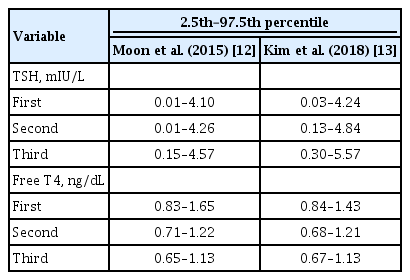
- Thyroid hormone plays a critical role in fetal growth and development, and thyroid dysfunction during pregnancy is associated with several adverse outcomes, such as miscarriage and preterm birth. In this review, we introduce and explain three major changes in the revised Korean Thyroid Association (KTA) guidelines for the diagnosis and management of thyroid disease during pregnancy: first, the normal range of thyroid-stimulating hormone (TSH) during pregnancy; second, the treatment of subclinical hypothyroidism; and third, the management of euthyroid pregnant women with positive thyroid autoantibodies. The revised KTA guidelines adopt 4.0 mIU/L as the upper limit of TSH in the first trimester. A TSH level between 4.0 and 10.0 mIU/L, combined with free thyroxine (T4) within the normal range, is defined as subclinical hypothyroidism, and a TSH level over 10 mIU/L is defined as overt hypothyroidism regardless of the free T4 level. Levothyroxine treatment is recommended when the TSH level is higher than 4 mIU/L in subclinical hypothyroidism, regardless of thyroid peroxidase antibody positivity. However, thyroid hormone therapy to prevent miscarriage is not recommended in thyroid autoantibody-positive women with normal thyroid function.
-
Citations
Citations to this article as recorded by
- Research Progress on the Effect of Singleton Pregnancy Combined with Gestational Hypothyroidism on Pregnancy Outcomes
隆基 朱
Advances in Clinical Medicine.2026; 16(03): 1287. CrossRef - Association between maternal thyroid function and adverse outcomes of pregnant women and offspring: evidence from an umbrella review
Jiani Zhang, Yingying Chen, Guiqiong Huang, Chunyan Deng, Chihui Mao, Bingjie Li, Xiaodong Wang, Haiyan Yu
BMC Pregnancy and Childbirth.2026;[Epub] CrossRef - The Starting Dosage of Levothyroxine for Hypothyroidism during Pregnancy
Hyunju Park, Arim Choi, Kyung-Soo Kim, Soo-Kyung Kim, Yong-Wook Cho
International Journal of Thyroidology.2026; 19(1): 60. CrossRef - Study of the Impact of Thyroxine Therapy on Bone Turnover Markers in Primary Hypothyroidism: A Cross-Sectional Comparative Study
Sunil B Shinde, Anup S Hendre, Axita C Vani
Cureus.2026;[Epub] CrossRef - The impact of thyroid function parameters and positive thyroid antibodies on IVF success in euthyroid infertile women: a prospective observational study
Aybuke Fatma Dirgen Yakar, Hamza Yildiz, Belgin Devranoglu
European Journal of Medical Research.2026;[Epub] CrossRef - Association of Maternal Thyroid-stimulating Hormone Levels with Psychological Well-being, Sexual Function, and Quality of Life During Pregnancy
Havva Betul Bacak, Fatma Ketenci Gencer, Enes Serhat Coskun, Fatih Irice, Yağmur Aciyiyen, Hayat Terkan, Ecenur Celikoglu Berker, Sinem Deligozoglu, Serkan Kumbasar, Suleyman Salman
Reproductive Sciences.2026;[Epub] CrossRef - Management of Thyroid Disorders during Pregnancy: A Survey of Physicians from the Middle East and North Africa
Salem A. Beshyah, Mohammed Bashir, Aly B. Khalil, Bashir Salih
Journal of Diabetes and Endocrine Practice.2025; 08(01): 045. CrossRef - Association of coexposure to per- and polyfluoroalkyl substances and heavy metals with thyroid function across varied age pregnant women and the potential role of hemoglobin
Fang Wang, Xinyu Zhang, Yuxin Hu, Gang Wang, Jingbo Pi, Tingyu Wang, Haina Guo, Mingqi Zhang, Lijuan Zhang, Yuanyuan Xu
International Journal of Hygiene and Environmental Health.2025; 266: 114574. CrossRef - DIAGNÓSTICO E MANEJO DO HIPOTIREOIDISMO SUBCLÍNICO: UMA REVISÃO DE LITERATURA
Dayane Beserra Costa Felício, Mariana Barbosa Silva, Mileide Beatriz de Lima Santos, Yasmin Cabral Menezes de Oliveira, Vinícius de Lima Paes, Ana Paula Simadon, Cleyciane Camila de Souza Belo Nogueira, Giulia Costa Moura
REVISTA FOCO.2025; 18(4): e8209. CrossRef - The Relationship between Thyroid Serum Indexes in Early Pregnancy and Diabetes in Pregnancy
敏 谢
Advances in Clinical Medicine.2025; 15(05): 2119. CrossRef - Investigating Birth and Thyroid Outcomes of Maternal-Fetal Environmental Exposures (IBM-E): A Cohort Protocol for Dietary Iodine and Endocrine Disruptors
Yun Ji Jung, Jeong Eun Shin, Ju-hee Yoon, Suhra Kim, Hayan Kwon, Sungbo Shim, Dong Yeob Shin, Minseo Gim, Younglim Kho, JoonHo Lee
Endocrinology and Metabolism.2025; 40(6): 940. CrossRef - Use of thyroid hormones in hypothyroid and euthyroid patients: A survey of members of the Endocrine Society of Australia
Nicole Lafontaine, Suzanne J. Brown, Petros Perros, Enrico Papini, Endre V. Nagy, Roberto Attanasio, Laszlo Hegedüs, John P. Walsh
Clinical Endocrinology.2024; 100(5): 477. CrossRef - A Prospective Clinical Trial of Radiofrequency Ablation in Patients with Low-Risk Unifocal Papillary Thyroid Microcarcinoma Favoring Active Surveillance Over Surgery
Ji Ye Lee, Dong Gyu Na, Jung Suk Sim, Jin Yong Sung, Sun Wook Cho, Do Joon Park, Young Joo Park, Ji-hoon Kim
Thyroid®.2024; 34(9): 1126. CrossRef - Association between antinuclear antibodies status and preterm birth in Japanese pregnant women: a prospective cohort study from Adjunct Study of the Japan Environment and Children’s Study
Mami Fukushige, Xi Lu, Minoru Satoh, Masako Oda, Takashi Ohba, Takahiko Katoh
BMC Pregnancy and Childbirth.2024;[Epub] CrossRef - Differentiation Between Clinical and Subclinical Hypothyroidism in Pathophysiology, Symptoms, Diagnosis and Treatment – A Narrative Review
Mustafa Mohammed Albassam, Noor Mohammed Obaid, Yasser Kadhim Hashem Al-Zwaini
Baghdad Journal of Biochemistry and Applied Biological Sciences.2024; 5(3): 144. CrossRef - Management of Subclinical Hypothyroidism: A Focus on Proven Health Effects in the 2023 Korean Thyroid Association Guidelines
Eu Jeong Ku, Won Sang Yoo, Hyun Kyung Chung
Endocrinology and Metabolism.2023; 38(4): 381. CrossRef - Maternal isolated hypothyroxinemia in the first trimester is not associated with adverse pregnancy outcomes, except for macrosomia: a prospective cohort study in China
Jing Du, Linong Ji, Xiaomei Zhang, Ning Yuan, Jianbin Sun, Dan Zhao
Frontiers in Endocrinology.2023;[Epub] CrossRef
- Research Progress on the Effect of Singleton Pregnancy Combined with Gestational Hypothyroidism on Pregnancy Outcomes

- Thyroid
- Prenatal Exposure to Per- and Polyfluoroalkyl Substances, Maternal Thyroid Dysfunction, and Child Autism Spectrum Disorder
- Hyeong-Moo Shin, Jiwon Oh, Rebecca J. Schmidt, Elizabeth N. Pearce
- Endocrinol Metab. 2022;37(6):819-829. Published online November 23, 2022
- DOI: https://doi.org/10.3803/EnM.2022.1598
- 18,055 View
- 200 Download
- 16 Web of Science
- 20 Crossref
-
Abstract
PDFPubReader ePub
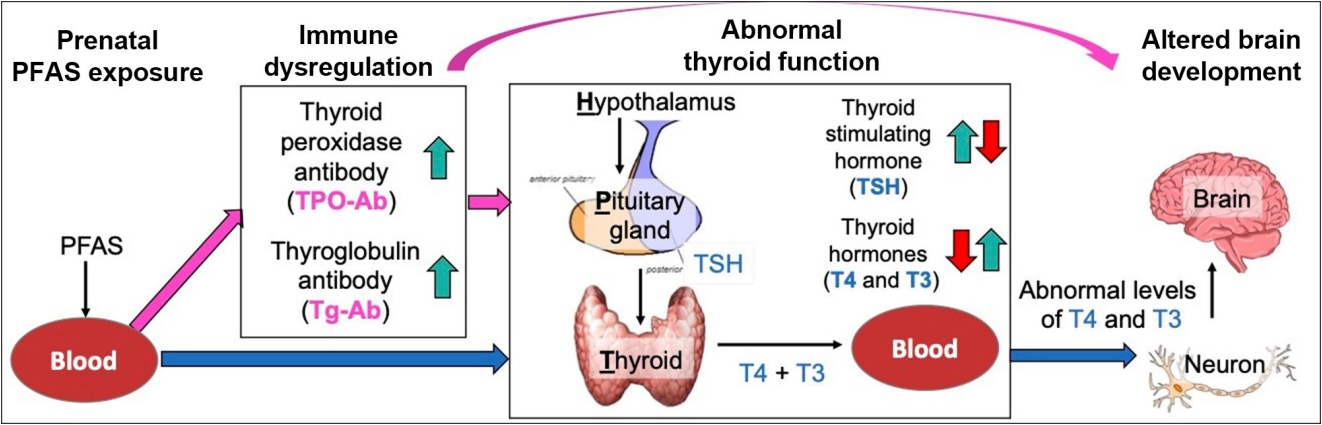
- Autism spectrum disorder (ASD), with its high economic and societal costs, is a growing public health concern whose prevalence has risen steadily over the last two decades. Although actual increased incidence versus improved diagnosis remains controversial, the increased prevalence of ASD suggests non-inherited factors as likely contributors. There is increasing epidemiologic evidence that abnormal maternal thyroid function during pregnancy is associated with increased risk of child ASD and other neurodevelopmental disorders. Prenatal exposure to endocrine-disrupting chemicals such as per- and polyfluoroalkyl substances (PFAS) is known to disrupt thyroid function and can affect early brain development; thus, thyroid dysfunction is hypothesized to mediate this relationship. The concept of a potential pathway from prenatal PFAS exposure through thyroid dysfunction to ASD etiology is not new; however, the extant literature on this topic is scant. The aim of this review is to evaluate and summarize reports with regard to potential mechanisms in this pathway.
-
Citations
Citations to this article as recorded by- Identifying possible neurodevelopmental effects of per- and polyfluoroalkyl substances (PFAS) through an adverse outcome pathway (AOP) network for human developmental neurotoxicology
Sayed Esmaeil Mousavi, Maryam Zarean, Jimmy Yu, Sepide Abbasi, Raymond W.M. Kwong
Science of The Total Environment.2026; 1011: 181170. CrossRef - Occurrence, distribution, and potential risk of per- and polyfluoroalkyl substances in soil, outdoor dust, and atmospheric particles in the electronic industrial agglomeration zone in South China
Hanying Zheng, Xulong Chen, Bingjun Lu, Pei Luo, Bei Wang, Chiqun Shan, Bo Fu, Yuli Lin, Muchen Yin, Jiayi Xu, Xiangxuan Kong, Tingting Zhu, Shaoyou Lu
Environmental Pollution.2026; 390: 127470. CrossRef - Levothyroxine mitigates autism-related behaviours in the maternally separated male mice possibly through manipulating hippocampal nitrite imbalance and neuroinflammation
Fatemeh Rafiei, Hourivash Ghaderi, Hosein Amini-khoei
The World Journal of Biological Psychiatry.2026; 27(4): 379. CrossRef - Associations of per- and polyfluoroalkyl substances (PFAS) exposure and thyroid hormone concentration during pregnancy in the LIFECODES cohort
Seonyoung Park, Ram C. Siwakoti, Kelly K. Ferguson, David E. Cantonwine, Bhramar Mukherjee, Thomas F. McElrath, John D. Meeker
International Journal of Hygiene and Environmental Health.2026; 275: 114824. CrossRef - Endocrine disruptor load in pregnancy and the thyroid–glucose axis: A mixture-aware systematic review and meta-analysis with mechanistic integration and a conceptual framework for the Pregnancy Disruptor Exposure Score
Wiku Andonotopo, Aryani Aziz, Nuswil Bernolian, Muhammad Adrianes Bachnas, Wisnu Prabowo, Eric Edwin Yuliantara, Mochammad Besari Adi Pramono, Julian Dewantiningrum, Efendi Lukas, I. Nyoman Hariyasa Sanjaya, Anak Agung Gede Putra Wiradnyana, Anak Agung Ng
Environmental Disease.2026; 11(2): 63. CrossRef - Prenatal PFAS exposure and offspring health: evidence review and implications for intergenerational risk assessment
Bin Deng, Xuan Xia, Xiaoxiang Sun
Frontiers in Public Health.2026;[Epub] CrossRef - Maternal Thyroid Dysfunction During Pregnancy and Childhood Autism or Other Developmental Outcomes
Zoe B. Kaplan, Elizabeth N. Pearce, Meghan Miller, Daniel Tancredi, Irva Hertz‐Picciotto, Hyeong‐Moo Shin, Rebecca J. Schmidt
Autism Research.2026;[Epub] CrossRef - Per- and polyfluoroalkyl substances as persistent pollutants with metabolic and endocrine-disrupting impacts
Lucas Gaillard, Robert Barouki, Etienne Blanc, Xavier Coumoul, Karine Andréau
Trends in Endocrinology & Metabolism.2025; 36(3): 249. CrossRef - Hormonal disorders in autism spectrum disorders
Solmaz Jalilzadeh Khalet Abad, Galavizh Kalashipour Chir, Parivash Heydari, Ahmad Fazilat, Fatemeh Mortazavi Moghadam, Mohammad Valilo
Hormone Molecular Biology and Clinical Investigation.2025; 46(2): 57. CrossRef - Maternal per- and polyfluoroalkyl substance concentrations and placental DNA methylation of thyroid hormone-related genes
Zhenzhen Xie, Longmei Jin, Qihan Wu, Honglei Ji, Maohua Miao, Xiuxia Song, Haijun Zhu, Huijia Su, Wei Yuan, Hong Liang
Journal of Hazardous Materials.2025; 489: 137545. CrossRef - Investigating Birth and Thyroid Outcomes of Maternal-Fetal Environmental Exposures (IBM-E): A Cohort Protocol for Dietary Iodine and Endocrine Disruptors
Yun Ji Jung, Jeong Eun Shin, Ju-hee Yoon, Suhra Kim, Hayan Kwon, Sungbo Shim, Dong Yeob Shin, Minseo Gim, Younglim Kho, JoonHo Lee
Endocrinology and Metabolism.2025; 40(6): 940. CrossRef - Endocrine Disruptors and Thyroid Health
Elizabeth N. Pearce
Endocrine Practice.2024; 30(2): 172. CrossRef - Maternal Thyroid Dysfunction During Pregnancy as an Etiologic Factor in Autism Spectrum Disorder: Challenges and Opportunities for Research
Zoe B. Kaplan, Elizabeth N. Pearce, Sun Y. Lee, Hyeong-Moo Shin, Rebecca J. Schmidt
Thyroid®.2024; 34(2): 144. CrossRef - Per-polyfluoroalkyl substances (PFAS) as thyroid disruptors: is there evidence for multi-transgenerational effects?
Francesca Coperchini, Marsida Teliti, Alessia Greco, Laura Croce, Mario Rotondi
Expert Review of Endocrinology & Metabolism.2024; 19(4): 307. CrossRef - Endocrine Disruptors in Pregnancy: Effects on Mothers and Fetuses—A Review
Rima Hajjar, Sana Hatoum, Serge Mattar, Gaby Moawad, Jean Marc Ayoubi, Anis Feki, Labib Ghulmiyyah
Journal of Clinical Medicine.2024; 13(18): 5549. CrossRef - Per- and polyfluoroalkyl substances (PFAS) in Indian environment: Prevalence, impacts and solutions
G.V. Koulini, Vignesh Vinayagam, Indumathi M. Nambi, R. Ravi Krishna
Journal of Water Process Engineering.2024; 66: 105988. CrossRef - Association between PFAS exposure and thyroid health: A systematic review and meta-analysis for adolescents, pregnant women, adults and toxicological evidence
Xiushuai Du, Yitian Wu, Gonghua Tao, Jun Xu, Zhiyuan Du, Minjuan Wu, Tianmin Gu, Jiasheng Xiong, Shuo Xiao, Xiao Wei, Yuanyuan Ruan, Ping Xiao, Ling Zhang, Weiwei Zheng
Science of The Total Environment.2024; 953: 175958. CrossRef - Neurotoxicity of per- and polyfluoroalkyl substances: Evidence and future directions
Bhagyashree Bharal, Chanda Ruchitha, Paarth Kumar, Rukmani Pandey, Mahesh Rachamalla, Som Niyogi, Ravi Naidu, Ravinder K. Kaundal
Science of The Total Environment.2024; 955: 176941. CrossRef - Associations Between Heavy Metal Exposure from Milk and Steroid Hormones in Mothers
Zheng Wang, Caixia Liang, Li Li Shi, Cheng-Sheng Zhu, Shenghang Wang, Shoji F. Nakayama, Teruhiko Kido, Xian Liang Sun, Jiancong Shan
Biological Trace Element Research.2024; 203(8): 3989. CrossRef - Effects of Endocrine-Disrupting Chemicals on Human Health
Jun Hyung Lee, Sung-Eun Cho
Laboratory Medicine Online.2023; 13(3): 129. CrossRef
- Identifying possible neurodevelopmental effects of per- and polyfluoroalkyl substances (PFAS) through an adverse outcome pathway (AOP) network for human developmental neurotoxicology
- Thyroid
- Euthyroid Thyroperoxidase Antibody Positivity during Pregnancy, to Treat or Not to Treat?
- Tim I. M. Korevaar
- Endocrinol Metab. 2022;37(3):387-391. Published online June 29, 2022
- DOI: https://doi.org/10.3803/EnM.2022.301

- 15,915 View
- 292 Download
- 5 Web of Science
- 7 Crossref
-
Abstract
PDFPubReader ePub
- Thyroperoxidase antibody (TPOAb) positivity is a well-known risk factor for thyroid dysfunction during pregnancy and is associated with a suboptimal response to thyroidal stimulation by human chorionic gonadotropin. About 75% of TPOAb positive women are euthyroid and there seems to be a higher risk of predominantly miscarriage and preterm birth in this subgroup. Nonetheless, clinical decision making with regards to gestational levothyroxine treatment remains difficult due to a lack of large randomized trials. Future studies assessing dose-dependent associations and additional biomarkers that can distinguish low-risk from high-risk individuals will be key in disentangling the crude clinical data.
-
Citations
Citations to this article as recorded by- Comorbid autoimmune disease in stiff-person syndrome spectrum disorder: a systematic review and meta-analysis
Yueyang Hu, Muzi Wen, Linxin Wen, Ruogu Cheng, Yinan Shen, Albert Aboseif, Pei Shang
Journal of Neurology.2026;[Epub] CrossRef - Impact of Enoxaparin on Maternal and Fetal Outcomes in In Vitro Fertilization (IVF) Pregnancies With Thyroid Autoimmunity: A Real-World, Single-Center, Retrospective, Observational Study
G. A. Rama Raju, Ponnada Sravani, Pranati Mahapatro, Aruna Kovvuri, Vishal Dave, Vivek Sharma, Deepak Bunger
Cureus.2025;[Epub] CrossRef - The Impact of Chronic Autoimmune Thyroiditis During Pregnancy on Maternal and Fetal Outcomes
Olesea Scrinic, Eduard Circo, Seila Musledin
Endocrines.2025; 6(4): 56. CrossRef - Thyroid autoimmunity and adverse pregnancy outcomes: A multiple center retrospective study
Yun Xu, Hui Chen, Meng Ren, Yu Gao, Kan Sun, Hongshi Wu, Rui Ding, Junhui Wang, Zheqing Li, Dan Liu, Zilian Wang, Li Yan
Frontiers in Endocrinology.2023;[Epub] CrossRef - The Clinical Implications of Anti-thyroid Peroxidase Antibodies in Graves’ Disease in Basrah
Emad S Alhubaish, Nassar T Alibrahim, Abbas A Mansour
Cureus.2023;[Epub] CrossRef - Research Progress on the Influence of Autoimmune Thyroid Disease on Pregnancy Outcome
敏 李
Advances in Clinical Medicine.2023; 13(08): 13720. CrossRef - The Impact of Maternal Hypothyroidism during Pregnancy on Minipuberty in Boys
Karolina Kowalcze, Robert Krysiak, Anna Obuchowicz
Journal of Clinical Medicine.2023; 12(24): 7649. CrossRef
- Comorbid autoimmune disease in stiff-person syndrome spectrum disorder: a systematic review and meta-analysis
- Miscellaneous
- Clinical Characteristics, Management, and Potential Biomarkers of Endocrine Dysfunction Induced by Immune Checkpoint Inhibitors
- Shintaro Iwama, Tomoko Kobayashi, Hiroshi Arima
- Endocrinol Metab. 2021;36(2):312-321. Published online April 27, 2021
- DOI: https://doi.org/10.3803/EnM.2021.1007

- 13,705 View
- 337 Download
- 32 Web of Science
- 30 Crossref
-
Abstract
PDFPubReader ePub
- Immune-related adverse events (irAEs) affecting the endocrine glands are among the most frequent irAEs induced by immune checkpoint inhibitors (ICIs) and include hypopituitarism, primary adrenal insufficiency, thyrotoxicosis, hypothyroidism, hypoparathyroidism, and type 1 diabetes mellitus. Since the incidence and clinical features of endocrine irAEs vary according to the ICI used, it is important to understand the characteristics of these irAEs and to manage each one appropriately. Since some endocrine irAEs, including adrenal crisis and diabetic ketoacidosis, are potentially life-threatening, predicting the risk of endocrine irAEs before their onset is critical. Several autoantibodies have been detected in patients who develop endocrine irAEs, among which anti-thyroid antibodies may be predictive biomarkers of thyroid dysfunction. In this review, we describe the clinical features of each endocrine irAE induced by ICIs and discuss their potential biomarkers, including autoantibodies.
-
Citations
Citations to this article as recorded by- Blood glucose variability in early-onset adrenocorticotropic hormone deficiency induced by immune checkpoint inhibitor therapy with continuous blood glucose monitoring: a case report
Yuta Nanao, Gentaro Egusa, Ryuta Baba, Takaya Kodama, Tsuguka Matsuda, Gaku Nagano, Haruya Ohno
Diabetology International.2026;[Epub] CrossRef - Real world incidence, predictors and outcomes of endocrine immune-related adverse events following immune checkpoint inhibitors
Shuwen Tan, Yuhan Wang, Yunjia Cai, Hongzhou Guo, Ying Gao
Human Vaccines & Immunotherapeutics.2026;[Epub] CrossRef - Endocrinologist‐Led Management of Endocrine Immune‐Related Adverse Events: Real‐World Evidence Supporting the Japan Endocrine Society Guidelines
Kota Nishihama, Hajime Fujimoto, Kanako Saito, Chisa Inoue, Yuko Okano, Atsuro Takeshita, Mei Uemura, Corina N. D'Alessandro‐Gabazza, Esteban C. Gabazza, Yutaka Yano, Taro Yasuma
Cancer Medicine.2026;[Epub] CrossRef - Hypothalamic-pituitary-adrenal axis dysfunction induced by cancer therapy with immune checkpoint inhibitors
A. Yu. Usynina, T. V. Saprina, N. O. Popova, E. A. Usynin, D. A. Eremin
Siberian journal of oncology.2026; 25(2): 155. CrossRef - Management, biomarkers and prognosis in people developing endocrinopathies associated with immune checkpoint inhibitors
Shintaro Iwama, Tomoko Kobayashi, Hiroshi Arima
Nature Reviews Endocrinology.2025; 21(5): 289. CrossRef - Thyroid Dysfunction After Intensity-Modulated Radiotherapy and PD⁃1 Inhibitor Treatment for Locally Advanced Nasopharyngeal Carcinoma
Kai Shang, Qianyong He, Xinyu Xu, Xunyan Luo, Chaofen Zhao, Lina Liu, Zhuoling Li, Yuanyuan Li, Feng Jin
Therapeutics and Clinical Risk Management.2025; Volume 21: 15. CrossRef - Subacute thyroiditis during anti-programmed cell death protein 1 antibody therapy: A case report
Makiko Ikemoto, Yasufumi Seki, Daisuke Watanabe, Toshio Takagi, Atsuhiro Ichihara
Thyroid Science.2025; 2(2): 100024. CrossRef - Combined PD-1 and CTLA-4 Blockade Increases the Risks of Multiple Pituitary Hormone Deficiency and Isolated Adrenocorticotropic Deficiency: A Prospective Study
Shintaro Iwama, Tomoko Kobayashi, Tetsushi Izuchi, Koji Suzuki, Takanori Murase, Masahiko Ando, Tomoko Handa, Takeshi Onoue, Takashi Miyata, Mariko Sugiyama, Daisuke Hagiwara, Hidetaka Suga, Ryoichi Banno, Tetsunari Hase, Shoichiro Mori, Tomoyasu Sano, Sh
Endocrinology and Metabolism.2025; 40(3): 459. CrossRef - Clinical characteristics and immunotherapy efficacy in advanced lung cancer patients with immune checkpoint inhibitor-related adrenal insufficiency
Lu Xu, Xinjie Zhang, Wang Yao, Vincent Kam Wai Wong
Medicine.2025; 104(34): e43983. CrossRef - Consensus-based disease definitions for endocrine immune-related adverse events of immune checkpoint inhibitors
Ling Zhu, Yee-Ming M Cheung, Cherie Chiang, Emily J Gallagher, Ole-Petter R Hamnvik, Jennifer Mammen, Zoe Quandt, Renisha Jones, Jon McDunn, Huda Al-Bahadili, Trevor Angell, Irina Bancos, Allison Betof Warner, Susan Blackwell, Cassandra Calabrese, Tracey
Journal for ImmunoTherapy of Cancer.2025; 13(10): e011865. CrossRef - Increased risk of hyperthyroidism induced by immune checkpoint inhibitors in patients with existing or prior Graves’ disease: a nested prospective cohort study with propensity score matching
Koji Suzuki, Tomoko Kobayashi, Tetsushi Izuchi, Takanori Murase, Masahiko Ando, Tomoko Handa, Takeshi Onoue, Takashi Miyata, Mariko Sugiyama, Daisuke Hagiwara, Hidetaka Suga, Ryoichi Banno, Hiroshi Arima, Shintaro Iwama
Frontiers in Endocrinology.2025;[Epub] CrossRef - Clinical characteristics and potential biomarkers of thyroid and pituitary immune-related adverse events
Tomoko Kobayashi, Shintaro Iwama, Hiroshi Arima
Endocrine Journal.2024; 71(1): 23. CrossRef - A case of rapidly progressive insulin-dependent diabetes mellitus without islet autoantibodies developed over two years after the first dose of nivolumab
Kota Nishihama, Yuko Okano, Chisa Inoue, Kanako Maki, Kazuhito Eguchi, Soichiro Tanaka, Atsuro Takeshita, Mei Uemura, Taro Yasuma, Toshinari Suzuki, Esteban C. Gabazza, Yutaka Yano
Diabetology International.2024; 15(3): 583. CrossRef - Endocrinopathies Associated With Immune Checkpoint Inhibitor Use
Anupam Kotwal, Randol Kennedy, Nupur Kikani, Sonali Thosani, Whitney Goldner, Afreen Shariff
Endocrine Practice.2024; 30(6): 584. CrossRef - Combined use of tyrosine kinase inhibitors with PD-(L)1 blockade increased the risk of thyroid dysfunction in PD-(L)1 blockade: a prospective study
Tomoko Kobayashi, Shintaro Iwama, Ayana Yamagami, Tetsushi Izuchi, Koji Suzuki, Koki Otake, Yoshinori Yasuda, Masahiko Ando, Takeshi Onoue, Takashi Miyata, Mariko Sugiyama, Daisuke Hagiwara, Hidetaka Suga, Ryoichi Banno, Tetsunari Hase, Naoki Nishio, Shoi
Cancer Immunology, Immunotherapy.2024;[Epub] CrossRef - Adrenal Insufficiency and Thyrotoxicosis Following Combined Immune Checkpoint Inhibitor Use: A Case Report and Literature Review
Kaoruko Fukushima, Saori Kitayama, Manami Sazuka, Remi Kodera, Kazuhito Oba, Kenji Toyoshima, Yuko Chiba, Hiroshi Yamamoto, Atsushi Araki, Yoshiaki Tamura
Cureus.2024;[Epub] CrossRef - Changes in TgAb and TPOAb titers are greater in thyrotoxicosis than isolated hypothyroidism induced by PD-1 blockade
Ayana Yamagami, Shintaro Iwama, Tomoko Kobayashi, Xin Zhou, Yoshinori Yasuda, Takayuki Okuji, Masaaki Ito, Tetsushi Izuchi, Masahiko Ando, Takeshi Onoue, Takashi Miyata, Mariko Sugiyama, Daisuke Hagiwara, Hidetaka Suga, Ryoichi Banno, Hiroshi Arima
Endocrine Journal.2024; 71(5): 515. CrossRef - Single-cell RNA sequencing analysis of peripheral blood mononuclear cells in PD-1-induced renal toxicity in patients with lung cancer
Shusu Liu, Peiyu Lu, Bixia Yang, Yan Yang, Hua Zhou, Min Yang
BMC Nephrology.2024;[Epub] CrossRef - Development of pituitary dysfunction and destructive thyroiditis is associated with better survival in non-small cell lung cancer patients treated with programmed cell death-1 inhibitors: a prospective study with immortal time bias correction
Koji Suzuki, Tomoko Kobayashi, Tetsushi Izuchi, Koki Otake, Masahiko Ando, Tomoko Handa, Takashi Miyata, Mariko Sugiyama, Takeshi Onoue, Daisuke Hagiwara, Hidetaka Suga, Ryoichi Banno, Tetsunari Hase, Megumi Inoue, Makoto Ishii, Hiroshi Arima, Shintaro Iw
Frontiers in Endocrinology.2024;[Epub] CrossRef - Recovery from insulin dependence in immune checkpoint inhibitor‐associated diabetes mellitus: A case report
Marie Okubo, Yuji Hataya, Kanta Fujimoto, Toshio Iwakura, Naoki Matsuoka
Journal of Diabetes Investigation.2023; 14(1): 147. CrossRef - Case Report: A Rising Cause of New-Onset Endocrinopathies After Immunotherapy
Charity Tan, Sarah Hendricks, Kristina Hernandez, Martha Benavides, Rupinderjit Samra
The Journal for Nurse Practitioners.2023; 19(5): 104582. CrossRef - Risk of Thyroid Dysfunction in PD-1 Blockade Is Stratified by the Pattern of TgAb and TPOAb Positivity at Baseline
Xin Zhou, Shintaro Iwama, Tomoko Kobayashi, Masahiko Ando, Hiroshi Arima
The Journal of Clinical Endocrinology & Metabolism.2023; 108(10): e1056. CrossRef - Severe thyrotoxicosis induced by tislelizumab: a case report and literature review
Liman Huo, Chao Wang, Haixia Ding, Xuelian Shi, Bin Shan, Ruoying Zhou, Ping Liang, Juan Hou
Frontiers in Oncology.2023;[Epub] CrossRef - Life-Threatening Endocrinological Immune-Related Adverse Events of Immune Checkpoint Inhibitor Therapy
Aleksandra Basek, Grzegorz K. Jakubiak, Grzegorz Cieślar, Agata Stanek
Cancers.2023; 15(24): 5786. CrossRef - Increased Risk of Thyroid Dysfunction by PD-1 and CTLA-4 Blockade in Patients Without Thyroid Autoantibodies at Baseline
Shintaro Iwama, Tomoko Kobayashi, Yoshinori Yasuda, Takayuki Okuji, Masaaki Ito, Masahiko Ando, Xin Zhou, Ayana Yamagami, Takeshi Onoue, Yohei Kawaguchi, Takashi Miyata, Mariko Sugiyama, Hiroshi Takagi, Daisuke Hagiwara, Hidetaka Suga, Ryoichi Banno, Tets
The Journal of Clinical Endocrinology & Metabolism.2022; 107(4): e1620. CrossRef - Biomarkers and risk factors for the early prediction of immune-related adverse events: a review
Ying Zhang, Xiaoling Zhang, Weiling Li, Yunyi Du, Wenqing Hu, Jun Zhao
Human Vaccines & Immunotherapeutics.2022;[Epub] CrossRef - Immune Checkpoint Inhibitors as a Threat to the Hypothalamus–Pituitary Axis: A Completed Puzzle
Agnese Barnabei, Andrea Corsello, Rosa Maria Paragliola, Giovanni Maria Iannantuono, Luca Falzone, Salvatore Maria Corsello, Francesco Torino
Cancers.2022; 14(4): 1057. CrossRef - Elevated TSH Level, TgAb, and Prior Use of Ramucirumab or TKIs as Risk Factors for Thyroid Dysfunction in PD-L1 Blockade
Tomoko Kobayashi, Shintaro Iwama, Ayana Yamagami, Yoshinori Yasuda, Takayuki Okuji, Masaaki Ito, Xin Zhou, Masahiko Ando, Takeshi Onoue, Takashi Miyata, Mariko Sugiyama, Daisuke Hagiwara, Hidetaka Suga, Ryoichi Banno, Tetsunari Hase, Masahiro Morise, Taka
The Journal of Clinical Endocrinology & Metabolism.2022; 107(10): e4115. CrossRef - Preconditioning of the immune system modulates the response of papillary thyroid cancer to immune checkpoint inhibitors
Fabiana Pani, Yoshinori Yasuda, Sylvie T Rousseau, Kevin C Bermea, Solmaz Roshanmehr, Rulin Wang, Srinivasan Yegnasubramanian, Patrizio Caturegli, Luigi Adamo
Journal for ImmunoTherapy of Cancer.2022; 10(12): e005538. CrossRef - Survival benefit of endocrine dysfunction following immune checkpoint inhibitors for nonthyroidal cancers
Anupam Kotwal, Mabel Ryder
Current Opinion in Endocrinology, Diabetes & Obesity.2021; 28(5): 517. CrossRef
- Blood glucose variability in early-onset adrenocorticotropic hormone deficiency induced by immune checkpoint inhibitor therapy with continuous blood glucose monitoring: a case report
Original Article
- Clinical Study
- Changes in Thyroid Peroxidase and Thyroglobulin Antibodies Might Be Associated with Graves' Disease Relapse after Antithyroid Drug Therapy
- Yun Mi Choi, Mi Kyung Kwak, Sang Mo Hong, Eun-Gyoung Hong
- Endocrinol Metab. 2019;34(3):268-274. Published online September 26, 2019
- DOI: https://doi.org/10.3803/EnM.2019.34.3.268
- 17,615 View
- 159 Download
- 14 Web of Science
- 15 Crossref
-
Abstract
PDFPubReader ePub
Background Graves' disease (GD) is an autoimmune thyroid disorder caused by antibodies stimulating the thyrotropin (TSH) receptor. TSH receptor antibody (TRAb) measurement is useful for predicting GD relapse after antithyroid drug (ATD) treatment. However, the association of other thyroid autoantibodies with GD relapse remains obscure.
Methods This retrospective study enrolled patients with GD who were initially treated with ATD. TRAb, thyroid peroxidase antibody (TPOAb), and thyroglobulin antibody (TgAb) were measured at the initial diagnosis and at the time of ATD discontinuation.
Results A total of 55 patients were enrolled. The mean age was 49.7 years, and 39 patients (70.9%) were female. Antibody positivity at diagnosis was 90.9%, 69.1%, and 61.9% for TRAb, TPOAb, TgAb, respectively. Median ATD treatment period was 15.1 months. At the time of ATD withdrawal, TRAb titers decreased uniformly overall. Conversely, TPOAb and TgAb showed various changes. After withdrawal of ATD, 19 patients (34.5%) experienced relapse. No clinical features or laboratory results were significantly related to relapse in the overall patient group. However, in the TPOAb positive group at diagnosis, increasing titer of TPOAb or TgAb after ATD treatment was significantly and independently related to relapse free survival (TPOAb: hazard ratio [HR], 17.99; 95% confidence interval [CI], 1.66 to 195.43;
P =0.02) (TgAb: HR, 5.73; 95% CI, 1.21 to 27.26;P =0.03).Conclusion Changes in TPOAb or TgAb titers during treatment might be useful for predicting relapse after ATD treatment in patients with positive TPOAb at diagnosis.
-
Citations
Citations to this article as recorded by- Clinical and Ultrasonographic Characterization of the Transition from Hashimoto Thyroiditis to Graves' Disease: A Long-term Follow-up Study
Alberto Vassallo, Francesca Ferrari, Luigi di Filippo, Francesca Perticone, Laura Castellino, Andrea Giustina, Paola Loli
Endocrine.2026;[Epub] CrossRef - Related Factors of Recurrence of Graves’ Disease after Withdrawal of Antithyroid Drugs
立静 陈
Journal of Clinical Personalized Medicine.2025; 04(02): 821. CrossRef - Enhanced predictive validity of integrative models for refractory hyperthyroidism considering baseline and early therapy characteristics: a prospective cohort study
Xinpan Wang, Tiantian Li, Yue Li, Qiuyi Wang, Yun Cai, Zhixiao Wang, Yun Shi, Tao Yang, Xuqin Zheng
Journal of Translational Medicine.2024;[Epub] CrossRef - Clinical significance of thyroglobulin antibodies and thyroid peroxidase antibodies in Graves’ disease: a cross-sectional study
Masahito Katahira, Taku Tsunekawa, Akira Mizoguchi, Mariko Yamaguchi, Kahori Tsuru, Hiromi Takashima, Ryoma Terada
Hormones.2023; 22(2): 253. CrossRef - The Clinical Implications of Anti-thyroid Peroxidase Antibodies in Graves’ Disease in Basrah
Emad S Alhubaish, Nassar T Alibrahim, Abbas A Mansour
Cureus.2023;[Epub] CrossRef - Influence of Thyroid Peroxidase Antibodies Serum Levels in Graves' Disease: A Retrospective Cohort Study
Maria L Guia Lopes, Carlos Tavares Bello, José P Cidade, Clotilde Limbert, Joao Sequeira Duarte
Cureus.2023;[Epub] CrossRef - Interpretation of Thyroid Autoantibodies in Hyperthyroidism
Han-Sang Baek, Dong-Jun Lim
The Korean Journal of Medicine.2023; 98(3): 132. CrossRef - Usefulness of Real-Time Quantitative Microvascular Ultrasonography for Differentiation of Graves’ Disease from Destructive Thyroiditis in Thyrotoxic Patients
Han-Sang Baek, Ji-Yeon Park, Chai-Ho Jeong, Jeonghoon Ha, Moo Il Kang, Dong-Jun Lim
Endocrinology and Metabolism.2022; 37(2): 323. CrossRef - Differential Diagnosis of Thyrotoxicosis by Machine Learning Models with Laboratory Findings
Jinyoung Kim, Han-Sang Baek, Jeonghoon Ha, Mee Kyoung Kim, Hyuk-Sang Kwon, Ki-Ho Song, Dong-Jun Lim, Ki-Hyun Baek
Diagnostics.2022; 12(6): 1468. CrossRef - The relationship between atherosclerotic disease and relapse during ATD treatment
Xinxin Zhu, Yaguang Zhang, Xiaoyu Zhao, Xiaona Zhang, Zixuan Ru, Yanmeizhi Wu, Xu Yang, Boyu Hou, Hong Qiao
Frontiers in Cardiovascular Medicine.2022;[Epub] CrossRef - Programmed Cell Death-Ligand 1 (PD-L1) gene Single Nucleotide Polymorphism in Graves’ Disease and Hashimoto’s Thyroiditis in Korean Patients
Jee Hee Yoon, Min-ho Shin, Hee Nam Kim, Wonsuk Choi, Ji Yong Park, A Ram Hong, Hee Kyung Kim, Ho-Cheol Kang
Endocrinology and Metabolism.2021; 36(3): 599. CrossRef - Low frequency of IL-10-producing B cells and high density of ILC2s contribute to the pathological process in Graves’ disease, which may be related to elevated-TRAb levels
Xiaoyun Ji, Jie Wan, Rong Chen, Huixuan Wang, Lan Huang, Shwngjun Wang, Zhaoliang Su, Huaxi Xu
Autoimmunity.2020; 53(2): 78. CrossRef - Implication of VDR rs7975232 and FCGR2A rs1801274 gene polymorphisms in the risk and the prognosis of
autoimmune thyroid diseases in the Tunisian population
S Mestiri, I Zaaber, I Nasr, H Marmouch
Balkan Journal of Medical Genetics.2020; 23(1): 69. CrossRef - Thyroid Peroxidase Antibody Positivity is Associated With Relapse-Free Survival Following Antithyroid Drug Treatment for Graves Disease
Christopher A. Muir, Graham R.D. Jones, Jerry R. Greenfield, Andrew Weissberger, Katherine Samaras
Endocrine Practice.2020; 26(9): 1026. CrossRef - Predicting the Risk of Graves Disease Relapse: Commentary on “Thyroid Peroxidase Antibody Positivity is Associated with Relapse-Free Survival Following Antithyroid Drug Treatment for Graves Disease”
D. Gallo, M.L. Tanda, E. Piantanida
Endocrine Practice.2020; 26(9): 1039. CrossRef
- Clinical and Ultrasonographic Characterization of the Transition from Hashimoto Thyroiditis to Graves' Disease: A Long-term Follow-up Study
Review Article
- Diabetes, Obesity and Metabolism
- Latent Autoimmune Diabetes in Adults: Current Status and New Horizons
- Paolo Pozzilli, Silvia Pieralice
- Endocrinol Metab. 2018;33(2):147-159. Published online June 21, 2018
- DOI: https://doi.org/10.3803/EnM.2018.33.2.147
- 34,555 View
- 644 Download
- 74 Web of Science
- 75 Crossref
-
Abstract
PDFPubReader ePub
Autoimmune diabetes is a heterogeneous disease which can arise at any age. Subjects with adult-onset autoimmune diabetes who do not necessitate insulin-therapy for at least 6 months after diagnosis are demarcated as having latent autoimmune diabetes in adults (LADA). This condition is more heterogeneous than young-onset autoimmune diabetes and shares clinical and metabolic characteristics with both type 2 and type 1 diabetes. Patients with LADA are considered by having highly variable β-cell destruction, different degrees of insulin resistance and heterogeneous titre and pattern of islet autoantibody, suggesting different pathophysiological pathways partially explaining the heterogeneous phenotypes of LADA. To date the heterogeneity of LADA does not allow to establish
a priori treatment algorithm and no specific guidelines for LADA therapy are available. These subjects are mostly treated as affected by type 2 diabetes, a factor that might lead to the progression to insulin-dependency quickly. A personalised medicine approach is necessary to attain optimal metabolic control and preserve β-cell function to decrease the risk of long-term diabetes complications. Recent data concerning the use of oral antidiabetic agents as dipeptidyl peptidase 4 inhibitors and glucagon-like peptide 1 receptor agonists indicate up-and-coming results in term of protect C-peptide levels and improving glycaemic control. This review summarises current knowledge on LADA, emphasising controversies regarding its pathophysiology and clinical features. Moreover, we discuss data available about novel therapeutic approaches that can be considered for prevention of β-cell loss in LADA.-
Citations
Citations to this article as recorded by- Associations between perceived stress, psychosocial stressors, and HbA1c levels in healthy young adults from a prospective cohort study
Vivi Just-Nørregaard, Vita Ligaya Dalgaard, Jens M. Bruun, Johan Hviid Andersen, Trine Nøhr Winding
Scientific Reports.2026;[Epub] CrossRef - The prevalence of latent autoimmune diabetes misdiagnosed with type 2 diabetes mellites among adult patients in Jordan: A cross-sectional study
Rania Alwreikat, Lobna Gharaibeh, Munther S. Alnajjar
International Journal of Diabetes in Developing Countries.2026;[Epub] CrossRef - Subclinical carotid atherosclerosis in latent autoimmune diabetes in adults and type 2 diabetes mellitus: a cross-sectional study
Tiantian Cai, Rui Zhou, Junlong Chen, Xiaoyun Ran, Wen Li, Mingyang Xia, Na Ao, Xiaoya Zheng
Nutrition, Metabolism and Cardiovascular Diseases.2026; 36(8): 104675. CrossRef - Latent autoimmune diabetes in Saudi adults aged 30-55 years old seen at a tertiary hospital in Riyadh, Saudi Arabia
Yasser Abdullah Aldrees, Bader Saad Alzahrani, Bandar Ayedh Alqahtani, Mashail M. Alowais, Afnan N. Alhemiddi, Alaa A. Ismail, Nasser Theeb Almazariqah, Fatima N. Alotaibi, Mai A. AlEleeq, Raed Abdullah Alnowais, Abdulaziz Abdulrahman Alzeer
Journal of Family Medicine and Primary Care.2026; 15(3): 1299. CrossRef - Pesquisa de anticorpos znt8 como ferramenta complementar no diagnóstico diferencial entre diabetes autoimune latente do adulto (lada) e diabetes tipo 2
Isabella Santos Kennd, Paulo Henrique Rosa Martins
RCMOS - Revista Científica Multidisciplinar O Saber.2026;[Epub] CrossRef - Risk of Hypoglycemia and Associated Factors Among In‐Hospital Chinese Patients With Latent Autoimmune Diabetes in Adults (LADA): A Multicenter Retrospective Cohort Study
Haojie Zhou, Qiang Zhang, Guniqing Zhu, Weiwei Xu, Xueyan Zhao, Xiangfu Gu, Xiaoyu Cai, Xiaoli Zhu, Ran Li, Hannah Wesley
Journal of Diabetes Research.2026;[Epub] CrossRef - Sustained metabolic control in latent autoimmune diabetes in adults (LADA) with semaglutide therapy in a patient with multiple autoimmune comorbidities: a case report and literature review
Settimio D’Andrea, Antonella Berardicurti, Vincenza Di Stasi, Anna Tortora, Livia Santarelli, Marco Giorgio Baroni, Onorina Berardicurti
Acta Diabetologica.2026;[Epub] CrossRef - Decentralized diabetes management: electrochemical and optical biosensors for insulin and C-peptide detection
Francesca Polli, Cristina Tortolini, Riccarda Antiochia
TrAC Trends in Analytical Chemistry.2026; 205: 119112. CrossRef - Autoimmune Phenotype Confirmation Intervals and Clinical Indicators in Patients With Latent Autoimmune Diabetes in Adults (LADA) in Southwest China: A Multicenter Retrospective Cross‐Sectional Study
Qiang Zhang, Haojie Zhou, Guniqing Zhu, Ran Li, Weiwei Xu, Ruonan Lin, Yuan Zhao, Hui Li, Xiangfu Gu, Xiaoli Zhu
Journal of Diabetes Research.2026;[Epub] CrossRef - Diabetes phenotyping, insulin management and complications in latent autoimmune diabetes in adults (LADA): patient-reported outcomes of the Canadian BETTER registry
Maya Nehme, Ishara Samuna Baseme, Virginie Messier, Pamela Dawe, Anne-Sophie Brazeau, Nadine Taleb
Journal of Diabetes and its Complications.2026; 40(11): 109417. CrossRef - Toward an Appropriate Classification of Adult-Onset Diabetes Mellitus: A Descriptive Study in Primary Care
Pilar Vich-Pérez, Belén Taulero-Escalera, Paula Regueiro-Toribio, Irene Moratinos-Recuenco, Javier Hernández-Jiménez, Laura Villanova-Cuadra, Ignacio Sevilla-Machuca, Julia Timoner-García, Mario Martínez-Grandmontagne, Tania Abós-Pueyo, Cristina Álvarez-H
Journal of Clinical Medicine.2026; 15(21): 8317. CrossRef - Diabetes Mellitus: Review of the Common, Rare, and Uncommon (Conceptual and Metaphorical) Types
Monika Pliszka, Leszek Szablewski
International Journal of Molecular Sciences.2026; 27(21): 9611. CrossRef - Characterization of Turner Syndrome-associated Diabetes Mellitus
Antoinette Cameron-Pimblett, Clementina La Rosa, Melanie C Davies, Jenifer P Suntharalingham, Miho Ishida, John C Achermann, Gerard S Conway
The Journal of Clinical Endocrinology & Metabolism.2025; 110(5): 1279. CrossRef - Latent Autoimmune Diabetes in Adults (LADA) Occurring in a Patient with Primary Biliary Cholangitis
Byung K. Lee, Kevin Pak, Paul J. Pockros
The American Journal of Medicine.2025; 138(1): 39. CrossRef - The potential of anti-glutamic acid decarboxylase antibodies to support a diagnosis of autoimmune diabetes mellitus
Maryah Liepert, Shamayel Alhaqqan, Alaa Husain, Heather Lochnan, Ronald A. Booth, Julie Shaw, Cathy J. Sun
Clinical Biochemistry.2025; 135: 110842. CrossRef - Slowly progressive subtype of childhood-onset type 1 diabetes as a high-risk factor for end-stage renal disease: A cohort study in Japan
Hiroshi Yokomichi, Mie Mochizuki, Shigeru Suzuki, Yoshiya Ito, Tomoyuki Hotsubo, Nobuo Matsuura
Journal of Diabetes and its Complications.2025; 39(1): 108922. CrossRef - Unveiling the Therapeutic Potential of the Second-Generation Incretin Analogs Semaglutide and Tirzepatide in Type 1 Diabetes and Latent Autoimmune Diabetes in Adults
Marco Infante, Francesca Silvestri, Nathalia Padilla, Francesca Pacifici, Donatella Pastore, Marcelo Maia Pinheiro, Massimiliano Caprio, Manfredi Tesauro, Andrea Fabbri, Giuseppe Novelli, Rodolfo Alejandro, Antonino De Lorenzo, Camillo Ricordi, David Dell
Journal of Clinical Medicine.2025; 14(4): 1303. CrossRef - Frequency of detection and factors of elevated levels of diabetes-associated autoantibodies in the blood of patients with clinical type 2 diabetes mellitus
Y.A. Saienko, B.M. Mankovsky
INTERNATIONAL JOURNAL OF ENDOCRINOLOGY (Ukraine).2025; 21(2): 147. CrossRef - Recent advances in early diagnosis and treatment of T1D with miRNAs
Xinling Zhang, Yuting Qiu, Dong-ang Liu, Ruiyao Hu, Shiyu Chen, Yue Xu, Keyi Chen, Jinghua Yuan, Xiaoping Li
Frontiers in Endocrinology.2025;[Epub] CrossRef - LADA: The Evolving Landscape of Adult-Onset Autoimmune Diabetes
Maneeth Mylavarapu, Lakshmi Sravya Popuri, Niharika Tanwar, Ankur Singla, Fabeha Zafar, Dharma Rayaprolu, Yaswanth Kancharla, Diptish Wankhade, Sara Cherkos Dawit
SN Comprehensive Clinical Medicine.2025;[Epub] CrossRef - Renal hypouricemia type 2 in a patient with latent autoimmune diabetes in adults: a case report and literature review
Yunyi Cui, Hanyue Liu, Rui Dong
BMC Nephrology.2025;[Epub] CrossRef - Latent autoimmune diabetes in adults phenotype with recurrent hypoglycemia as diagnostic challenge (case report)
Teuta Mulla Goga, Afrim Zeqiraj
INTERNATIONAL JOURNAL OF ENDOCRINOLOGY (Ukraine).2025; 21(8): 894. CrossRef - Diabetes in the African-Caribbean and the Romford Experience (DARE): A Retrospective Study
Noha Meneissy, Adnan Abdullah, Bhavini Bhatt, Ehsan Shakoor, Furhana Hussein, Zahid Khan, Lina Eltayieb, Bashir Mahamud, Azhar Faisymohammed, Gideon Mlawa
Cureus.2025;[Epub] CrossRef - Utility of Fasting C-Peptide for the Diagnostic Differentiation of Patients with Type 1, Type 2 Diabetes, MODY, and LADA
Ricardo Alemán-Contreras, Rita A. Gómez-Díaz, Maura E. Noyola-García, Rafael Mondragón-González, Niels Wacher, Aldo Ferreira-Hermosillo
Life.2024; 14(5): 550. CrossRef - Latent autoimmune diabetes in adults: current data (review of literature and own data)
N.V. Pashkovska, I.O. Tsaryk
INTERNATIONAL JOURNAL OF ENDOCRINOLOGY (Ukraine).2024; 20(3): 163. CrossRef - Dyslipidemia in latent autoimmune diabetes in adults: the relationship with vitamin D
I.O. Tsaryk, N.V. Pashkovska, V.I. Pankiv, V.M. Pashkovskyy
INTERNATIONAL JOURNAL OF ENDOCRINOLOGY (Ukraine).2024; 20(5): 357. CrossRef - Latent Autoimmune Diabetes in a Young Female: A Case Report
Keerthana K Pampapathi, Hsu Y Mon, Joshua M Ibrahim, Samson O Oyibo
Cureus.2024;[Epub] CrossRef - GLP-1 receptor agonist–induced diabetic ketoacidosis: A case report
Jiaming Zhang, Ying Ma, Qianhe Zu, Xiaohui Wang, Yao Zhang
Medicine.2024; 103(39): e39799. CrossRef - Global Trends in LADA Type Diabetes Research: A Bibliometric Analysis of Publications from Web of Science and Scopus, 1994–2024
Khatimya Kudabayeva, Bibigul Tleumagambetova, Yerlan Bazargaliyev, Raikul Kosmuratova, Aliya Zhylkybekova, Liping Yu
Journal of Diabetes Research.2024;[Epub] CrossRef - Vitamin D Supplementation as a Therapeutic Strategy in Autoimmune Diabetes: Insights and Implications for LADA Management
Niki G. Mourelatou, Dimitris Kounatidis, Edward B. Jude, Eleni Rebelos
Nutrients.2024; 16(23): 4072. CrossRef - Drug candidates and potential targets ofCurculigospp. compounds for treating diabetes mellitus based on network pharmacology, molecular docking and molecular dynamics simulation
Abdul Halim Umar, Diah Ratnadewi, Mohamad Rafi, Yohana Caecilia Sulistyaningsih, Hamim Hamim, Wisnu Ananta Kusuma
Journal of Biomolecular Structure and Dynamics.2023; 41(17): 8544. CrossRef - Development and validation of a clinical score for identifying patients with high risk of latent autoimmune adult diabetes (LADA): The LADA primary care-protocol study
Pilar Vich-Pérez, Juan Carlos Abánades-Herranz, Gustavo Mora-Navarro, Ángela María Carrasco-Sayalero, Miguel Ángel Salinero-Fort, Ignacio Sevilla-Machuca, Mar Sanz-Pascual, Cristina Álvarez Hernández-Cañizares, Carmen de Burgos-Lunar, Vijayaprakash Suppia
PLOS ONE.2023; 18(2): e0281657. CrossRef - Diagnostic Dilemmas and Current Treatment Approaches in Latent Onset
Autoimmune Diabetes in Adults: A Concise Review
Lakshmi Chandran, Ankul Singh S., Chitra Vellapandian
Current Diabetes Reviews.2023;[Epub] CrossRef - Characteristics of adult-onset auto-immune type 1 diabetes
Faten Hadj Kacem, Ameni Jerbi, Bibi Twaheerah Allymamod, Wafa Bel Abed, Mouna Mnif, Nadia Charfi, Mouna Elleuch, Nabila Rekik, Hatem Masmoudi, Mohamed Abid
The American Journal of the Medical Sciences.2023; 366(1): 49. CrossRef - The role of cholecalciferol deficiency in the development of latent autoimmune diabetes in adults
I.O. Tsaryk, N.V. Pashkovska
INTERNATIONAL JOURNAL OF ENDOCRINOLOGY (Ukraine).2023; 19(4): 259. CrossRef - Newly diagnosed type 1 diabetes mellitus in a human immunodeficiency virus-infected patient with antiretroviral therapy-induced immune reconstitution inflammatory syndrome: a case report
Min-ChunYeh, Han-Chuan Chuang, Shuen-Fu Weng, Chung-Huei Hsu, Chen-Ling Huang, Yu-Pei Lin, Yan-Yu Lin, Yu-Shan Hsieh
BMC Infectious Diseases.2023;[Epub] CrossRef - A Review on Latent Autoimmune Diabetes in Adults
Vijay Ravikumar, Ariba Ahmed, Ashish Anjankar
Cureus.2023;[Epub] CrossRef - Exploring Immune Therapies in a Twin Case of Latent Autoimmune Diabetes in Adults and Generalized Granuloma Annulare
Brian W. Connor, Sarah E.B. Smith, Andrea Kalus
Clinical Diabetes.2023; 41(4): 583. CrossRef - Innate immunity in latent autoimmune diabetes in adults
Juan Huang, James Alexander Pearson, F. Susan Wong, Li Wen, Zhiguang Zhou
Diabetes/Metabolism Research and Reviews.2022;[Epub] CrossRef - Endocrine Manifestations and New Developments in Mitochondrial Disease
Yi Shiau Ng, Albert Zishen Lim, Grigorios Panagiotou, Doug M Turnbull, Mark Walker
Endocrine Reviews.2022; 43(3): 583. CrossRef - Two Fifth-Generation Fighter Pilots Discovered with Latent Autoimmune Diabetes
Joe X. Zhang, Jacob Berry, Nathan M. Kim, Justin J. Gray, Savannah Fotheringham, Tom J. Sauerwein
Aerospace Medicine and Human Performance.2022; 93(2): 106. CrossRef - A Case of Late Diagnosis of Latent Autoimmune Diabetes in Adults
Joana R Costa, Ana Mestre, Mariana S Miranda, Frederica H Ferreira, Yahia Abuowda
Cureus.2022;[Epub] CrossRef - Class I MHC Polymorphisms Associated with Type 2 Diabetes in the Mexican Population
Paola Mendoza-Ramírez, Mildred Alejandra López-Olaiz, Adriana Lizeth Morales-Fernández, María Isabel Flores-Echiveste, Antonio de Jesus Casillas-Navarro, Marco Andrés Pérez-Rodríguez, Felipe de Jesús Orozco-Luna, Celso Cortés-Romero, Laura Yareni Zuñiga,
Genes.2022; 13(5): 772. CrossRef - Efficacy and safety of sitagliptin and insulin for latent autoimmune diabetes in adults: A systematic review and meta‐analysis
Tong Lin, Yinhe Cai, Liting Tang, Youwei Lian, Min Liu, Chaonan Liu
Journal of Diabetes Investigation.2022; 13(9): 1506. CrossRef - Partial Remission of Diabetes in a Young Adult While Testing Positive for Several Islet Cell Autoantibodies: A Case Report, Literature Review, and Patient Perspective
Samson O Oyibo
Cureus.2022;[Epub] CrossRef - Latent Autoimmune Diabetes in Adults and Metabolic Syndrome—A Mini Review
Niansi Pan, Shimei Yang, Xiaohong Niu
Frontiers in Endocrinology.2022;[Epub] CrossRef - Prevalence and factors associated with latent autoimmune diabetes in adults (LADA): a cross-sectional study
Anselmo M. Manisha, Aminiel R. Shangali, Sayoki G. Mfinanga, Erasto V. Mbugi
BMC Endocrine Disorders.2022;[Epub] CrossRef - Diabetic ketoacidosis as first presentation of latent autoimmune diabetes in adults in a patient with hashitoxicosis as first presentation of Hashimoto’s thyroiditis: a case report
Maria Xenou, Ioannis Zoupas, Dimitrios Lygnos, Evangelos Fousteris
Journal of Medical Case Reports.2022;[Epub] CrossRef - Latent Autoimmune Diabetes in Adults (LADA): From Immunopathogenesis to Immunotherapy
Jingyi Hu, Rong Zhang, Hailan Zou, Lingxiang Xie, Zhiguang Zhou, Yang Xiao
Frontiers in Endocrinology.2022;[Epub] CrossRef - Adult-onset autoimmune diabetes
Raffaella Buzzetti, Ernesto Maddaloni, Jason Gaglia, R. David Leslie, F. Susan Wong, Bernhard O. Boehm
Nature Reviews Disease Primers.2022;[Epub] CrossRef - Diagnostic camouflage: A case report on Latent autoimmune diabetics of adulthood
Sandhya kiran Neupane, Prakash Paudel Jaishi, Divyaa Koirala, Arjun Kandel, Prabhat Kiran Neupane
Annals of Medicine and Surgery.2022; 82: 104699. CrossRef - A Mechanistic Insight on Phytoconstituents Delivering Hypoglycemic Activity: A Comprehensive Overview
Shraddha Singh Raghav, Bhavna Kumar, Neeraj Kumar Sethiya, Ankur Kaul
Future Pharmacology.2022; 2(4): 511. CrossRef - Diagnostic Dilemmas in Young onset Diabetes Mellitus
Avijit Saha, Parna Roy
Annals of Medical Science & Research.2022; 1(3): 111. CrossRef - Prevalence of diabetes-associated autoantibodies among patients presenting with type 2 diabetes and related metabolic differences
Fatemeh Moosaie, Neda Meftah, Niloofar Deravi, Kosar Abouhamzeh, Fatemeh Dehghani Firouzabadi, Pegah Khaloo, Mohammad Ali Mansournia, Seyede Marzie Fatemi Abhari, Manouchehr Nakhjavani, Alireza Esteghamati
Primary Care Diabetes.2021; 15(1): 169. CrossRef - The association of human leukocyte antigen class II (HLA II) haplotypes with the risk of Latent autoimmune diabetes of adults (LADA): Evidence based on available data
Wenjun Chen, Xinlin Chen, Minting Zhang, Zunnan Huang
Gene.2021; 767: 145177. CrossRef - A practical approach to the clinical challenges in initiation of basal insulin therapy in people with type 2 diabetes
Thomas Forst, Pratik Choudhary, Doron Schneider, Bruno Linetzky, Paolo Pozzilli
Diabetes/Metabolism Research and Reviews.2021;[Epub] CrossRef - Bewusstseinsstörung, Tachypnoe und Tachykardie bei einem 71-jährigen Patienten mit Diabetes mellitus Typ 2
S. Großmann, U. Hoffmann, C. Girlich
Der Internist.2021; 62(6): 672. CrossRef - Good Glycemic Outcomes Following Bariatric Surgery Among Patients With Type 2 Diabetes, Obesity, and Low-Titer GAD Antibodies
Ruveena Kaur, David Kim, Richard Cutfield, Michael Booth, Lindsay Plank, Rinki Murphy
Diabetes Care.2021; 44(2): 607. CrossRef - Slowly evolving, immune-mediated diabetes in 14-year-old patient: a case report
M. R. Ragimov, D. D. Omelchuk, L. I. Ibragimova, O. S. Derevyanko, T. V. Nikonova
Diabetes mellitus.2021; 24(1): 70. CrossRef - Combination of vitamin D and dipeptidyl peptidase-4 inhibitors (VIDPP-4i) as an immunomodulation therapy for autoimmune diabetes
Marcelo Maia Pinheiro, Felipe Moura Maia Pinheiro, Susana Nogueira Diniz, Andrea Fabbri, Marco Infante
International Immunopharmacology.2021; 95: 107518. CrossRef - Current view of diagnosis and treatment of latent autoimmune diabetes in adults
Jana Urbanová, Ludmila Brunerová, Jana Malinovská, Barbora Pelechová, Ludmila Koberová, Jan Brož
Vnitřní lékařství.2021; 67(2): 97. CrossRef - Alpha‐amylase as molecular target for treatment of diabetes mellitus: A comprehensive review
Navjot Kaur, Vanktesh Kumar, Surendra Kumar Nayak, Pankaj Wadhwa, Paranjit Kaur, Sanjeev Kumar Sahu
Chemical Biology & Drug Design.2021; 98(4): 539. CrossRef - CLINICAL AND IMMUNOLOGICAL ASPECTS OF VERIFICATION OF LATENT AUTOIMMUNE DIABETES IN ADULTS AT EARLY STAGES OF DISEASE MANIFESTATION
Tetiana М. Tykhonova, Igor V. Belozоrov, Nadiya Ye. Barabash, Larysa O. Martymianova
Wiadomości Lekarskie.2021; 74(7): 1707. CrossRef - Bacillus Calmette-Guerin 's beneficial impact on glucose metabolism: Evidence for broad based applications
Gabriella F. Shpilsky, Hiroyuki Takahashi, Anna Aristarkhova, Michele Weil, Nathan Ng, Kacie J. Nelson, Amanda Lee, Hui Zheng, Willem M. Kühtreiber, Denise L. Faustman
iScience.2021; 24(10): 103150. CrossRef - Multicentre analysis of hyperglycaemic hyperosmolar state and diabetic ketoacidosis in type 1 and type 2 diabetes
S. R. Tittel, K. M. Sondern, M. Weyer, T. Poeplau, B. M. Sauer, M. Schebek, K.-H. Ludwig, F. Hammer, E. Fröhlich-Reiterer, R. W. Holl
Acta Diabetologica.2020; 57(10): 1245. CrossRef - Pancreas Pathology of Latent Autoimmune Diabetes in Adults (LADA) in Patients and in a LADA Rat Model Compared With Type 1 Diabetes
Anne Jörns, Dirk Wedekind, Joachim Jähne, Sigurd Lenzen
Diabetes.2020; 69(4): 624. CrossRef - Past, present and future of latent autoimmune diabetes in adults
Bingwen Liu, Yufei Xiang, Zhenqi Liu, Zhiguang Zhou
Diabetes/Metabolism Research and Reviews.2020;[Epub] CrossRef - Adult-onset autoimmune diabetes in 2020: An update
Ernesto Maddaloni, Chiara Moretti, Carmen Mignogna, Raffaella Buzzetti
Maturitas.2020; 137: 37. CrossRef - Altered peripheral nerve structure and function in latent autoimmune diabetes in adults
Tushar Issar, Aimy Yan, Natalie C. G. Kwai, Ann M. Poynten, Adeniyi A. Borire, Ria Arnold, Arun V. Krishnan
Diabetes/Metabolism Research and Reviews.2020;[Epub] CrossRef - Low rate of latent autoimmune diabetes in adults (LADA) in patients followed for type 2 diabetes: A single center’s experience in Turkey
Abbas Ali Tam, Didem Ozdemir, Nagihan Bestepe, Fatma Dilek Dellal, Muhammet Cuneyt Bilginer, Sevgul Faki, Cemile Bicer, Reyhan Ersoy, Bekir Cakir
Archives of Endocrinology and Metabolism.2020;[Epub] CrossRef - Distinguishing between type 1 and type 2 diabetes
Alexandra E Butler, David Misselbrook
BMJ.2020; : m2998. CrossRef - Exogenous Insulin Injection-Induced Stiff-Person Syndrome in a Patient With Latent Autoimmune Diabetes: A Case Report and Literature Review
Yi-Yin Lee, Cheng-Wei Lin, I-Wen Chen
Frontiers in Endocrinology.2020;[Epub] CrossRef - Investigating optimal β‐cell‐preserving treatment in latent autoimmune diabetes in adults: Results from a 21‐month randomized trial
Ingrid K. Hals, Hanne Fiskvik Fleiner, Nina Reimers, Marianne C. Astor, Karin Filipsson, Zuheng Ma, Valdemar Grill, Anneli Björklund
Diabetes, Obesity and Metabolism.2019; 21(10): 2219. CrossRef - Immunological and clinical characteristics of latent autoimmune diabetes in the elderly
Silvina Yohena, Alberto Penas‐Steinhardt, Clara Muller, Natalia I. Faccinetti, Gloria E. Cerrone, Silvia Lovecchio, Edgardo Ridner, Silvina Valdez, Gustavo Frechtel
Diabetes/Metabolism Research and Reviews.2019;[Epub] CrossRef - Autoimmunity in latent autoimmune diabetes in adults
Alessandro P. Delitala
AIMS Medical Science.2019; 6(2): 132. CrossRef
- Associations between perceived stress, psychosocial stressors, and HbA1c levels in healthy young adults from a prospective cohort study
Case Reports
- Diabetes, Obesity and Metabolism
- Recurrent Insulin Autoimmune Syndrome Caused by α-Lipoic Acid in Type 2 Diabetes
- Sang Mook Bae, Myoung Nam Bae, Eun Young Kim, Il Kyu Kim, Min Woo Seo, Jin Kyeong Shin, Sung Rae Cho, Gui Hwa Jeong
- Endocrinol Metab. 2013;28(4):326-330. Published online December 12, 2013
- DOI: https://doi.org/10.3803/EnM.2013.28.4.326
- 11,137 View
- 64 Download
- 20 Crossref
-
Abstract
PDFPubReader
Insulin autoimmune syndrome (IAS) is characterized by spontaneous hypoglycemia caused by insulin autoantibodies in the absence of exogenous insulin administration. Some drugs containing sulfhydryl compounds are known to initiate the onset of IAS. A 67-year-old female who had diabetes for 5 years visited the outpatient clinic at our institution due to diabetic peripheral polyneuropathy. She was prescribed α-lipoic acid (ALA), which contains two sulfur atoms. Two weeks later, she complained of recurrent hypoglycemic symptoms. We detected a high level of insulin and high titers of insulin autoantibodies. Her human leukocyte antigen (HLA) genotype included the DRB1*0406 allele, which indicates a high level of susceptibility to IAS. She was treated with prednisolone. After this episode, she experienced two more hypoglycemic events after taking ALA for diabetic neuropathy in other hospitals. As ALA can be used to treat diabetic peripheral polyneuropathy, physician discretion is advised based on the possibility of IAS due to ALA in diabetic patients.
-
Citations
Citations to this article as recorded by- A Malaysian Expert Consensus on The Identification, Evaluation, and Pharmacological Management of Diabetic Sensorimotor Polyneuropathy
Lee-Ling Lim, Siew-Hui Foo, Rohana Abdul Ghani, Luqman Ibrahim, Norasyikin A. Wahab, Wan Mohd Izani Wan Mohamed, Siang-Chin Lim, Norlaila Mustafa, Fen-Lee Hew, Zanariah Hussein, Siew-Pheng Chan
Diabetes Therapy.2026;[Epub] CrossRef - HLA Alleles Associate with Insulin Autoimmune Syndrome
Dan Yao, Jiefeng Jiang, Qianyun Zhou, Caiyun Feng, Jianping Chu, Zhiyan Chen, Jie Yang, Jinying Xia, Yujia Chen
Diabetes, Metabolic Syndrome and Obesity.2024; Volume 17: 3463. CrossRef - Hypoglycemia and Multivitamins
Vaishnavi Revankar, Parth Lakhpatia, Suchitra Kelkar, Sangeeta Chincholkar, Kuldeep Dalal, Kanchan Kewalramani
Journal of The Association of Physicians of India.2024; 72(8): 99. CrossRef - Long-term follow-up after discharge witnesses a slow decline of insulin autoantibodies in patients with insulin autoimmune syndrome complicated with Grave’s disease: a report of two cases
Lili Zhao, Jinzhi He, Shandong Ye, Chao Chen, Jie Zhu, Chunchun Xiao, Tingni Wu, Zhicheng Liu
BMC Endocrine Disorders.2023;[Epub] CrossRef - Postprandial hyperinsulinemic hypoglycemia
A. A. Akmedova, F. O. Ushanova
FOCUS. Endocrinology.2023; 4(3): 74. CrossRef - Effects of alpha lipoic acid on metabolic syndrome: A comprehensive review
Nahid Najafi, Soghra Mehri, Mahboobeh Ghasemzadeh Rahbardar, Hossein Hosseinzadeh
Phytotherapy Research.2022; 36(6): 2300. CrossRef - Alpha-Lipoic Acid and Glucose Metabolism: A Comprehensive Update on Biochemical and Therapeutic Features
Umberto Capece, Simona Moffa, Ilaria Improta, Gianfranco Di Giuseppe, Enrico Celestino Nista, Chiara M. A. Cefalo, Francesca Cinti, Alfredo Pontecorvi, Antonio Gasbarrini, Andrea Giaccari, Teresa Mezza
Nutrients.2022; 15(1): 18. CrossRef - Analysis of the clinical characteristics of insulin autoimmune syndrome induced by alpha‐lipoic acid
Zuojun Li, Yanhong Su, Dan Yi, Cuifang Wu, Weijin Fang, Chunjiang Wang
Journal of Clinical Pharmacy and Therapeutics.2021; 46(5): 1295. CrossRef - Scientific opinion on the relationship between intake of alpha‐lipoic acid (thioctic acid) and the risk of insulin autoimmune syndrome
Dominique Turck, Jacqueline Castenmiller, Stefaan de Henauw, Karen Ildico Hirsch‐Ernst, John Kearney, Helle Katrine Knutsen, Inge Mangelsdorf, Harry J McArdle, Androniki Naska, Carmen Pelaez, Kristina Pentieva, Alfonso Siani, Frank Thies, Sophia Tsabouri,
EFSA Journal.2021;[Epub] CrossRef - Management of Insulin Autoimmune Hypoglycaemia: Single‐centre experience from Western India with systematic review of world literature
Muniraj Patel, Ravikumar Shah, Swati Ramteke‐Jadhav, Virendra Patil, Shivendra Kumar Patel, Anurag Lila, Nalini Shah, Tushar Bandgar
Clinical Endocrinology.2020; 92(5): 409. CrossRef - Glucose Changes in a Patient With Insulin Autoimmune Syndrome Demonstrated by Continuous Glucose Monitoring
Shi-Dou Lin, Shang-Ren Hsu
AACE Clinical Case Reports.2019; 5(1): e35. CrossRef - Insulin Autoimmune Syndrome in a 25-Year-Old, Previously Healthy Kuwaiti Man
Einas Alrashidi, Thamer Alessa
Case Reports in Endocrinology.2019; 2019: 1. CrossRef - Insulin autoimmune syndrome in an Argentine woman taking α-lipoic acid: A case report and review of the literature
Valentina Izzo, Carla Greco, Diana Corradini, Marco Infante, Maria Teresa Staltari, Maria Romano, Alfonso Bellia, Davide Lauro, Luigi Uccioli
SAGE Open Medical Case Reports.2018;[Epub] CrossRef - Assessment and Management of Anti-Insulin Autoantibodies in Varying Presentations of Insulin Autoimmune Syndrome
David Church, Luís Cardoso, Richard G Kay, Claire L Williams, Bernard Freudenthal, Catriona Clarke, Julie Harris, Myuri Moorthy, Efthmia Karra, Fiona M Gribble, Frank Reimann, Keith Burling, Alistair J K Williams, Alia Munir, T Hugh Jones, Dagmar Führer,
The Journal of Clinical Endocrinology & Metabolism.2018; 103(10): 3845. CrossRef - Current Status of Health Foods Including Their Interactions with Drugs and Adverse Events
Yoshiro Saito
YAKUGAKU ZASSHI.2018; 138(12): 1511. CrossRef - Autoimmune hypoglycaemia caused by alpha-lipoic acid: a rare condition in Caucasian patients
A Veltroni, G Zambon, S Cingarlini, M V Davì
Endocrinology, Diabetes & Metabolism Case Reports.2018;[Epub] CrossRef - GLP‑1R agonists ameliorate peripheral nerve dysfunction and inflammation via p38 MAPK/NF‑κB signaling pathways in streptozotocin‑induced diabetic rats
Jingjing Ma, Min Shi, Xiangcheng Zhang, Xiaoning Liu, Juan Chen, Ridong Zhang, Xingzhou Wang, Hong Zhang
International Journal of Molecular Medicine.2018;[Epub] CrossRef - Insulin autoimmune syndrome associated with alpha-lipoic acid in a young woman with no concomitant disease
Sang Bae Lee, Min Young Lee, Ji Hong You, Seong Han Kim, Ji Sun Nam
Yeungnam University Journal of Medicine.2017; 34(1): 115. CrossRef - The insulin autoimmune syndrome (IAS) as a cause of hypoglycaemia: an update on the pathophysiology, biochemical investigations and diagnosis
Adel A.A. Ismail
Clinical Chemistry and Laboratory Medicine (CCLM).2016; 54(11): 1715. CrossRef - Brief Review of Articles in 'Endocrinology and Metabolism' in 2013
Won-Young Lee
Endocrinology and Metabolism.2014; 29(3): 251. CrossRef
- A Malaysian Expert Consensus on The Identification, Evaluation, and Pharmacological Management of Diabetic Sensorimotor Polyneuropathy
- A Case of Graves' Disease with Spuriously Elevsted TSH due to Interference of Heterophilin Actibodies.
- Jeong Hee Han, Sung Jin Lee, Young Rok Sin, Eun Ju Lee, Eun Sook Kim, Sang Wook Kim, Jin Yub Kim, Il Min Ahn
- J Korean Endocr Soc. 1999;14(1):160-164. Published online January 1, 2001
- 3,078 View
- 34 Download
-
Abstract
PDF
- Thyroid-stimulating hormone (TSH) is the most sensitive marker reflecting thyroid function. TraditionaUy, TSH concentration was measured by the method of RadioImmunoAssay (RIA) with the detection limits around 1 to 2 mIU/L, which was unable to differentiate hyperthyroid status. Since 1980s, owing to the sensitive assay for TSH, immunoradiometric assay (IRMA), it has been possible to detect low concentration of TSH by 0.001 mlU/L. TSH is composed of two glycopeptide subunits, a-subunit and B-subunit. Monoclonal antibodies, directed against two different sites of the TSH peptides, are used in IRMA. One antibody is directed toward the specific B-subunit of TSH molecule and is used to extract it from serum, a second antibody labelled with a radioactive material is then attached to the separated TSH to form "sandwhich" molecule that can be measured. Generally, mouse monoclonal antibodies are used as capture and detection antibodies. Infrequently, when there is heterophilic antibody, i.e. human anti-mouse antibody (HAMA), TSH can be measured as spuriously elevated, since HAMA may form a link between the signal and capture molecules. We report a case of inappropriately elevated TSH concentration due to heterophilic antibody, later diagnosed as Graves disease. A 41-year-old woman visited our clinic with the chief complaints of hand tremor, hyperphagia, weight loss for 3 months. Two years earlier, she underwent total colectomy due to colon cancer and had treat on multiple chemotherapies. The results of thyroid function test shows that TSH was 0.77 mIU/L, free T was 7.1 ng/dL (0.8~1.9), free T was 11.3 pg/mL (0.2~5.5). Thyroid specific auto- antibody results were anti-Tg-Ab 21.3 m/mL(0 100), anti-TPO-Ab 87.9m/mL(0100), TBIAb 7.8% (-15/15). Thyroid scan showed that radioactiveiodine uptake was increased and thyroid gland wasenlarged diffusely. Because TSH level was elevated, further evaluations were performed to differentiate with TSH producing pituitary tumor and pituitary resistance to thyroid hormone. Sellar MRI was normal, TRH stimulation test showed flat response. Since spurious elevation of TSH is possible at the presence of hetrophilic antibody, we rechecked TSH concentration after adding mouse monoclonal antibody to the patients serum with result of TSH less than 0.05 mIU/L. She was able to be diagnosed as Graves disease, and started with methimazole. Three months later, thyroid function test showed that TSH was 10.5 mIU/L, free T4 was 1.0 ng/dL, free T3 was 4.0 pg/mL. TSH level after removal the effect of heterophilic antibody with mouse monoclonal antibody was 0.71 mIU/L. Neutropenia was developed 5 months after methimazole therapy, to stop antithyroid medication. With the plan of radioactive iodine therapy if she relapses, she is being followed with periodic thyroid function test. We report a case of Graves disease with spuriously elevated TSH due to the effect of heterophilic antibodies.
 First
 Prev


