
 KES
KES
Search
- Page Path
- HOME > Search
Review Article
- Thyroid
- T4+T3 Combination Therapy: An Unsolved Problem of Increasing Magnitude and Complexity
- Wilmar M. Wiersinga
- Endocrinol Metab. 2021;36(5):938-951. Published online September 30, 2021
- DOI: https://doi.org/10.3803/EnM.2021.501
- 9,026 View
- 335 Download
- 11 Web of Science
- 9 Crossref
-
 Abstract
 PDF
PDF PubReader
  ePub
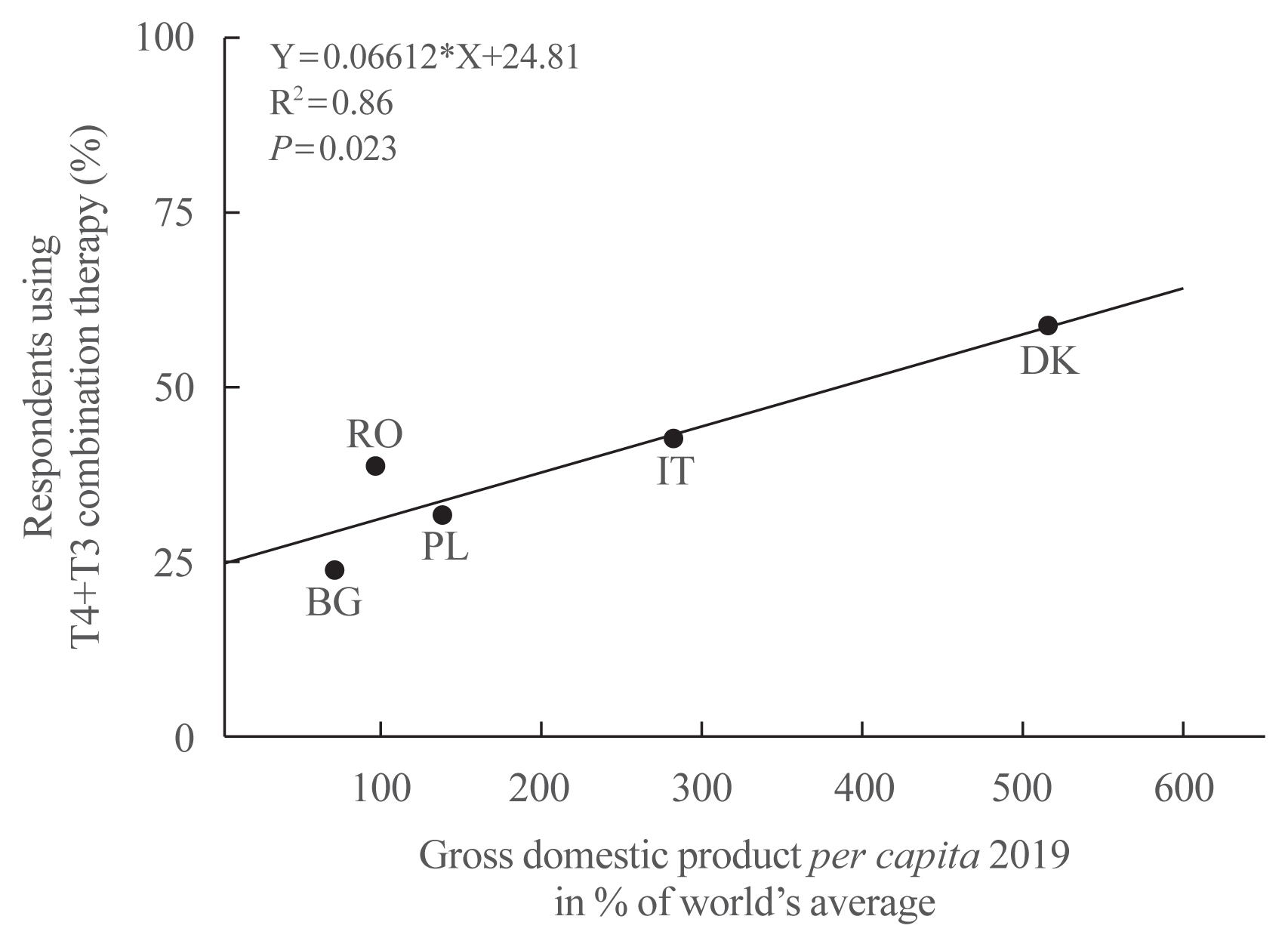
ePub - Thyroxine (T4)+triiodothyronine (T3) combination therapy can be considered in case of persistent symptoms despite normal serum thyroid stimulating hormone in levothyroxine (LT4)-treated hypothyroid patients. Combination therapy has gained popularity in the last two decades, especially in countries with a relatively high gross domestic product. The prevalence of persistent symptoms has also increased; most frequent are complaints about energy levels and fatigue (80% to 90%), weight management (70% to 75%), memory (60% to 80%), and mood (40% to 50%). Pathophysiological explanations for persistent problems are unrealistic patient expectations, comorbidities, somatic symptoms, related disorders (Diagnostic and Statistical Manual of Mental Disorders [DSM-5]), autoimmune neuroinflammation, and low tissue T3. There is fair circumstantial evidence for the latter cause (tissue and specifically brain T3 content is normalized by T4+T3, not by T4 alone), but the other causes are viewed as more relevant in current practice. This might be related to the ‘hype’ that has emerged surrounding T4+T3 therapy. Although more and better-designed trials are needed to validate the efficacy of T4+T3 combination, the management of persistent symptoms should also be directed towards alternative causes. Improving the doctor-patient relationship and including more and better information is crucial. For example, dissatisfaction with the outcomes of T4 treatment for subclinical hypothyroidism can be anticipated as recent trials have demonstrated that LT4 is hardly effective in improving symptoms associated with subclinical hypothyroidism.
-
Citations
Citations to this article as recorded by
- Association of DIO2 and MCT10 Polymorphisms With Persistent Symptoms in LT4-Treated Patients in the UK Biobank
Christian Zinck Jensen, Jonas Lynggaard Isaksen, Gustav Ahlberg, Morten Salling Olesen, Birte Nygaard, Christina Ellervik, Jørgen Kim Kanters
The Journal of Clinical Endocrinology & Metabolism.2024; 109(2): e613. CrossRef - Quality of life, daily functioning, and symptoms in hypothyroid patients on thyroid replacement therapy: A Dutch survey
Ellen Molewijk, Eric Fliers, Koen Dreijerink, Ad van Dooren, Rob Heerdink
Journal of Clinical & Translational Endocrinology.2024; 35: 100330. CrossRef - Use of thyroid hormones in hypothyroid and euthyroid patients: A survey of members of the Endocrine Society of Australia
Nicole Lafontaine, Suzanne J. Brown, Petros Perros, Enrico Papini, Endre V. Nagy, Roberto Attanasio, Laszlo Hegedüs, John P. Walsh
Clinical Endocrinology.2024; 100(5): 477. CrossRef - Use of Thyroid Hormones in Hypothyroid and Euthyroid Patients: A THESIS questionnaire survey of members of the Irish Endocrine Society
Mohamad Mustafa, Elsheikh Ali, Anne McGowan, Laura McCabe, Laszlo Hegedüs, Roberto Attanasio, Endre V. Nagy, Enrico Papini, Petros Perros, Carla Moran
Irish Journal of Medical Science (1971 -).2023; 192(5): 2179. CrossRef - Levothyroxine: Conventional and Novel Drug Delivery Formulations
Hanqing Liu, Wei Li, Wen Zhang, Shengrong Sun, Chuang Chen
Endocrine Reviews.2023; 44(3): 393. CrossRef - Re: “Exploring the Genetic Link Between Thyroid Dysfunction and Common Psychiatric Disorders: A Specific Hormonal or a General Autoimmune Comorbidity” by Soheili-Nezhad et al.
Christiaan F. Mooij, A.S. Paul van Trotsenburg
Thyroid®.2023; 33(8): 999. CrossRef - Circulating thyroid hormones and clinical parameters of heart failure in men
Iva Turić, Ivan Velat, Željko Bušić, Viktor Čulić
Scientific Reports.2023;[Epub] CrossRef - Evaluation of cortical and trabecular bone structure of the mandible in patients using L-Thyroxine
Melike Gulec, Melek Tassoker, Mediha Erturk
BMC Oral Health.2023;[Epub] CrossRef - The Impact of Hypothyroidism on Satisfaction with Care and Treatment and Everyday Living: Results from E-Mode Patient Self-Assessment of Thyroid Therapy, a Cross-Sectional, International Online Patient Survey
Petros Perros, Laszlo Hegedüs, Endre Vezekenyi Nagy, Enrico Papini, Harriet Alexandra Hay, Juan Abad-Madroñero, Amy Johanna Tallett, Megan Bilas, Peter Lakwijk, Alan J. Poots
Thyroid.2022;[Epub] CrossRef
- Association of DIO2 and MCT10 Polymorphisms With Persistent Symptoms in LT4-Treated Patients in the UK Biobank

Original Article
- Clinical Study
- High Serum-Induced AhRL Is Associated with Prevalent Metabolic Syndrome and Future Impairment of Glucose Tolerance in the Elderly
- Youngmi Kim Pak, Hoon Sung Choi, Wook Ha Park, Suyeol Im, P. Monica Lind, Lars Lind, Hong Kyu Lee
- Endocrinol Metab. 2021;36(2):436-446. Published online April 19, 2021
- DOI: https://doi.org/10.3803/EnM.2020.883
- 3,932 View
- 110 Download
- 2 Web of Science
- 2 Crossref
-
Abstract
PDF
 Supplementary MaterialPubReader ePub
 - Background
High circulating levels of dioxins and dioxin-like chemicals, acting via the aryl hydrocarbon receptor (AhR), have previously been linked to diabetes. We now investigated whether the serum AhR ligands (AhRL) were higher in subjects with metabolic syndrome (MetS) and in subjects who had developed a worsened glucose tolerance over time.
Methods
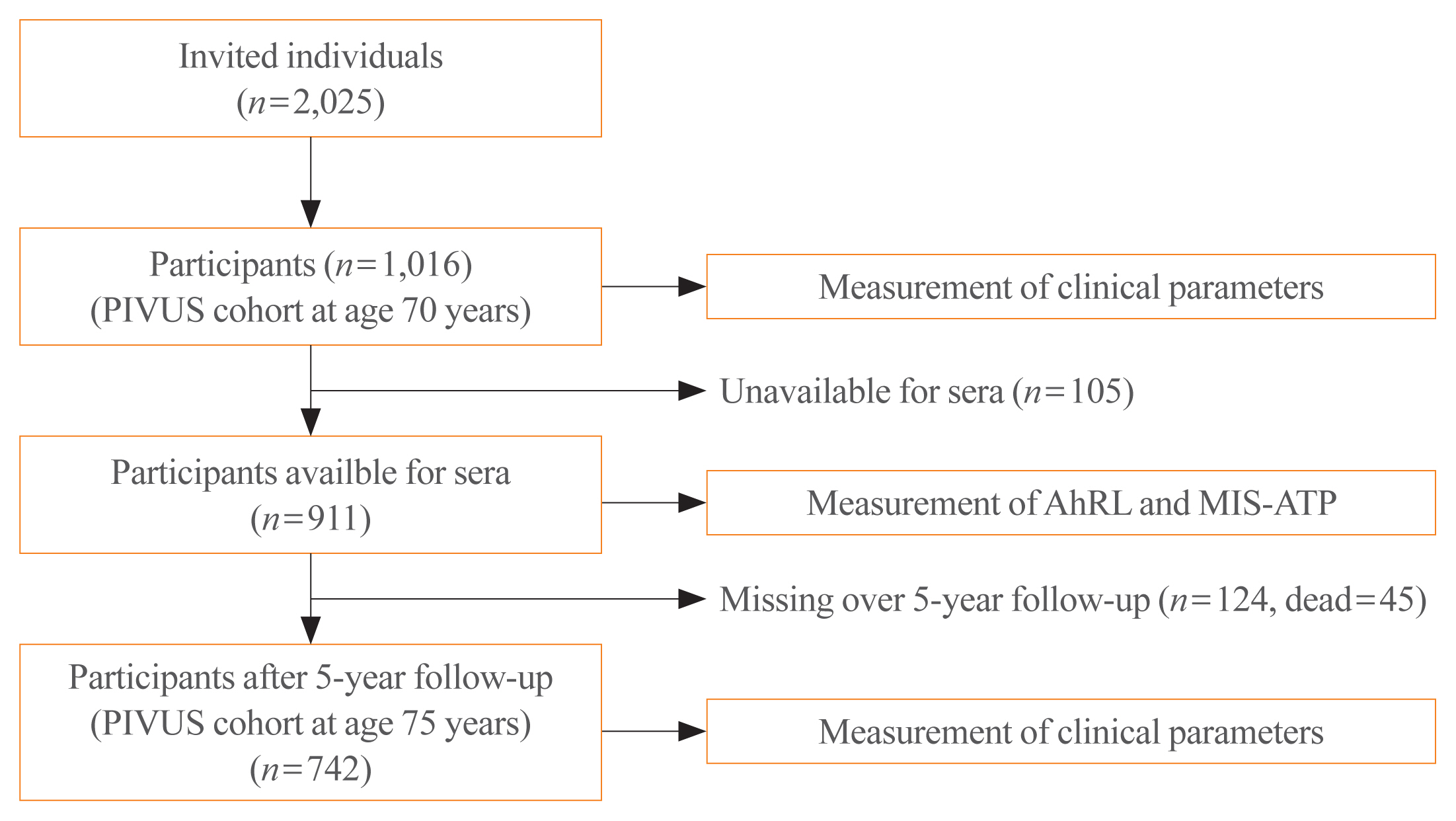
Serum AhRL at baseline was measured by a cell-based AhRL activity assay in 70-year-old subjects (n=911) in the Prospective Investigation of the Vasculature in Uppsala Seniors (PIVUS) study. The main outcome measures were prevalent MetS and worsening of glucose tolerance over 5 years of follow-up.
Results
AhRL was significantly elevated in subjects with prevalent MetS as compared to those without MetS, following adjustment for sex, smoking, exercise habits, alcohol intake and educational level (P=0.009). AhRL at baseline was higher in subjects who developed impaired fasting glucose or diabetes at age 75 years than in those who remained normoglycemic (P=0.0081). The odds ratio (OR) of AhRL for worsening glucose tolerance over 5 years was 1.43 (95% confidence interval [CI], 1.13 to 1.81; P=0.003, continuous variables) and 2.81 (95% CI, 1.31 to 6.02; P=0.008, in the highest quartile) adjusted for sex, life style factors, body mass index, and glucose.
Conclusion
These findings support a large body of epidemiologic evidence that exposure to AhR transactivating substances, such as dioxins and dioxin-like chemicals, might be involved in the pathogenesis of MetS and diabetes development. Measurement of serum AhRL in humans can be a useful tool in predicting the onset of metabolic disorders. -
Citations
Citations to this article as recorded by- An Interactive Online App for Predicting Diabetes via Machine Learning from Environment-Polluting Chemical Exposure Data
Rosy Oh, Hong Kyu Lee, Youngmi Kim Pak, Man-Suk Oh
International Journal of Environmental Research and Public Health.2022; 19(10): 5800. CrossRef - A Novel Aryl Hydrocarbon Receptor Antagonist HBU651 Ameliorates Peripheral and Hypothalamic Inflammation in High-Fat Diet-Induced Obese Mice
Sora Kang, Aden Geonhee Lee, Suyeol Im, Seung Jun Oh, Hye Ji Yoon, Jeong Ho Park, Youngmi Kim Pak
International Journal of Molecular Sciences.2022; 23(23): 14871. CrossRef
- An Interactive Online App for Predicting Diabetes via Machine Learning from Environment-Polluting Chemical Exposure Data
Review Article
- Miscellaneous
- Evidence of the Possible Harm of Endocrine-Disrupting Chemicals in Humans: Ongoing Debates and Key Issues
- Duk-Hee Lee
- Endocrinol Metab. 2018;33(1):44-52. Published online March 21, 2018
- DOI: https://doi.org/10.3803/EnM.2018.33.1.44
- 10,187 View
- 137 Download
- 43 Web of Science
- 44 Crossref
-
Abstract
PDFPubReader ePub
Evidence has emerged that endocrine-disrupting chemicals (EDCs) can produce adverse effects, even at low doses that are assumed safe. However, systemic reviews and meta-analyses focusing on human studies, especially of EDCs with short half-lives, have demonstrated inconsistent results. Epidemiological studies have insuperable methodological limitations, including the unpredictable net effects of mixtures, non-monotonic dose-response relationships, the non-existence of unexposed groups, and the low reliability of exposure assessment. Thus, despite increases in EDC-linked diseases, traditional epidemiological studies based on individual measurements of EDCs in bio-specimens may fail to provide consistent results. The exposome has been suggested as a promising approach to address the uncertainties surrounding human studies, but it is never free from these methodological issues. Although exposure to EDCs during critical developmental periods is a major concern, continuous exposure to EDCs during non-critical periods is also harmful. Indeed, the evolutionary aspects of epigenetic programming triggered by EDCs during development should be considered because it is a key mechanism for developmental plasticity. Presently, living without EDCs is impossible due to their omnipresence. Importantly, there are lifestyles which can increase the excretion of EDCs or mitigate their harmful effects through the activation of mitohormesis or xenohormesis. Effectiveness of lifestyle interventions should be evaluated as practical ways against EDCs in the real world.
-
Citations
Citations to this article as recorded by- Joint and interactive effects of metal mixtures on liver damage: Epidemiological evidence from repeated-measures study
Guohuan Yin, Shuanzheng Zhao, Meiduo Zhao, Jing Xu, Xiaoyu Ge, Jingtao Wu, Yifan Zhou, Xiaolin Liu, Lanping Wei, Qun Xu
Ecotoxicology and Environmental Safety.2024; 274: 116178. CrossRef - Reconsidering “low‐dose”—Impacts of oral estrogen exposure during preimplantation embryo development
Meret Schmidhauser, Anna‐Katharina Hankele, Susanne E. Ulbrich
Molecular Reproduction and Development.2023; 90(7): 445. CrossRef - Simultaneous estimation of methyl paraben, propyl paraben, and Bisphenol A in the plasma of Indian pregnant women using liquid chromatography–tandem mass spectrometry
Rajesh Pradhan, Diksha Mishra, Sunil Kumar Dubey, Rajesh Khadgawat, Garima Kachhawa, Tarang Gupta, Rajeev Taliyan
SEPARATION SCIENCE PLUS.2023;[Epub] CrossRef - Influences of key factors on river water quality in urban and rural areas: A review
Nguyen Tuan Anh, Le Duy Can, Nguyen Thi Nhan, Britta Schmalz, Tran Le Luu
Case Studies in Chemical and Environmental Engineering.2023; 8: 100424. CrossRef - Human health risk assessment for consumption of microplastics and plasticizing substances through marine species
Virginia Montero, Yarenis Chinchilla, Luis Gómez, Adrián Flores, Alejandro Medaglia, Rossy Guillén, Ernesto Montero
Environmental Research.2023; 237: 116843. CrossRef - Effects of postnatal exposure to phthalate, bisphenol a, triclosan, parabens, and per- and poly-fluoroalkyl substances on maternal postpartum depression and infant neurodevelopment: a korean mother-infant pair cohort study
Ju Hee Kim, Nalae Moon, Eunsun Ji, Hyo-Bang Moon
Environmental Science and Pollution Research.2023; 30(42): 96384. CrossRef - Cadmium exposure and thyroid hormone disruption: a systematic review and meta-analysis
Seung Min Chung, Min Cheol Chang
Reviews on Environmental Health.2023;[Epub] CrossRef - Systematic review of prenatal exposure to endocrine disrupting chemicals and autism spectrum disorder in offspring
Salvador Marí-Bauset, Isabel Peraita-Costa, Carolina Donat-Vargas, Agustín Llopis-González, Amelia Marí-Sanchis, Juan Llopis-Morales, María Morales Suárez-Varela
Autism.2022; 26(1): 6. CrossRef - Elucidation of xenoestrogen metabolism by non-targeted, stable isotope-assisted mass spectrometry in breast cancer cells
Mira Flasch, Christoph Bueschl, Giorgia Del Favero, Gerhard Adam, Rainer Schuhmacher, Doris Marko, Benedikt Warth
Environment International.2022; 158: 106940. CrossRef - Fetoplacental vasculature as a model to study human cardiovascular endocrine disruption
Margarida Lorigo, Elisa Cairrao
Molecular Aspects of Medicine.2022; 87: 101054. CrossRef - UV-B Filter Octylmethoxycinnamate Is a Modulator of the Serotonin and Histamine Receptors in Human Umbilical Arteries
Margarida Lorigo, Carla Quintaneiro, Luiza Breitenfeld, Elisa Cairrao
Biomedicines.2022; 10(5): 1054. CrossRef - Microbiota analysis for risk assessment: evaluation of hazardous dietary substances and its potential role on the gut microbiome variability and dysbiosis
Klara Cerk, Margarita Aguilera‐Gómez
EFSA Journal.2022;[Epub] CrossRef - Human adrenocortical carcinoma cell line (NCI-H295R): An in vitro screening model for the assessment of endocrine disruptors’ actions on steroidogenesis with an emphasis on cell ultrastructural features
Hana Duranova, Veronika Fialkova, Veronika Valkova, Jana Bilcikova, Lucia Olexikova, Norbert Lukac, Peter Massanyi, Zuzana Knazicka
Acta Histochemica.2022; 124(5): 151912. CrossRef - Endocrine Disrupting Compounds (Nonylphenol and Bisphenol A)–Sources, Harmfulness and Laccase-Assisted Degradation in the Aquatic Environment
Agnieszka Gałązka, Urszula Jankiewicz
Microorganisms.2022; 10(11): 2236. CrossRef - Subacute exposure to lead promotes disruption in the thyroid gland function in male and female rats
Niedson Correia de Lima Junior, Juliana Franco Camilo, Pâmella Rodrigues do Carmo, Marcelle Novaes de Andrade, Bernardo Ferreira Braz, Ricardo Erthal Santelli, Lycia de Brito Gitirana, Andrea Claudia Freitas Ferreira, Denise Pires de Carvalho, Leandro Mir
Environmental Pollution.2021; 274: 115889. CrossRef - Plasticenta: First evidence of microplastics in human placenta
Antonio Ragusa, Alessandro Svelato, Criselda Santacroce, Piera Catalano, Valentina Notarstefano, Oliana Carnevali, Fabrizio Papa, Mauro Ciro Antonio Rongioletti, Federico Baiocco, Simonetta Draghi, Elisabetta D'Amore, Denise Rinaldo, Maria Matta, Elisabet
Environment International.2021; 146: 106274. CrossRef - Impact of endocrine-disrupting chemicals on steroidogenesis and consequences on testicular function
Casandra Walker, Samuel Garza, Vassilios Papadopoulos, Martine Culty
Molecular and Cellular Endocrinology.2021; 527: 111215. CrossRef - Best Achievements in Translational and Basic Thyroidology in 2020
Sun Wook Cho, Young Joo Park
Endocrinology and Metabolism.2021; 36(1): 36. CrossRef - Endocrine disrupting chemicals in the pathogenesis of hypospadias; developmental and toxicological perspectives
Deidre M. Mattiske, Andrew J. Pask
Current Research in Toxicology.2021; 2: 179. CrossRef - Perfluoroalkyl Chemicals and Male Reproductive Health: Do PFOA and PFOS Increase Risk for Male Infertility?
Pheruza Tarapore, Bin Ouyang
International Journal of Environmental Research and Public Health.2021; 18(7): 3794. CrossRef - Role of Endocrine-Disrupting Chemicals in the Pathogenesis of Non-Alcoholic Fatty Liver Disease: A Comprehensive Review
Raquel Cano, José Pérez, Lissé Dávila, Ángel Ortega, Yosselin Gómez, Nereida Valero-Cedeño, Heliana Parra, Alexander Manzano, Teresa Véliz Castro, María Albornoz, Gabriel Cano, Joselyn Rojas-Quintero, Maricarmen Chacín, Valmore Bermúdez
International Journal of Molecular Sciences.2021; 22(9): 4807. CrossRef - Microplastics in aquatic environment: Challenges and perspectives
Aashlesha Chekkala Vivekanand, Sanjeeb Mohapatra, Vinay Kumar Tyagi
Chemosphere.2021; 282: 131151. CrossRef - A Review on Emerging Pollutants in the Water Environment: Existences, Health Effects and Treatment Processes
Nor Zaiha Arman, Salmiati Salmiati, Azmi Aris, Mohd Razman Salim, Tasnia Hassan Nazifa, Mimi Suliza Muhamad, Marpongahtun Marpongahtun
Water.2021; 13(22): 3258. CrossRef - Urban-level environmental factors related to pediatric asthma
Inês Paciência, João Cavaleiro Rufo
Porto Biomedical Journal.2020; 5(1): e57. CrossRef - Mechanisms of Testicular Disruption from Exposure to Bisphenol A and Phtalates
Francesco Pallotti, Marianna Pelloni, Daniele Gianfrilli, Andrea Lenzi, Francesco Lombardo, Donatella Paoli
Journal of Clinical Medicine.2020; 9(2): 471. CrossRef - Developmental instability is associated with estrogenic endocrine disruption in the Chilean native fish species, Trichomycterus areolatus
Angéline Bertin, Gautier Damiens, Daniela Castillo, Ricardo Figueroa, Christophe Minier, Nicolas Gouin
Science of The Total Environment.2020; 714: 136638. CrossRef - Tyrosinase nanocapsule based nano-biosensor for ultrasensitive and rapid detection of bisphenol A with excellent stability in different application scenarios
Lingxia Wu, Xianbo Lu, Kai Niu, Dhanjai, Jiping Chen
Biosensors and Bioelectronics.2020; 165: 112407. CrossRef - The sex-specific effects of blood lead, mercury, and cadmium levels on hepatic steatosis and fibrosis: Korean nationwide cross-sectional study
Seung Min Chung, Jun Sung Moon, Ji Sung Yoon, Kyu Chang Won, Hyoung Woo Lee
Journal of Trace Elements in Medicine and Biology.2020; 62: 126601. CrossRef - Diet: A Source of Endocrine Disruptors
Hina Rashid, Saad S. Alqahtani, Saeed Alshahrani
Endocrine, Metabolic & Immune Disorders - Drug Targets.2020; 20(5): 633. CrossRef - Aryl-hydrocarbon receptor binding and the incidence of type 2 diabetes: the Brazilian Longitudinal Study of Adult Health (ELSA-Brasil)
Bruce B. Duncan, Cristina D. Castilhos, Paula A. Bracco, Maria I. Schmidt, Sora Kang, Suyeol Im, Hong-Kyu Lee, Álvaro Vigo, Youngmi K. Pak
Environmental Health.2020;[Epub] CrossRef -
Endocrinology and Metabolism Has Been Indexed in MEDLINE: A Major Achievement
Won-Young Lee
Endocrinology and Metabolism.2019; 34(2): 138. CrossRef - Endocrine-disrupting chemicals: Effects on neuroendocrine systems and the neurobiology of social behavior
Andrea C. Gore, Krittika Krishnan, Michael P. Reilly
Hormones and Behavior.2019; 111: 7. CrossRef - Removal of Pharmaceutical Contaminants in Wastewater Using Nanomaterials: A Comprehensive Review
Anjali Chauhan, Devendra Sillu, Shekhar Agnihotri
Current Drug Metabolism.2019; 20(6): 483. CrossRef - Endocrine Disrupting Chemicals: An Occult Mediator of Metabolic Disease
Olga Papalou, Eleni A. Kandaraki, George Papadakis, Evanthia Diamanti-Kandarakis
Frontiers in Endocrinology.2019;[Epub] CrossRef - Adverse Effect of Nonylphenol on the Reproductive System in F2 Male
Mice : A Qualitative Change?
Yong-Bin Kim, Yong-Pil Cheon, Donchan Choi, Sung-Ho Lee
Development & Reproduction.2019; 23(3): 255. CrossRef - Association of serum levels of p,p’- Dichlorodiphenyldichloroethylene (DDE) with type 2 diabetes in African American and Caucasian adult men from agricultural (Delta) and non-agricultural (non-Delta) regions of Mississippi
Edward C. Meek, Dana Dale Jones, J. Allen Crow, Robert W. Wills, William H. Cooke, Janice E. Chambers
Journal of Toxicology and Environmental Health, Part A.2019; 82(6): 387. CrossRef - UV-B Filter Octylmethoxycinnamate Induces Vasorelaxation by Ca2+ Channel Inhibition and Guanylyl Cyclase Activation in Human Umbilical Arteries
Margarida Lorigo, Carla Quintaneiro, Manuel Lemos, José Martinez-de-Oliveira, Luiza Breitenfeld, Elisa Cairrao
International Journal of Molecular Sciences.2019; 20(6): 1376. CrossRef - Transgenerational effects of BPA on female reproduction
Stefania Santangeli, Claudia Consales, Francesca Pacchierotti, Hamid R. Habibi, Oliana Carnevali
Science of The Total Environment.2019; 685: 1294. CrossRef - Exposure to polybrominated biphenyl and stochastic epigenetic mutations: application of a novel epigenetic approach to environmental exposure in the Michigan polybrominated biphenyl registry
Sarah W. Curtis, Dawayland O. Cobb, Varun Kilaru, Metrecia L. Terrell, M. Elizabeth Marder, Dana Boyd Barr, Carmen J. Marsit, Michele Marcus, Karen N. Conneely, Alicia K. Smith
Epigenetics.2019; 14(10): 1003. CrossRef - Determining the endocrine disruption potential of industrial chemicals using an integrative approach: Public databases, in vitro exposure, and modeling receptor interactions
Olubusayo Alofe, Edwina Kisanga, Salmaan H. Inayat-Hussain, Masao Fukumura, Rolando Garcia-Milian, Lalith Perera, Vasilis Vasiliou, Shannon Whirledge
Environment International.2019; 131: 104969. CrossRef - 4-Nonylphenol-enhanced EZH2 and RNF2 expression, H3K27me3 and H2AK119ub1 marks resulting in silencing of p21CDKN1A in vitro
Krishna Ghosh, Biji Chatterjee, Uma Maheswari, Mariyam Athifa, Santosh R Kanade
Epigenomics.2019; 11(8): 899. CrossRef - Sex-specific effects of blood cadmium on thyroid hormones and thyroid function status: Korean nationwide cross-sectional study
Seung Min Chung, Jun Sung Moon, Ji Sung Yoon, Kyu Chang Won, Hyoung Woo Lee
Journal of Trace Elements in Medicine and Biology.2019; 53: 55. CrossRef - Assessment of the endocrine disrupting properties of Bisphenol AF according to the EU criteria and ECHA/EFSA guidance
Laura Escrivá, Annika Hanberg, Johanna Zilliacus, Anna Beronius
EFSA Journal.2019;[Epub] CrossRef - Comparative assessment of endocrine disrupting compounds removal in heterotrophic and enriched nitrifying biomass
Elissavet Kassotaki, Maite Pijuan, Ignasi Rodriguez-Roda, Gianluigi Buttiglieri
Chemosphere.2019; 217: 659. CrossRef
- Joint and interactive effects of metal mixtures on liver damage: Epidemiological evidence from repeated-measures study
Original Article
- Diabetes
- The Association between Persistent Hypertriglyceridemia and the Risk of Diabetes Development: The Kangbuk Samsung Health Study
- Yu Hyun Kwon, Seul-Ki Kim, Jung Hwan Cho, Hyemi Kwon, Se Eun Park, Hyung-Geun Oh, Cheol-Young Park, Won-Young Lee, Ki-Won Oh, Sung-Woo Park, Eun-Jung Rhee
- Endocrinol Metab. 2018;33(1):55-61. Published online January 30, 2018
- DOI: https://doi.org/10.3803/EnM.2018.33.1.55
- 4,183 View
- 62 Download
- 13 Web of Science
- 14 Crossref
-
Abstract
PDFPubReader ePub
Background Hypertriglyceridemia is known to have an association with increased risks of insulin resistance and diabetes. The aim of this study was to investigate the risk of diabetes mellitus, according to changes in the concentrations of triglycerides, over time.
Methods A total of 15,932 non-diabetic participants (mean age 43.2 years, 68% men) who attended five consecutive annual health check-ups at Kangbuk Samsung Hospital, between January 2010 and December 2014, were recruited. Participants were classified according to their triglyceride concentrations; normal (<150 mg/dL) and abnormal (≥150 mg/dL). According to the triglyceride levels in 2010 and 2012, subjects were divided into four groups: normal-normal, normal-abnormal, abnormal-normal, and abnormal-abnormal. The risk for incident diabetes was assessed in 2014.
Results Among the total subjects, 67.5% belonged to the normal-normal group, 8.6% to the normal-abnormal group, 9.4% to the abnormal-normal group, and 14.5% to the abnormal-abnormal group. A total of 234 subjects (1.5%) were newly diagnosed with diabetes, between 2010 and 2014. Over 4 years, 1%, 1.5%, 2.1%, and 3.0% of the subjects developed diabetes in the normal-normal, normal-abnormal, abnormal-normal, and abnormal-abnormal groups, respectively. When the risk for incident diabetes was analyzed in the groups, after adjusting the confounding variables, a 1.58-fold increase in the risk of diabetes (95% confidence interval [CI], 1.10 to 2.26) was observed in the participants with persistent hypertriglyceridemia (abnormal-abnormal group). This was attenuated by further adjustments for body mass index (BMI) (hazard ratio, 1.25; 95% CI, 0.86 to 1.80).
Conclusion In this large study population, persistent hypertriglyceridemia, over a period of 2 years, was significantly associated with the risk of incident diabetes, which was attenuated after adjustment for BMI.
-
Citations
Citations to this article as recorded by- Cumulative exposure to hypertriglyceridemia and risk of type 2 diabetes in young adults
Min-Kyung Lee, Kyungdo Han, Bongsung Kim, Jong-Dai Kim, Moon Jung Kim, Byungpyo Kim, Jung Heo, Jiyeon Ahn, Seo-Young Sohn, Jae-Hyuk Lee
Diabetes Research and Clinical Practice.2024; 208: 111109. CrossRef - Usefulness of SPISE Index for Screening and Detection of Early Stages of Insulin Resistance among Chilean Young Adults
Isabel Pereyra González, Sandra Lopez-Arana
Annals of Nutrition and Metabolism.2023; 79(4): 372. CrossRef - Lipid variability in patients with diabetes mellitus
Jeongmin Lee, Seung-Hwan Lee
Cardiovascular Prevention and Pharmacotherapy.2023; 5(4): 126. CrossRef - Sesamin: A Promising Therapeutic Agent for Ameliorating Symptoms of Diabetes
Shu-Ming Huang, Cheng-Hung Chuang, Christine Joyce F. Rejano, Lemmuel L. Tayo, Cheng-Yang Hsieh, Steven Kuan-Hua Huang, Po-Wei Tsai
Molecules.2023; 28(21): 7255. CrossRef - Variability, Mean, and Baseline Values of Metabolic Parameters in Predicting Risk of Type 2 Diabetes
Duong Duc Pham, Jaekyung Song, Yunwan Jeon, Ibrahimi Hajar, Chae Hun Leem
The Journal of Clinical Endocrinology & Metabolism.2022; 107(5): 1270. CrossRef - Lipid Variability and Diabetes Mellitus
Jeongmin Lee, Seung-Hwan Lee
The Journal of Korean Diabetes.2022; 23(1): 28. CrossRef - The Risk of Type 2 Diabetes Mellitus in a Russian Population Cohort According to Data from the HAPIEE Project
Svetlana V. Mustafina, Oksana D. Rymar, Liliya V. Shcherbakova, Evgeniy G. Verevkin, Hynek Pikhart, Olga V. Sazonova, Yuliya I. Ragino, Galina I. Simonova, Martin Bobak, Sofia K. Malyutina, Mikhail I. Voevoda
Journal of Personalized Medicine.2021; 11(2): 119. CrossRef - The influence of VDR polymorphisms on the type 2 diabetes susceptibility in Chinese: an interaction with hypertriglyceridemia
Dongdong Zhang, Cheng Cheng, Yan Wang, Yuan Xue, Yaping Liu, Yiming Liu, Mingming Feng, Ze Xu, Wenjie Li, Xing Li
Molecular Genetics and Genomics.2021; 296(4): 837. CrossRef - Development and validation of a new diabetes index for the risk classification of present and new-onset diabetes: multicohort study
Shinje Moon, Ji-Yong Jang, Yumin Kim, Chang-Myung Oh
Scientific Reports.2021;[Epub] CrossRef - Hypertriglyceridemia as an Independent Predictor for Ten-Year Incidence of Diabetes in Thais
Suranut Charoensri, Supatida Turnsaket, Chatlert Pongchaiyakul
Vascular Health and Risk Management.2021; Volume 17: 519. CrossRef - Prevalence and Current Management of Cardiovascular Risk Factors in Korean Adults Based on Fact Sheets
Eun-Jung Rhee
Endocrinology and Metabolism.2020; 35(1): 85. CrossRef - HDL-Cholesterol, Its Variability, and the Risk of Diabetes: A Nationwide Population-Based Study
Seung-Hwan Lee, Hun-Sung Kim, Yong-Moon Park, Hyuk-Sang Kwon, Kun-Ho Yoon, Kyungdo Han, Mee Kyoung Kim
The Journal of Clinical Endocrinology & Metabolism.2019; 104(11): 5633. CrossRef - Response: The Association between Persistent Hypertriglyceridemia and the Risk of Diabetes Development: The Kangbuk Samsung Health Study (Endocrinol Metab 2018;33:55–61, Yu Hyun Kwon et al.)
Eun-Jung Rhee, Yu Hyun Kwon
Endocrinology and Metabolism.2018; 33(3): 425. CrossRef - The Association between Persistent Hypertriglyceridemia and the Risk of Diabetes Development: The Kangbuk Samsung Health Study (Endocrinol Metab 2018;33:55–61, Yu Hyun Kwon et al.)
Mi Hae Seo
Endocrinology and Metabolism.2018; 33(2): 305. CrossRef
- Cumulative exposure to hypertriglyceridemia and risk of type 2 diabetes in young adults
 First
First Prev
Prev


